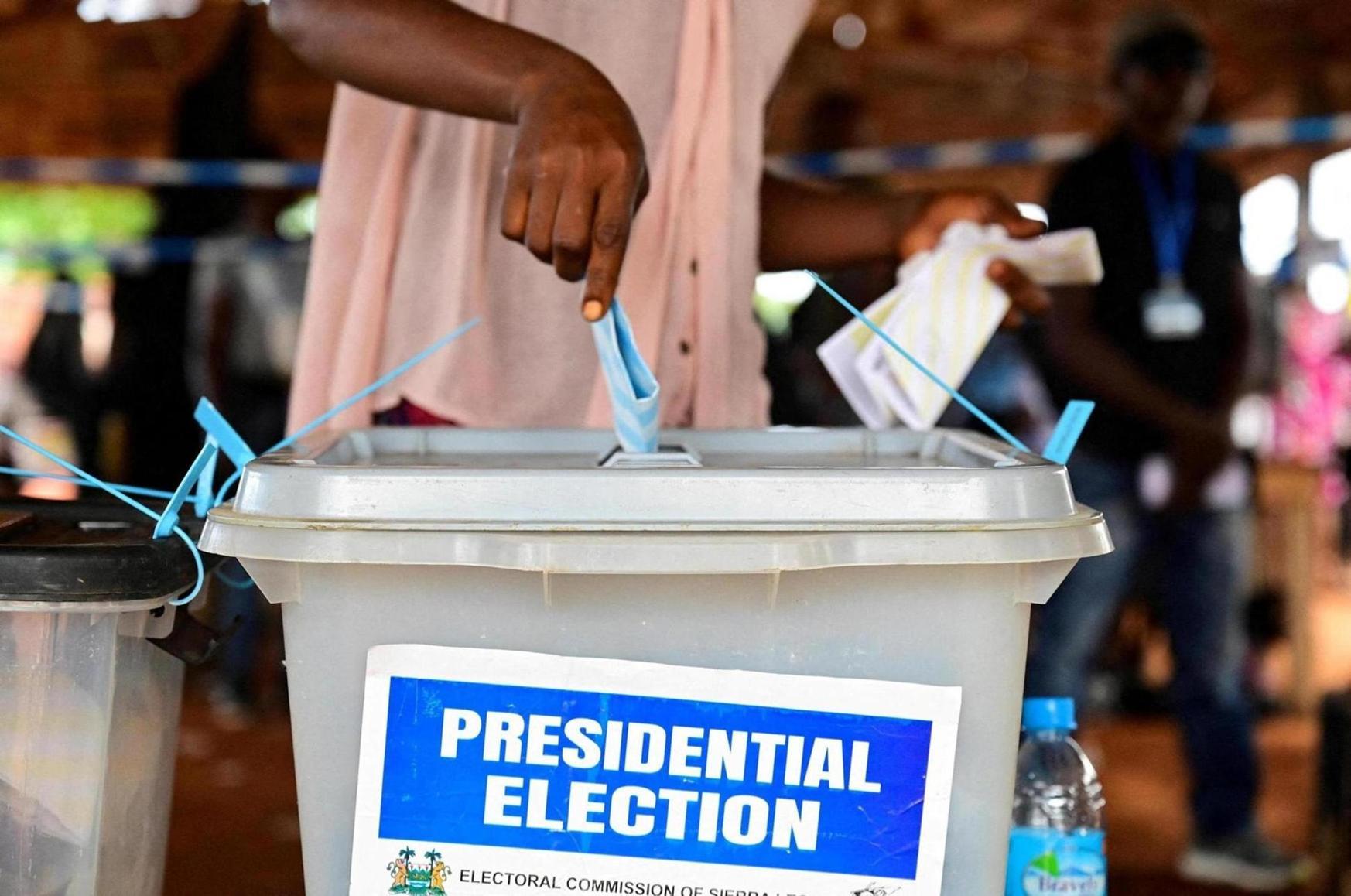
Africa-Press – Eswatini. This being a nominations weekend, a process that in the nature of competitive elections, is fraught with all sorts of tensions and suspicions – is the best time to highlight the noble role of traditional leaders/chiefs.
Chiefs, as benevolent heads of their communities, are expected to play a facilitating role in the elections process; community members have every reason to expect an unbiased stance from their chiefs with regards to nominated and contesting candidates, this has been the rule since the inception of the constitution.
Chiefs have, in the main, conducted themselves in a fair and impartial manner, successfully distancing themselves from any of the contesting candidates.
The changing political culture, with some political agitators actually treating traditional leadership structures with suspicion and disdain, calls for an even more commitment to neutrality by chiefs in order to redeem their esteem as benevolent leaders of their communities.
This impartiality, without doubt, will be put under increasing pressure in the current elections given the expected candidates who have stated that they will be pushing a change agenda in the new Parliament.
The success of these candidates /campaign remains to be seen and the arbiter will not be the authorities or chiefs, but the voters across the country.
We do need to interrogate how chiefs will navigate these difficult political tensions and affiliations; the neutrality of recently installed chiefs will also be subjected to suspicions that are inevitable in the post-chieftaincy dispute period.
These questions need to be explored, including the claims by some that in fact endorsement by chiefs could be more of a liability than a benefit in the obtaining political climate.
Chiefs neutrality and
anti-establishment candidates
The sad reality is that we’re confronted by a political environment, where those agitating for multiparty politics have already identified chiefs as one of their targets, this has resulted in the tragic murder of one chief to date and a number of chief`s residences (imiphakadzi) gutted down by fire in a heinous arson attack campaign.
We have made the argument previously that the bulk of chiefs, who are poor and enjoy no security, have no political agency that justifies their targeting, except for the simple fact that their attackers see them as easy targets.
That radical progressives actually envision a future Eswatini that has no trace of our Swatiness and Africaness, an Eswatini that regurgitates internationalist progressivism that is totally at odds with everything we cherish, including our Christian faith.
Certainly, this radical vision is both unattainable and unsustainable and the calls for a revolution is a concession that these desires are undemocratic and unsustainable. Chiefs have been, to the greatest extent, benevolent heads of our rural communities where over 80 per cent of the citizens reside and their targeting for political violence remains totally unprovoked and unjustifiable.
This nominations weekend could bring the benevolent chiefs to face-to-face contact with their aggressors in the form of anti-establishment candidates; this is a test that no other leaders have ever been subjected to and we hope chiefs will demonstrate the political maturity befitting their stature.
In a sense this election will be a referendum on the popularity of anti-establishment politics ,and chiefs must restrain themselves and allow the voter to decide so that we emerge from this election process wiser in terms of the urgent tasks our people expect their representatives to address.
Any democratic society ought to be tolerant with its divergent cultures and ideologies and strive for national unity that does not require for conservatives to be less conservative ,nor for progressives to be less progressive; instead a national unity that continuously yields to the democratic will of the people.
Chiefs neutrality in a
post-chieftaincy dispute context
The demise of most chiefs and we dare say most chiefs, is often followed by a contentious and acrimonious succession process; the poorly managed succession process often takes unnecessarily long and inevitable creates schisms between the chief’s extended family, which often extends to the community; this sad but avoidable process has an extended aftermath that often lasts generations, exposing our inability to promptly resolve conflict which has, unfortunately, has settled and become part of our culture.
The elections process unfolding with nominations this weekend will most certainly put pressure on the scores of recently installed chiefs to demonstrate neutrality even when candidates coming from previously adversarial factions emerge ,this is a very tall order because its an issue that is obviously very personal to the new chiefs.
The biggest temptation is for these chiefs to indicate their preferred candidates, obviously this could be discretely done outside the careful view of the elections body, often in activities/events preceding the nominations process where elections officials cannot interfere with the process.
The neutrality of chiefs has to be reemphasised to ensure that the elections process remains free and fare and most importantly to ensure chiefs reclaim their moral capital as benevolent leaders who lead their communities with total impartiality.
We do need to concede that there’s very little in our leadership development culture that could prepare chiefs for this kind of complex situations, we remain very weak as a people in this area.
Could overt endorsement
by chiefs be a liability
We do need to ask, if the narrative of anti-establishment activists is indeed is true, could overt endorsement by chiefs actually be a liability to endorsed candidates; the anti-establishment camp seem to make the suggestion that chiefs are significantly infamous, which justifies their targeting for arson attacks.
But even a cursory observation exposes this fallacy of chiefs being infamous and undesirable, instead still an overwhelming number of Emaswati still willingly pay their loyal homage to their chiefs.
It is doubtful if anti-establishment would be indifferent to overt endorsement of candidates by chiefs, common sense says that a sizable number of people could be receptive to their chief`s endorsement of a particular candidate and sway their voting accordingly.
The issue of suitability of candidates is best left to the voters and of course the voter needs to educated on the suitability or otherwise of the candidates, that’s the purpose of having political campaigns and debates; the fact that the constitution prohibits campaigning, which could also follow the format of political debates, unnecessarily limits the voters ability to know all there is to know about contesting candidates.
This aspect of the Constitution is very archaic and inimical to democratic practice, the drafters of our constitution gave us a stillbirth clause here because this clause was defective from the very first day the constitution was introduced.
Open debates would have worked very well to expose the unsuitability of anti-establishment candidates, something that some members of the cabinet are actively attempting to do; we are Certainly not trying to water down the efforts of these cabinet ministers, but it is clear that if such issues were being brought up in an open debate between candidates the exercise would have more credibility, especially because each candidate would also have the opportunity to respond ,which is exactly what democracy demands.
The lack of open political debates in our elections process is a significant part of the reason that promotes the culture of foo-parcels politics. There’s no denying the fact that parliamentarians produced through food-parcels politics can rarely meet the qualitative requirements expected of public representatives.
The candidate with more resources, illicit and otherwise, to purchase food parcels are given a beeline to parliament and that as detrimental as a sabotage campaign driven by antiestablishment activists.
Clearly the elections process requires the credible and demonstrable neutrality of chiefs and just as importantly, it also needs to have inbuilt mechanisms that facilitate the exposure of destructive political platforms through public debates. We do look forward to a successful nominations process and pray the exercise delivers the kind of leaders capable of taking the country to greater heights.
Source: times
For More News And Analysis About Eswatini Follow Africa-Press