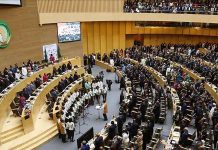
Africa-Press – Eswatini. “It is important that the decorum and dignity of the House is upheld at all times. The image of Parliament in the public mind should be one where proceedings, debates and discussions take place with a view to resolve issues through a constructive and co-operative approach” – Pratibha Patil.
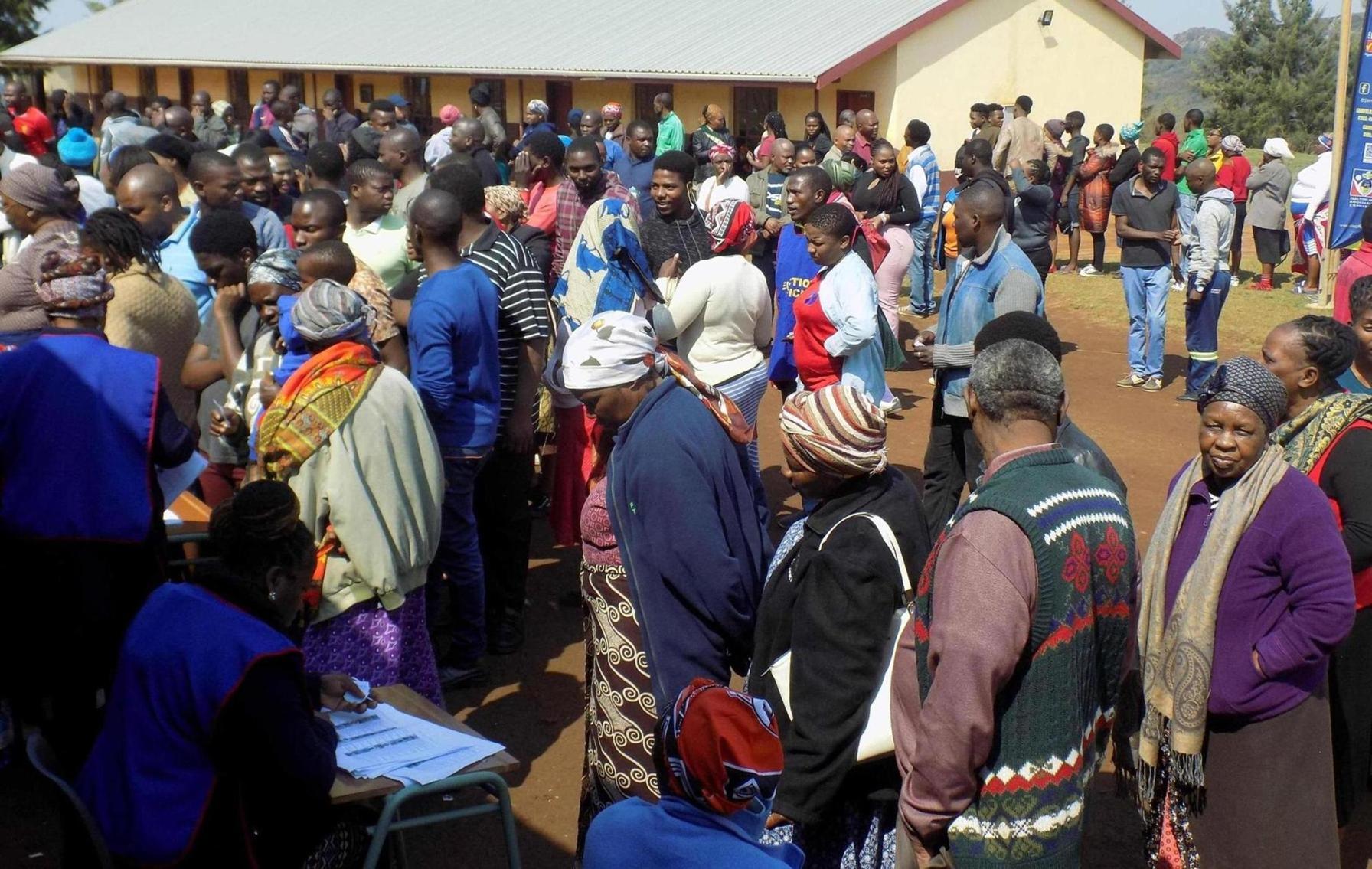
The excitement for the upcoming, primary elections, that is, the second stage of the parliamentary elections in the kingdom is intensifying. The individuals aspiring to become members of the 12th Parliament have captured the attention of the people, who have diverted their gaze from their dreary existence and are channelling their efforts and aspirations towards a brighter future, which they bank on the motley group of people who, around September or October this year, will be sworn in, constituting the 12th Parliament. However, it has been a huge let down for those who were nominated, but, sadly, failed the vetting phase.
Conversely, it has been a victory for those who have advanced to the subsequent stages of the electoral procedure after passing the vetting process. Congratulations are in order for the latter and ‘hardy’ to the former. Better luck next time – in five years’ time. Phew! The vetting process has proved to be a snare and speed trap for some, bashaye phasi nge difu, kwasho bo public transport conductor. In this article, I have compiled my own list of expectations from the aspiring members of Parliament of the 12th Parliament, which I hope will resonate well with a majority of the electorate, especially those who are well versed with the core duties of parliamentarians.
accountable
The voters are considering what they expect from the possible members who will form the 12th Parliament. They are asking important questions such as: What unique qualities do they possess compared to the underwhelming, outgoing, 11th parliamentarians? Will the hopeful candidates be dynamic and efficient in their oversight role, ensuring that the Executive is accountable? Can they remain strong, resilient and resist the prevailing fear that has taken over the country due to the Executive’s oppressive tactics? The primary concern I have is that the potential members of the 12th Parliament must have a shared mission statement. For those unfamiliar, a mission statement is a concise statement explaining an organisation’s purpose, objectives, and overall aspirations.
It strengthens the vision and serves as a tool for communicating significance and direction to, for instance, employees, customers, vendors and other stakeholders such as, in relation to this article, the electorate. When an organisation lacks a mission statement, it can lead to numerous disastrous consequences. These include a lack of clear direction for the future, undefined current objectives or measures for success, and a lack of unity or team cohesion. For parliamentarians, the most significant consequence is the loss of confidence from the electorate. This can result in voters regretting their decision to elect representatives who fail to fulfil their mandate, wasting their valuable vote. To be honest, a Parliament ought to serve as a symbol of tranquillity and optimism, where all lawmakers strive to uphold the fundamental ideals of democracy by holding the ruling government accountable and promoting good governance. It must not devolve into a breeding ground for self-indulgence, where elected officials prioritise personal gain over fulfilling their duties and obligations to the people who voted for them.
Now, according to yours truly, what should be the mission of the imminent 12th Parliament? In my view, the 12th Parliament ought to prioritise empowering the people by enacting laws, promoting transparency and accountability, and ensuring fair distribution of the country’s resources. It should be the voice of the voiceless. It is disheartening that some previous lawmakers have let down their constituents, and if there was a constitutional provision for recalling non-performing legislators, many would have faced this consequence.
boundaries
Additionally, past administrations have often overstepped their boundaries by interfering with the independence of Parliament, which is a vital component of our government. It’s hard to forget the incident where a parliamentary committee was left embarrassed after it had to drop, like a hot potato, an investigation into suspected corruption during the building of the Nhlangano-Sicunusa-Gege Road construction project because a key witness refused to testify. Unfortunately, the investigation has remained unfinished and has not made any progress since then. It is intriguing to observe that as the upcoming elections approach, the political parties advocating for participation are determined to ‘fight the system from within’.
It is also interesting how those who are members of political parties hope to fight the system from within when the ‘oath of allegiance’ in Section 128 of the Constitution of Swaziland compels public officials to ‘be faithful and bear true allegiance to the King, to his heirs and successors according to the law, so help me God…’. They will solemnly taking this oath, Bible in hand!
Whether this bold, ‘fight the system from within’ strategy will succeed remains uncertain, given the consequences faced by a few daring MPs, who in the past dared to venture into uncharted territory. Nevertheless, as the wise often say, success cannot be achieved without effort. It may be wise to note that the nation is presently governed by the Tinkhundla System and is a one-party State. Political parties have been prohibited since the controversial 1973 Decree by the late King Sobhuza II (may he rest in peace). The Constitution mandates that public officials are elected based on individual merit. Despite the existence of some unregistered political associations, there is no legal means for parties to register and participate in elections.
legitimise
Several parties have chosen to boycott the electoral process due to their belief that participating would legitimise an undemocratic system of governance. This has caused division among political parties, and those who have chosen to participate in the current election are often viewed as betraying the fight for democracy. Due to the ongoing political tensions in the country, there are concerns from certain groups about the necessity of holding elections, while the anticipated dialogue process, which has been delayed for a significant period, is awaited.
Government has consistently moved the goalposts, using the previous unstable environment as a reason for not holding a dialogue. Despite the recent announcement by the head of State that a ‘dialogue’ will take place after the elections, there are doubts about whether it will be an internationally accepted type of dialogue process held at a neutral venue, or a ‘monologue’, or hopefully, ‘talks about talks’ or something different.
That said, back to the electoral process. We anticipate that the imminent, 12th Parliament will fulfil its oversight duties impartially and without yielding, say, to pressure from either the Executive or the Judiciary. Its primary objective should be to prevent the squandering of public funds on projects that ultimately prove to be futile. The public has long expressed dissatisfaction with how the public purse is utilised. Consider, for instance, the case of the construction of the two hotels down in the Ezulwini Valley, which are widely regarded as unprofitable ventures. Despite previous parliamentary inquiries into the rationale behind the construction of these hotels, the government prevailed. Similarly, the government’s proposal to erect a new parliamentary edifice met with some resistance, but, ultimately, the Executive had its way.
In my view, the 12th Parliament should prioritise fairness and equity in addressing citizens’ needs. As a developing Third World nation, we require progressive development that puts citizens’ needs first. Poverty reduction, unemployment alleviation, crime reduction, nepotism prevention, corruption eradication, and ending security forces brutality are among the many challenges we face. Parliament must play a crucial role in addressing these issues. It is imperative for the 12th Parliament to consider all perspectives while making decisions. The electorate expects participation and wise contributions by all members in motions that reflect their aspirations, development of constituencies by representatives, and policy recommendations that will advance the nation.
mainstreaming
When participating in the electoral process, it is crucial for voters to consider the issue of gender mainstreaming in Parliament. The traditional notion that a woman’s place is solely in the kitchen is out-dated. It is imperative to elect female legislators, who will actively work towards addressing issues that disproportionately affect women. Recognising and valuing the differences between men and women in legislation and policy is of utmost importance. Another issue I always decry which is lacking in public officials is transparency. This is one of the issues that continue to stick like sore thumb in as far as proper – or poor – governance is concerned. Parliament – in fact, all three arms of government – need to strive to act transparently. They must work towards acting openly and make all their activities and decisions accessible to citizens.
It is a plea to the incoming 12th Parliament to uphold exemplary ethical and moral principles while executing their duties. Unity should be the top priority, and they must protect diverse opinions from their peers. They should not hesitate to support colleagues who raise motions that may not align with the Executive’s interests. We remember how the outgoing lot neglected pro-democracy MPs like Bacede Mabuza and Mthandeni Dube. Our expectations of a visionary Parliament are for it to prioritise achieving the utmost level of skill and competence in fulfilling its responsibilities. It is crucial for the electorate to exercise caution when selecting their preferred candidates. Voting based on popularity and the distribution of gifts intended to buy the vote should be avoided at all costs. Parliamentary duties are a weighty matter, and it is imperative that we abstain from electing members who solely prioritise their personal interests.
Finally, let me share with the reader this very interesting excerpt found at www.https://ipu.org (Inter Parliamentary Union): “Representative Parliaments are both socially and politically inclusive. They allow members to carry out their mandates freely, and their hallmarks include: Free and fair elections; the presence of women and men; open and democratic systems within political parties; and guaranteed rights. These might cover freedom of speech and equality of opportunity for all MPs, including those from opposition parties. Open Parliaments conduct their business transparently. Proceedings are open to the public and the media. Debates are publicised in advance and documents are published on the Internet. Open Parliaments have their own public relations teams, and make effective use of technology to put information in the public domain. Accessible Parliaments involve the public in their work. They have various means for citizens to reach their MPs, and effective ways for the public to be consulted before laws are passed. Other hallmarks of accessibility include people’s right to ask for action on particular subjects, and make complaints if they have grievances. Interest groups lobby within agreed legal provisions that ensure transparency.
integrity
“Accountable Parliaments have members who are answerable to the electorate for their performance in office, and for the integrity of their conduct. There is a genuine possibility of electoral sanctions, as well as standards and enforceable codes of conduct for MPs. Members are paid adequately, must register their interests and income, and are limited in their election spending. Parliament reports on its institutional performance in a regular and transparent manner. “Effective Parliaments have mechanisms and resources to ensure their own independence such as control of their own budgets. They have access to non-partisan professional staff separate from the main civil service. Members are able to access unbiased research and information. At the national level, Parliaments are effective at drawing up laws, holding governments to account, and being a national forum for issues of concern. They interact effectively with regional authorities, cooperating and consulting with them so that policies are driven by local needs. And, finally, they are also involved in international affairs.” I am throwing the gauntlet at aspiring MPs to read the above carefully. In light of the clamouring to be representatives of the electorate, is the above what we should expect from the 12th Parliament?
Source: times
For More News And Analysis About Eswatini Follow Africa-Press