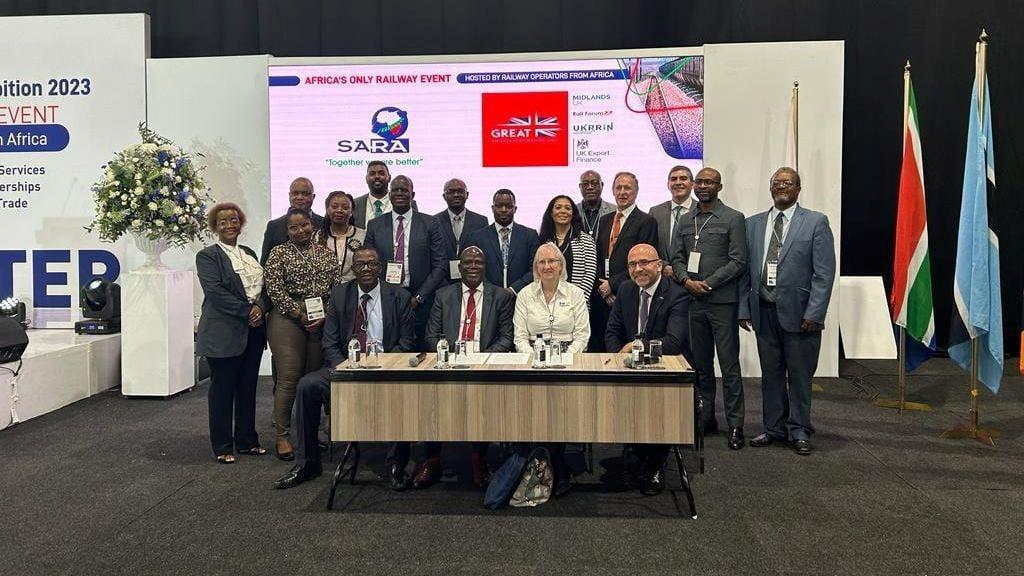
Africa-Press – Eswatini. At the recent Southern African Railways Association (SARA) conference, a significant focus was placed on the role of Eswatini in regional rail integration.
Nonhlanhla Shongwe, Board Chairperson of Eswatini Railways (ESR), represented the Ministry of Public Works and Transport from the Kingdom of Eswatini and highlighted key initiatives and commitments of the Eswatini Government in the realm of railway development. Shongwe began by addressing the geographical challenges faced by Eswatini, a landlocked nation with no direct access to the sea. Emphasising the importance of regional integration, she noted Eswatini’s strategic collaborations, particularly with South Africa and Mozambique, for the transportation of goods to and from seaports like Richards Bay and Durban in South Africa, and Maputo in Mozambique. The central topic in Shongwe’s presentation was the Eswatini Rail Link project, a major infrastructural initiative involving Eswatini, South Africa (Transnet), and Mozambique (CFM).
Cost
The project envisions constructing a 145km long rail line to facilitate the movement of freight traffic through Eswatini, enhancing economic connectivity between the three countries.
The project, estimated to cost around E29 billion, is currently in its early stages, focusing on resettlement efforts for communities affected by the rail construction. The government of Eswatini has demonstrated a strong commitment to the project, thus allocating E550 million for relocation exercises, with the first phase nearing completion at a cost of E270 million, fully financed by the government. This investment is seen as a critical step towards stimulating Eswatini’s economy, which is anticipated to create numerous job opportunities and improve the efficiency of goods transportation in the region.
Opportunities
As the project progresses, the Eswatini Government is actively seeking additional financing for the remaining E29 billion. Shongwe highlighted the importance of revisiting the business case, initially made in 2016, to update project figures and attract potential investors. The project, along with other local initiatives, is seen as pivotal in enhancing regional transportation infrastructure. Shongwe further expressed optimism about the project’s potential to transform the transportation landscape between Eswatini, South Africa, and Mozambique.
For More News And Analysis About Eswatini Follow Africa-Press