
By Delisa Magagula
Africa-Press – Eswatini. In the quiet valleys of Ezulwini, where the lowing of cattle once echoed through the hills, a new sound now fills the air, the silence of empty kraals and the anguish of farmers waking to find their herds gone.
A well-organised livestock theft syndicate is sweeping through the area with ruthless precision, leaving a trail of loss and fear in its wake. Over 20 cattle have reportedly vanished in just four weeks, and in a single chilling night, three families were hit at once.
With Eswatini recording stock losses worth E6.5 million in a single year, the situation has become a ticking time bomb for rural communities and for a nation that treasures its livestock not just as wealth but as a way of life.
The Royal Eswatini Police Service (REPS) said it suspects the group is part of a larger, well-coordinated cross-border operation. A senior officer at Lobamba Police Station said officers are treating the matter as urgent due to the frequency and scale of the thefts.
“We believe this is not just a random occurrence. The thefts are happening systematically, and there’s a clear indication that the perpetrators are familiar with the area,” he said in an interview.
The affected families, still shaken by the incidents, expressed their frustration and fear over the lack of security in rural areas.
Nhlanhla Motsa, one of the victims, said he lost seven cattle in a single night in February.
“These are animals I have raised from birth. They were my only source of income. We didn’t even hear them being taken. By morning, the kraal was empty,” he said.
Motsa said he now spends sleepless nights patrolling the area with other community members.
“We take turns staying up because we don’t know who’s next,” he added.
The broader context paints an even grimmer picture. Between April and June last year, Eswatini lost 1,325 livestock worth over E6.5 million to theft, according to data released by the police. Only a small portion of those animals has been recovered.
“These syndicates are smart. They use vehicles with foreign registration plates, remove animal tags, and even slaughter on-site to avoid being traced,” said Chief Police Information and Communications Officer Senior Superintendent Phindile Vilakati in a recent broadcast interview.
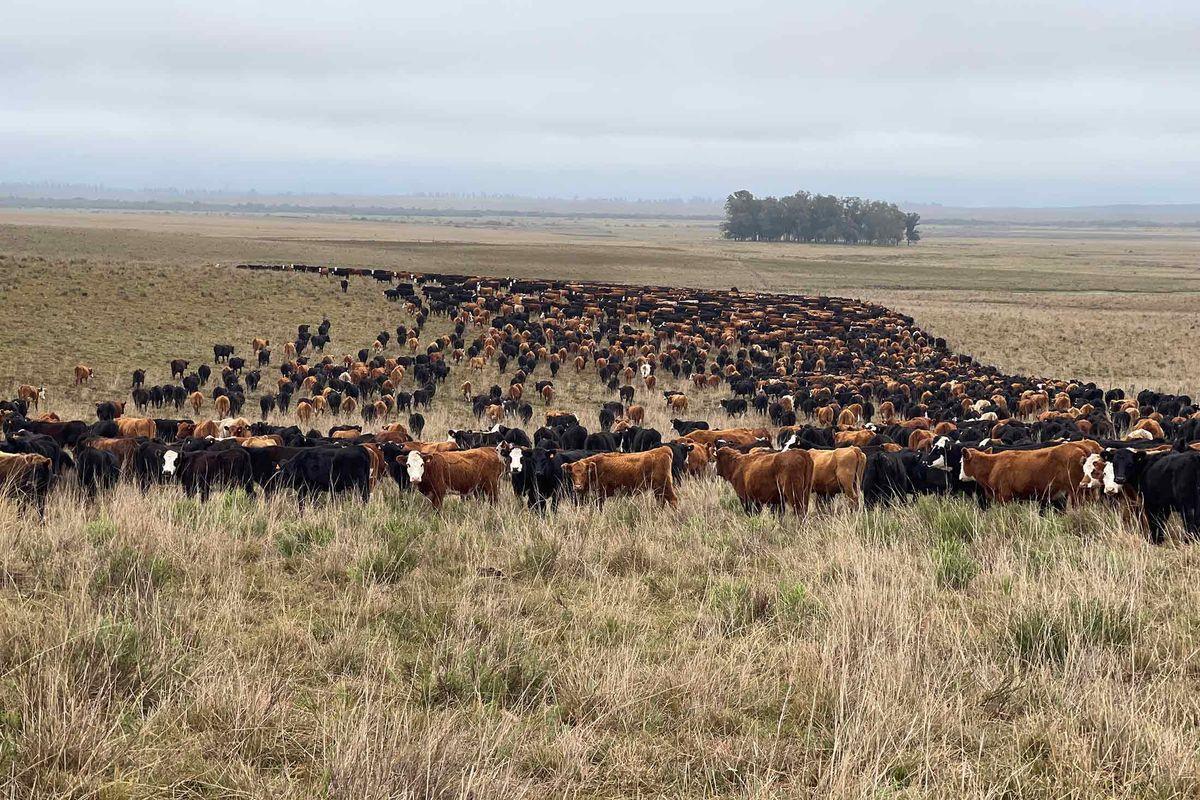
SAPS gathering stolen cattle during a three day district raid in February 2025
The police have increased patrols and deployed a livestock theft unit in hotspot areas, including parts of Ezulwini and Lobamba.
Officers are also working with local leaders to strengthen neighbourhood watch programs. Farmers are being urged to brand their livestock, reinforce their kraals, and report any suspicious activity immediately.
However, some residents feel that authorities are still a step behind.
“We keep reporting, but by the time police arrive, it’s too late,” said Sipho Dube, another farmer who recently lost four goats.
Investigations suggest that stolen livestock is being trafficked across the border to South Africa or Mozambique, where the animals are either sold at auction or slaughtered for meat. The porous borders have long been a problem for security forces, who say it’s difficult to intercept smugglers without improved surveillance.
Jabulani Simelane, a farmer from the Mzilikazi area who lost 40 cattle last year, suffered a mild stroke after the incident. In an interview with Eswatini Farming, he said the theft left him devastated.
“Cattle are not just animals for us; they are our investment, our bank. I used to sell one cow to pay for my children’s school fees and put food on the table,” he said.
In addition, he said the psychological toll was also evident as they started to fear for their life, not just livestock.
Eswatini’s Prime Minister, Russell Mmiso Dlamini, in his strategic plan, addressed the issue, acknowledging the impact on communities.
“These criminals are targeting the core of our rural economy. We urge every citizen to stay vigilant and report suspicious movements, especially in border areas. The government is also exploring the use of drones and surveillance tools to help monitor livestock corridors,” he said.
In 2023, the Ministry of Agriculture introduced a proposal to microchip livestock, which would help track their movement and curb illegal sales.
Stock theft
However, funding and implementation remain challenges. The technology exists, but the rollout depends on budget allocations and community readiness, according to the Ministry. Despite the government’s assurances, local farmers say they feel largely unprotected. As they have been forced to become security guards.
Some have taken to reinforcing their kraals with barbed wire, installing lights, and using bells to detect movement at night. In some areas, farmers have begun organizing voluntary patrol units, hoping to deter thieves through visibility and quick alerts.
Still, many believe the solution lies in collaboration. The police, border officials, and farmers were implored to sit down and come up with a real plan. Meanwhile, experts in agricultural security warn that failure to address livestock theft could destabilize the rural economy.
“Livestock is not just a commodity; it is capital; it is survival,” said economist Zanele Simelane.
She further mentioned that the longer they allow syndicates to operate unchecked, the deeper the wound becomes.
Source: Eswatini Daily News
For More News And Analysis About Eswatini Follow Africa-Press