Africa-Press – Eswatini. The Ministry of Education and Training does not have the authority to decide who graduates and who does not, the University of Eswatini (UNESWA) has said.
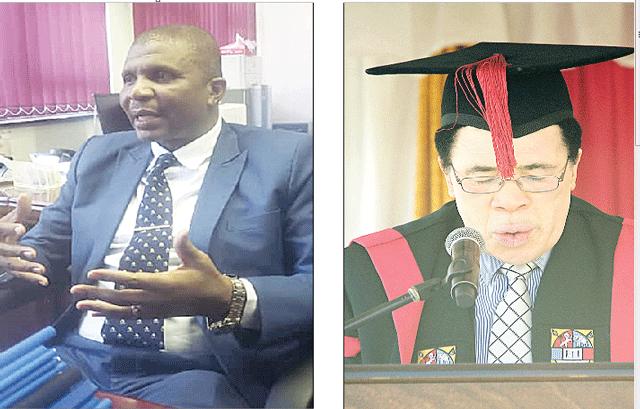
The university’s position is in response to assertions by the Principal Secretary Bheki Gama, that the class of 2021 would not graduate unless they completed all their lessons.
Gama last week warned that students who did not attend the required number of lessons would not be allowed to sit for exams, nor would they be allowed to graduate. According to the PS, the ministry would not ignore the fact that students did not learn and were not prepared to sit for the examinations, adding that all institutions would have to prove that students who sat for the exam had attended the expected minimum number of classes to qualify.
However, UNESWA holds a different perspective to that of the ministry on the graduation issue, saying the ministry had no say on this subject.
Dr Salebona Simelane, UNESWA Registrar, categorically stated that it was not the ministry to decide who passed or failed at the university.
The registrar acknowledged that the ministry was a very important stakeholder and that the UNESWA Senate would listen to the ministry and take into consideration suggestions that meet international standards and adjust its regulations when it was necessary.
That, however, has not happened yet, said Dr Simelane.
He explained that the university operates the academic system through Academic General Regulations that are passed by the University Senate.
“These regulations are proposed by academics, debated, benchmarked against what happens in other universities, approved by the Senate for implementation and incorporated into a set of regulations dealing with the programme structure, assessment of courses and progression from year to year,” said Dr Simelane. “Unfortunately, this requirement by the ministry (which would be a proposal at this stage) has not made its way to the university.
“If it did, it would have to pass through the foregoing process.”
Dr Simelane said students worldwide were admitted into universities in accordance with the academic regulations or requirements of those universities.
“They are taught according to set standards of those institutions too. They are assessed in accordance with standards that are set by their academic bodies which, in the case of the University of Eswatini, is the Senate.
It is the University Senate that can decide if the standards which compare with international standards where the university is accredited, are met or not,” he explained
As things stand at UNESWA, students are supposed to be taught for at least 12 weeks per course, be assessed in at least two pieces of work and sit for an examination in each of the courses in order to proceed from year to year.
For the first semester of 2021/2022, students were taught through blended learning to cover at least 12 weeks as per Senate’s decision, according to Dr Simelane.
“At least six weeks of face to face teaching and five weeks of online teaching have been completed despite the delays that have been experienced during the first part of 2022,” he added.
He said an assessment for at least two pieces of work ought to be completed before examinations were taken in each course and it was expected that for those courses where the foregoing requirement had not been met, next week would be used to meet it.
For More News And Analysis About Eswatini Follow Africa-Press