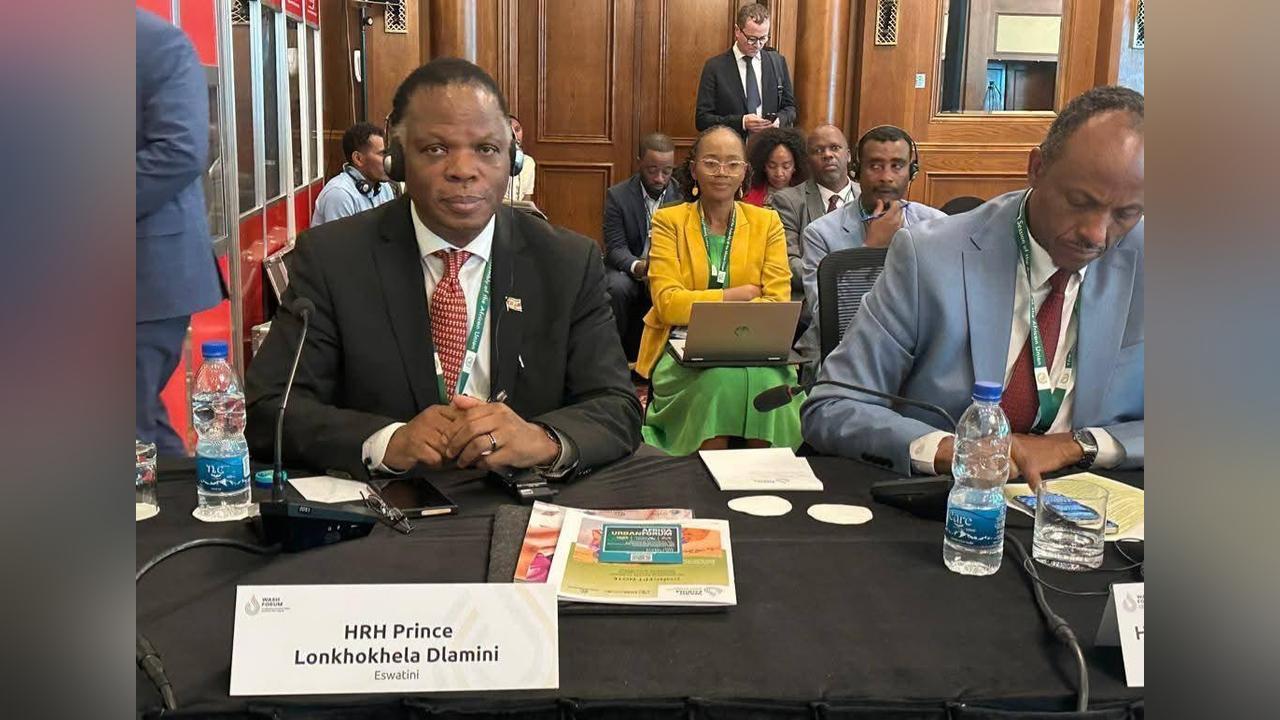
Africa-Press – Eswatini. Eswatini has reaffirmed its commitment to strengthening water security and sustainable development, with the Minister of Natural Resources and Energy, HRH Prince Lonkhokhela, attending a High-Level Session on Water Investment held on the sidelines of the 39th Ordinary Session of the African Union Summit of Heads of State and Government.
According to information from the Ministry of Natural Resources and Energy, the strategic session, convened under the theme “Water for People and Prosperity, through Cooperation and Investment in Water”, brought together ministers, development partners, financial institutions and water sector experts from across the continent. The discussions centred on mobilising sustainable financing for water infrastructure, improving governance in the water sector, and accelerating Africa’s progress towards universal access to safe water and sanitation.
Advancing Water Security for Development
Water security remains a critical pillar for economic growth, agricultural productivity, public health and climate resilience. During the session, delegates explored innovative financing models, including blended finance, public-private partnerships and climate adaptation funds, to unlock greater investment in water infrastructure.
For Eswatini, the meeting provided an opportunity to align national priorities with continental strategies under the African Union’s Agenda 2063 and the Sustainable Development Goals (SDGs), particularly SDG 6, which focuses on clean water and sanitation for all.
Prince Lonkhokhela’s participation underscores the Kingdom’s recognition that water is not merely a social service, but a strategic economic asset that underpins agriculture, energy production, tourism and industrial development.
Eswatini’s Continental Representation
Welcoming delegates to the session was Eswatini’s own Moses Vilakati, African Union Commissioner for Agriculture, Rural Development, Blue Economy and Sustainable Development (ARBE). His presence at the helm of the discussions highlighted Eswatini’s growing influence within continental policy structures.
Commissioner Vilakati emphasised that investment in water systems must go beyond infrastructure to include governance reforms, data systems and community engagement. He noted that resilient water systems are essential for food security, particularly as climate variability continues to affect rainfall patterns across Africa.
Relevance to Eswatini’s National Agenda
Eswatini has made notable strides in expanding access to potable water in both urban and rural areas. However, challenges remain, particularly in drought-prone regions and rapidly growing peri-urban settlements.
Participation in the high-level dialogue provides the Kingdom with access to technical expertise and funding partnerships that can strengthen initiatives such as:
• Expansion of rural water supply schemes
• Rehabilitation of ageing water infrastructure
• Investment in dam construction and bulk water storage
• Climate-resilient irrigation systems for smallholder farmers
The Ministry of Natural Resources and Energy has been prioritising integrated water resource management to ensure that water use across domestic, agricultural and industrial sectors remains sustainable.
Strengthening Regional Cooperation
The meeting also reinforced the importance of cross-border water cooperation, particularly for countries sharing river basins. Eswatini shares several key water resources with neighbouring states, making collaboration essential for equitable and sustainable utilisation.
Delegates agreed that improved coordination, data sharing and joint investment frameworks are necessary to prevent water-related conflicts and to promote shared prosperity.
Looking Ahead
As Africa confronts the twin pressures of climate change and population growth, investment in water infrastructure is increasingly recognised as urgent. The High-Level Session served as a platform to galvanise political will and financial commitments towards closing the continent’s water investment gap.
Eswatini’s active participation signals its determination to remain engaged in continental solutions that directly benefit its citizens. By positioning water as a driver of prosperity and resilience, the Kingdom continues to contribute meaningfully to Africa’s collective development agenda.
The outcomes of the session are expected to inform further discussions at the African Union Summit, where Heads of State and Government are deliberating on strategies to accelerate sustainable development across the continent.
For Eswatini, the message is clear: investing in water is investing in people, productivity and long-term national prosperity.