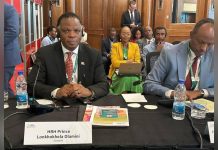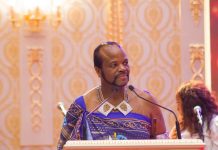
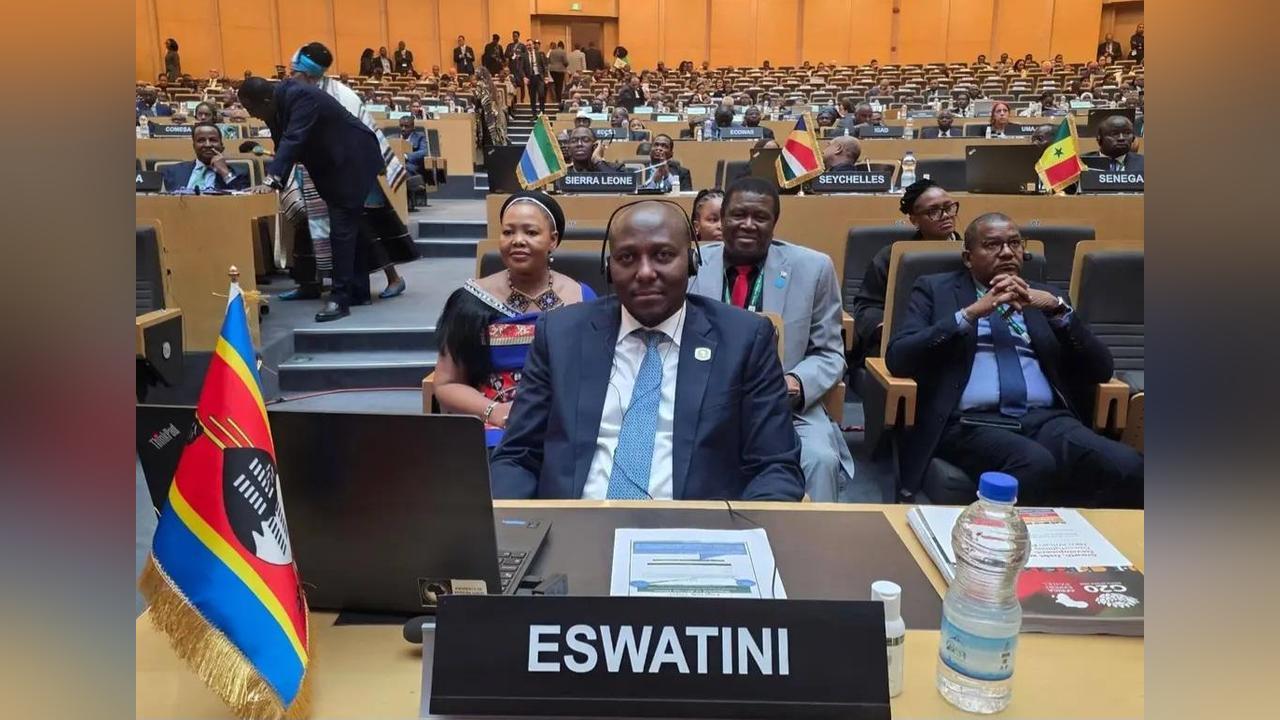
Africa-Press – Eswatini. The Prime Minister, Russell Mmiso Dlamini, represented His Majesty King Mswati III at the 39th Ordinary Session of the African Union (AU) Heads of State and Government Summit.
The Prime Minister arrived yesterday morning and joined fellow Heads of State and Government to deliberate on key continental priorities.
He witnessed the official opening of the AU Summit, which was conducted by His Excellency João Manuel Gonçalves Lourenço, President of the Republic of Angola and outgoing Chairperson of the organisation.
The PM also witnessed the formal handover of the AU chairmanship from President Lourenço to the Republic of Burundi, led by His Excellency President Evariste Ndayishimiye.
In his remarks, the outgoing chairperson called for accelerated action to ensure sustainable water availability and safe sanitation systems, in line with the AU’s 2026 theme.
He described access to water as a political, moral and strategic priority that is essential for Africa’s development, public health, food security and stability.
According to the AU website, President Lourenço reflected on Angola’s year as Chair, highlighting progress in advancing Agenda 2063, mobilising investment for infrastructure, strengthening continental integration through the African Continental Free Trade Area (AfCFTA), and promoting reforms aimed at improving AU efficiency and reducing bureaucracy.
On peace and security, President Lourenço stressed that Africa’s development depends on “silencing the guns” and addressing ongoing conflicts, particularly in Sudan and the Democratic Republic of the Congo, as well as combating terrorism in the Sahel and the Horn of Africa.
Meanwhile, the Eswatini Prime Minister also witnessed an address by the Chairperson of the AU Commission, His Excellency Mahmoud Ali Youssouf.
The Chairperson framed the summit around the 2026 theme of water and sanitation, describing access to water as a collective good that must promote both development and peace.
During the engagements, African leaders deliberated on the AU Theme of the Year 2026, titled: ‘A Call to Action for Safe Water and Sanitation to Drive Africa’s Development Agenda’.
The theme was formally adopted. In a statement shared on the AU website, it was noted that as leaders and citizens rally together in pursuit of a healthier and more prosperous Africa, water and sanitation must take centre stage to bring hope and opportunity to millions of citizens. The organisation will therefore prioritise sustainable water and sanitation systems in 2026 as a pivotal step towards realising the health aspirations of Agenda 2063.
It was further highlighted that the theme underscores the critical importance of water and sanitation in driving Africa’s development agenda and addressing the continent’s pressing challenges.
The adoption of the Africa Water Vision 2026 was also emphasised as a strategic framework aimed at fostering inclusive and climate-resilient water security across the continent. This approach is expected to pave the way for integrated water resources management within the Water, Energy, Food and Ecosystems (WEFE) nexus framework, while promoting a new narrative that recognises the vital role of water in economic growth, job creation and industrialisation.
Additionally, the Department of Agriculture, Rural Development, Blue Economy, and Sustainable Environment (ARBE), which is responsible for promoting sustainable agricultural development, rural economic growth and environmental sustainability across Africa, is championing the implementation of the AU Theme of the Year 2026 in alignment with AU Assembly Decisions.
The AU further revealed that it is in the process of developing an all-inclusive implementation strategy for the 2026 water and sanitation theme.
This strategy will feature innovative solutions and actively involve youth, women and marginalised communities, recognising their critical role in driving sustainable change.
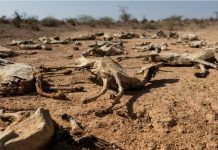
“Water scarcity and supply disruptions limit economic growth. Exacerbated by climate change, water scarcity is also a contributing factor to migration, while the transition to a greener economy enhances opportunities for decent jobs,” reads part of the AU statement.
PM holds bilateral talks with Kenya, Zambia and Uganda leaders
ADDIS ABABA – As a representative of His Majesty King Mswati III, Prime Minister Russell Mmiso Dlamini held bilateral talks with several leaders attending the African Union Summit.
He began by engaging in a closed meeting with the President of Zambia, His Excellency Hakainde Hichilema, who received a special message from His Majesty King Mswati III.
The PM also held bilateral discussions with the President of Kenya, William Ruto, and met with the President of Angola, João Lourenço.
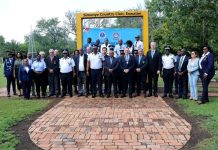
In addition to the bilateral engagements, the PM participated in the official AU Heads of State family photograph session.
He also met with the President General of the African Indigenous Governance Council, His Majesty Robinson Tanyi, who conveyed a special message for His Majesty King Mswati III.
Although the engagements were private and the media was not permitted to attend, the Office of the Prime Minister, through Deputy Government Spokesperson Thabile Mduli, shared that discussions included resource mobilisation efforts led by His Majesty King Mswati III in his role as Champion of Resource Mobilisation for the Organisation of African, Caribbean and Pacific States (OACPS).
Notably, a delegation from the OACPS, led by Secretary-General His Excellency Moussa Saleh Batraki, was also in attendance at the AU Summit.
The King was invited by Member States to assume the role of Champion for Resource Mobilisation. Through this assignment, he commissioned Prime Minister Russell Mmiso Dlamini to galvanise Member States and unite them in solidarity to pursue a common purpose — namely, the reconfiguration and repurposing of the organisation.
The OACPS was born out of a shared vision that countries of the Global South would unite to defend their common interests, strengthen their autonomy, and establish a model of cooperation founded on equity, solidarity and mutual respect.
In the mid-1970s, amid profound economic and geopolitical transformations, nations of Africa, the Caribbean and the Pacific sought to create a common space for dialogue — a platform where their voices could converge around major development challenges.
This vision materialised through two foundational milestones. The first was the Lomé Convention, signed on 28 February 1975 in Togo, which established an unprecedented partnership framework between 46 African, Caribbean and Pacific countries and the European Economic Community. The second was the Georgetown Agreement, signed on 6 June 1975 in Georgetown, Guyana, which gave birth to the ACP Group — an intergovernmental alliance designed to coordinate cooperation among countries of the Global South and with their international partners.
Over the decades, the alliance evolved into a fully-fledged international organisation — the OACPS.
Botswana President recognises Eswatini’s malaria fight
ADDIS ABABA – The Kingdom of Eswatini’s efforts to eliminate malaria have not gone unnoticed.
The President of Botswana, Advocate Duma Boko, cited Eswatini as one of the countries on the right trajectory in the journey towards malaria elimination.
President Boko made the remarks at the 39th Ordinary Session of the African Union Summit in Addis Ababa, Ethiopia, during a high-level press conference held under the theme of Sustainable Malaria Financing.
Speaking in his capacity as Chair of the African Leaders Malaria Alliance (ALMA), the President noted that Eswatini and several other countries are on track to win the battle against malaria, but emphasised that more work remains to be done.
Founded in 2009, ALMA is a groundbreaking coalition of African Heads of State and Government working across national and regional borders to achieve a malaria-free Africa by 2030.
This is not the first time this year that Eswatini’s efforts have been recognised at a high-level meeting.
During the 76th East, Central and Southern Africa Health Community (ECSA-HC) Health Ministers Conference held recently, the Kingdom of Eswatini was referred to as one of the countries on course to achieve malaria elimination.
The acknowledgement was made by former President of Tanzania, Jakaya Mrisho Kikwete, who praised the country’s proactive and sustained efforts in combating the disease.
Kikwete made the remarks while delivering a keynote address at the Health Financing Dialogue on “Value for Money, Value for Health: Optimising Investments in Health Systems”, held in Ezulwini as part of the build-up to the conference.
The former Tanzanian leader, who is also a member of the End Malaria Council, described Eswatini as a regional example of commitment and innovation in malaria control.
He cited the establishment of the End Malaria Fund Eswatini as clear evidence of political will and strategic focus, noting that such initiatives place the country on a firm path towards elimination.
He further emphasised that financing solutions must address the real challenges facing communities — the true beneficiaries of health services — and urged leaders to ensure that health investments translate into measurable outcomes on the ground.
Meanwhile, the AU website reported that Member States account for 96 per cent of global malaria cases and 97 per cent of malaria-related deaths.
It further highlighted that progress against malaria has stalled since 2015, and that a projected 30 per cent reduction in funding could lead to 146 million additional cases and 397,000 preventable deaths by 2030.
The high-level press conference took place amid what has been described as an unprecedented “perfect storm” of challenges facing elimination efforts, including critical financial shortfalls, climate-driven surges, and rising insecticide resistance.
In addition to the Botswana President, other dignitaries outlined priorities under the “Big Push” Against Malaria. These include advancing health sovereignty through local manufacturing, addressing the 70 per cent drop in Official Development Assistance (ODA) through domestic resource mobilisation and End Malaria Councils, and deploying next-generation tools to counter insecticide resistance and climate-related outbreaks.