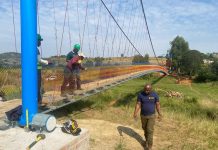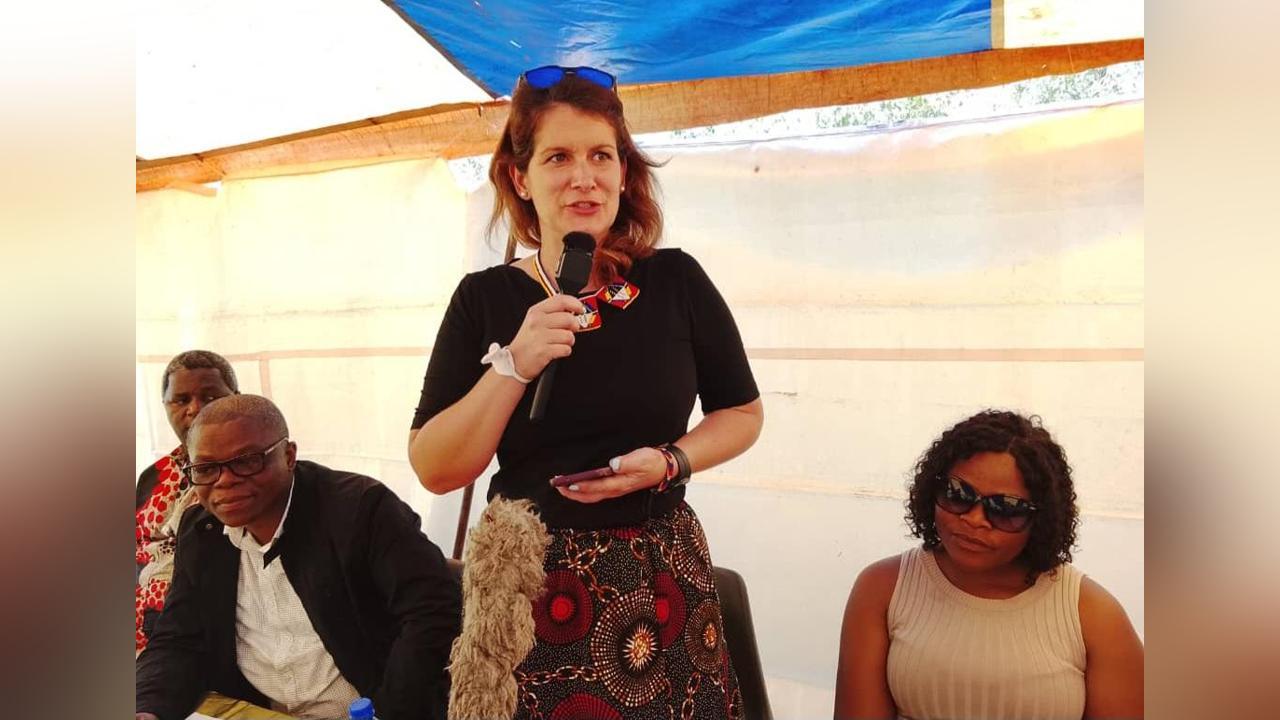
Africa-Press – Eswatini. Government, through the Ministry of Economic Planning and Development, under it’s Microprojects wing, in collaboration with Engineers in Action have officially launched the 40th footbridge in Eswatini and the project has been described as the most challenging, connecting three communities surrounding the mighty Nkomanzi River.
The benefitting communities from this project are Malanti, Luvinjelweni and KaNdeva.
Microprojects’ Simphiwe Nhlapho explained to residents on how the project was to be carried out.
EIA Programme Manager Ana Jovanovic said her colleagues first visited in 2021, and again in 2022 and 2023, to assess the condition of the existing bridge.
“When we returned in 2025, it became very clear: the time had come.
It is time to build a new bridge after 20 years. It is time to give our colleagues from Malolotja a chance to breathe, without the constant need for repairs.
Most importantly, it is time for this community, for school children, families, and everyone in these communities to have a safe and reliable crossing,” she said.
EIA have now been working in the country for nine years. During this time, they have built 36 bridges across Eswatini, and they are currently constructing three more.
“Tomorrow, we will be launching our 37th bridge. Tintfutfwini suspended footbridge will be our 40th, a significant milestone and a proud achievement for us. What excites me most about this project is the strong commitment from this community. We have held many meetings, discussing safety, preparations, and the work that lies ahead,” said Jovanovic.
Each time, she said, they have seen great participation, and that give them confidence that this will be a successful project.
“However, let me be clear, this will not be an easy project. As we discussed in our recent meeting with community leadership, we are starting earlier than usual because we anticipate challenges. These include excavation difficulties, transporting materials, and installing cables across a deep river. This is why it is critical that we work together and stay committed every single day,” she said.
She noted that if they are to meet their target of unavailing the bridge on July 16th, they will need everyone’s support, assisting engineers, supporting volunteers, ensuring materials are ready, and strictly following safety procedures.
She thanked everyone who had contributed. Jovanovic said they have seen great progress—the rocks have been delivered, and there has been strong activity on site.
“We are still expecting sand and other materials, but your efforts have not gone unnoticed. I would also like to extend special thanks to Malolotja Game Reserve for providing a tractor. This is a significant contribution, as moving such large quantities of material manually would be extremely difficult.”
She added that this will be a tall, three-tier suspended bridge.
As the Program Manager, she said her top priority was safety. She said the project presented unique challenges as they are to work over a deep river, unlike the seasonal rivers they are used to.
“We will be using new technology for the first time in Eswatini, with support from our international team, including directors from the United States.
I am not saying this to alarm you, but to emphasize the level of care and preparation required,” she noted.
Jovanovic emphasized on strictly following all safety protocols. The community leadership has already been briefed. This includes movement restrictions, safe working practices, and precautions against wildlife such as hippos, crocodiles, pythons, and even black mambas.
“This will be a demanding three-month journey, but also an exciting one.
On May 25th, we will welcome a team of volunteers from the United States, 12 students, along with professors and professional engineers who will work alongside you to build this bridge.”
For More News And Analysis About Eswatini Follow Africa-Press