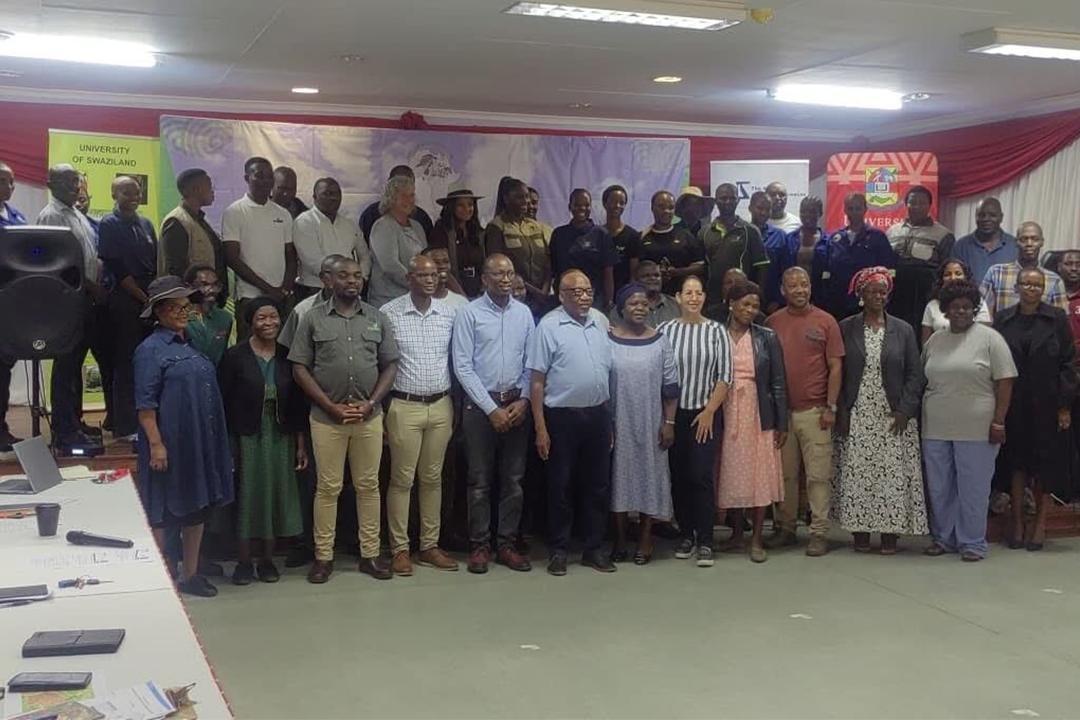
Africa-Press – Eswatini. A major step toward sustainable agriculture and farmer-led innovation was marked with the official launch of the Agroecology Demonstration Site at Luyengo, bringing together partners committed to transforming food systems through knowledge sharing, experimentation, and climate-resilient farming practices.
The initiative is led by PELUM Eswatini in partnership with University of Eswatini and Eswatini Coffee, strengthening collaboration between researchers, farmers, and the private sector in advancing agroecological solutions tailored to local conditions.
The demonstration site serves as a living classroom where farmers are actively engaged in farmer-driven research, practical experimentation, and learning exchanges designed to improve productivity while protecting the environment. The approach places farmers at the centre of agricultural innovation, enabling them to test, observe, and adopt practices that best suit their contexts.
At the heart of the site are Eswatini Coffee production trials, featuring both Manzini and Arabica varieties grown under two distinct conditions—shade and open field. This setup allows farmers to directly compare growth patterns, crop performance, and adaptability under varying environmental conditions, offering valuable insights into climate-smart coffee production.
Alongside coffee trials, the site showcases a variety of sweet potatoes, including Melinda, Namanga, and Ininda. These crops highlight the importance of diversification within farming systems, a key principle of agroecology that enhances food security, soil health, and resilience against climate shocks.
Farmers participating in the programme are benefiting from hands-on learning sessions where they are exposed to improved agronomic practices, sustainable soil management techniques, and adaptive crop production strategies.
These practical engagements are equipping them with the knowledge needed to make informed decisions that strengthen both productivity and sustainability.
The initiative is more than a research site—it is a movement toward building resilient farming communities. By combining indigenous knowledge with scientific research, the programme is fostering innovation that is both locally relevant and environmentally responsible.
The collaboration also reflects a shared commitment to climate justice and sustainable development, ensuring that smallholder farmers—who are often most affected by climate change—are empowered with tools and knowledge to adapt and thrive.
As the demonstration site takes root in Luyengo, it is expected to become a regional hub for agroecology learning, attracting farmers, students, and researchers eager to explore practical solutions for sustainable agriculture.
Ultimately, the initiative is building knowledge, strengthening community resilience, and transforming agricultural systems through agroecology—one demonstration at a time.
For More News And Analysis About Eswatini Follow Africa-Press