Africa-Press – Eswatini. The Eswatini Housing Board (EHB) has injected E354 million into the country’s economy through housing development, land sales, job creation, and community infrastructure, according to information from the Ministry of Housing and Urban Development.
The contribution comes as Eswatini marks 40 years of King Mswati III’s reign, during which the Housing Board has expanded its role in providing accessible and dignified housing for emaSwati.
Under the ministry, where EHB operates as a parastatal, the organisation has built 1 259 houses and sold 4 939 residential plots, generating significant economic activity while supporting national development priorities.
Housing Growth Supports Jobs and Enterprise
Beyond the direct financial injection, EHB’s projects have contributed to employment creation, skills development, and the growth of local enterprises involved in construction and related industries.
Officials indicated that the organisation’s developments have also improved community wellbeing by providing secure housing, serviced land, and access to essential infrastructure.
The Housing Board remains central to national development efforts, with future priorities focused on innovation, sustainability, and inclusive growth to meet rising housing demand.
Established to Provide Dignified Housing
Known locally as Luphahla, the Eswatini Housing Board was established on 1 March 1988 under the Eswatini Housing Board Act.
Its creation followed rapid industrial growth between 1969 and 1978 in centres such as Matsapha, Ngwenya, and Nhlangano, which triggered urban migration and housing shortages.
Earlier housing initiatives, including partnerships with companies such as Mhlume Sugar Company, exposed the need for a coordinated national housing strategy.
The Industrial Housing Company, formed in 1978, later evolved into the Housing Board in 1988, broadening its mandate from property management to full-scale housing development.
Expansion Into Planned Communities
Initially focused on managing estates, EHB later shifted towards planned community development, ensuring access to water, roads, sanitation, and other services.
Early projects included Sidwashini and Msunduza Extensions in Mbabane, as well as Two Sticks developments in Manzini, Nhlangano, and Siteki.
These were followed by major township developments such as Embangweni, Helemisi, Makholokholo, Nkhanini, Mabuya, and Mhobodleni.
Officials said the emphasis has always been on building communities rather than simply constructing houses.
Current Portfolio and Landmark Projects
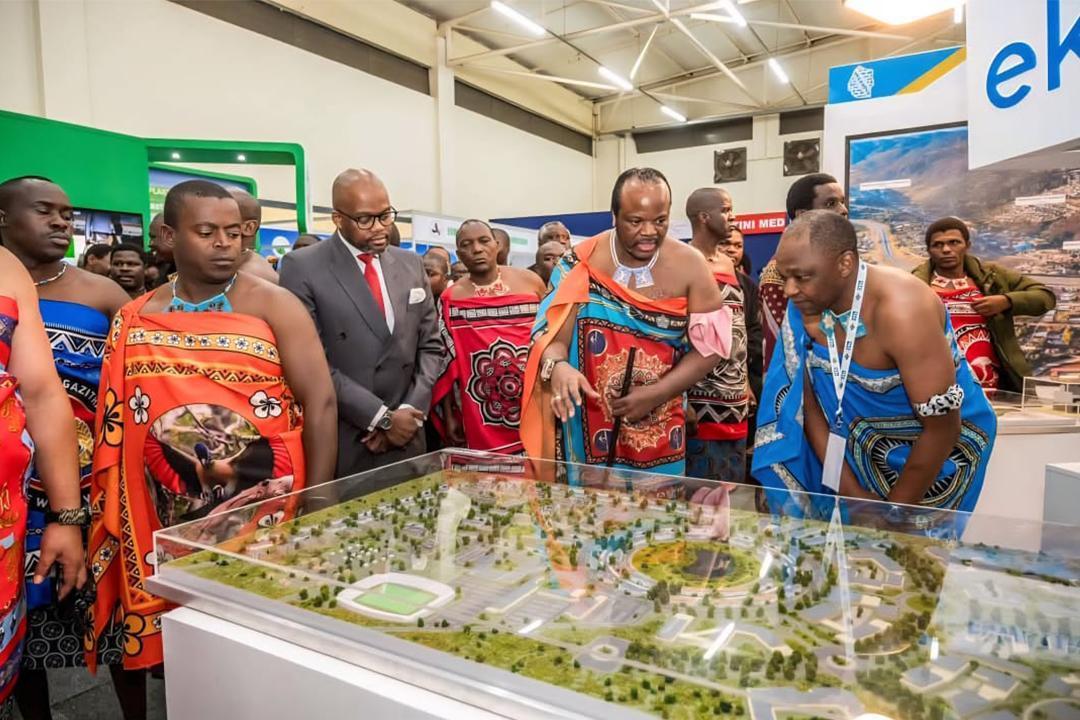
Today, EHB manages more than 1,000 residential units with occupancy rates above 95 per cent across areas including Matsapha, Mbabane, Manzini, and Ngwenya.
It also oversees commercial properties that support local economic activity and provides affordable rental structures aimed at working families, young professionals, and first-time urban residents.
Among its landmark projects are:
Msunduza Extension 4 – 1 794 serviced plots
Sidwashini Extension 25 – more than 200 plots
Two Sticks upgrades – 552 plots across regions
Woodlands Extensions 1 and 2 – 430 residential units and the Woodlands Shopping Centre
Institutional Housing for Essential Workers
One of the major initiatives under the Board has been the Institutional Housing Project (IHP), launched by the King in 2009.
The programme delivered more than 590 housing units for members of the Police Service, Correctional Services, Fire and Emergency Services, the Ministry of Health, and the KMIII Estate.
The project significantly improved living conditions for key public sector workers.
Legacy Beyond Buildings
Officials said the Housing Board’s greatest achievement lies not only in buildings, but in transformed communities, improved lives, and strengthened national pride.
Its mission remains to provide dignified housing so that every Liswati can proudly say, Naku Ekhaya – here is home.
For More News And Analysis About Eswatini Follow Africa-Press