Africa-Press – Eswatini. Eswatini’s foreign policy of maintaining no enemy, widely known as Asinasitsa, has enabled the country to advance with stability in a world increasingly marked by conflict and geopolitical tension.
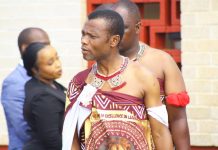
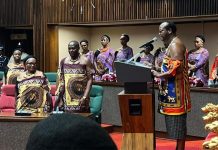
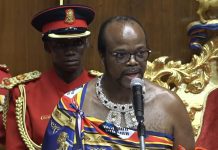
This was highlighted by Senate President Lindiwe Dlamini on Friday, 20 February 2026, during the State Opening of the Third Session of the 12th Parliament. Dlamini was delivering welcoming remarks to His Majesty Mswati III and, by extension, Her Majesty the Indlovukazi, thanking them for gracing the occasion. Her address also formally introduced the King to deliver the Speech from the Throne.
Dlamini said Eswatini’s long-standing diplomatic approach of friendship and non-hostility had provided a firm foundation for peace and continuity. In an era characterised by wars, economic uncertainty and strained international relations, she noted that the Kingdom had remained stable, able to focus on development and nation-building.
She further informed His Majesty that, in line with his vision of bringing Government closer to the people, legislators had embarked on an initiative to take Parliament to the grassroots. The outreach began in the Manzini Region, where Members visited Mangcongco Inkhundla and Nkamanzi Chiefdom under Ludzeludze Inkhundla. The visits were aimed at strengthening engagement with communities and ensuring that parliamentary processes remain accessible and responsive to citizens.
Dlamini reported that Parliament had successfully passed 19 principal Acts and six instruments of subordinate legislation. These measures, she explained, were designed to ensure that the country’s legal framework reflects the current aspirations of emaSwati while safeguarding the peace and stability experienced during the King’s four decades of leadership.
She also noted that legislators continued to participate actively in key regional, continental and international parliamentary bodies, where they had contributed diligently and earned the respect of their counterparts. Such engagements, she said, reinforced Eswatini’s diplomatic standing and aligned with the spirit of Asinasitsa.
Looking ahead, Dlamini announced plans to launch a historical publication chronicling the development of Eswatini’s Legislature from 1967 to the present day. Parliament would also unveil a fully equipped studio to facilitate the live broadcasting of proceedings, a move expected to enhance transparency and public access. The studio was officially opened by His Majesty.
She added that Parliament’s calendar would be particularly busy this year, as the country prepares to host the 60th SADC Parliamentary Forum Plenary Assembly and the 23rd SADC Organisation of Public Accounts Committees Conference, further cementing Eswatini’s active role within the regional bloc.