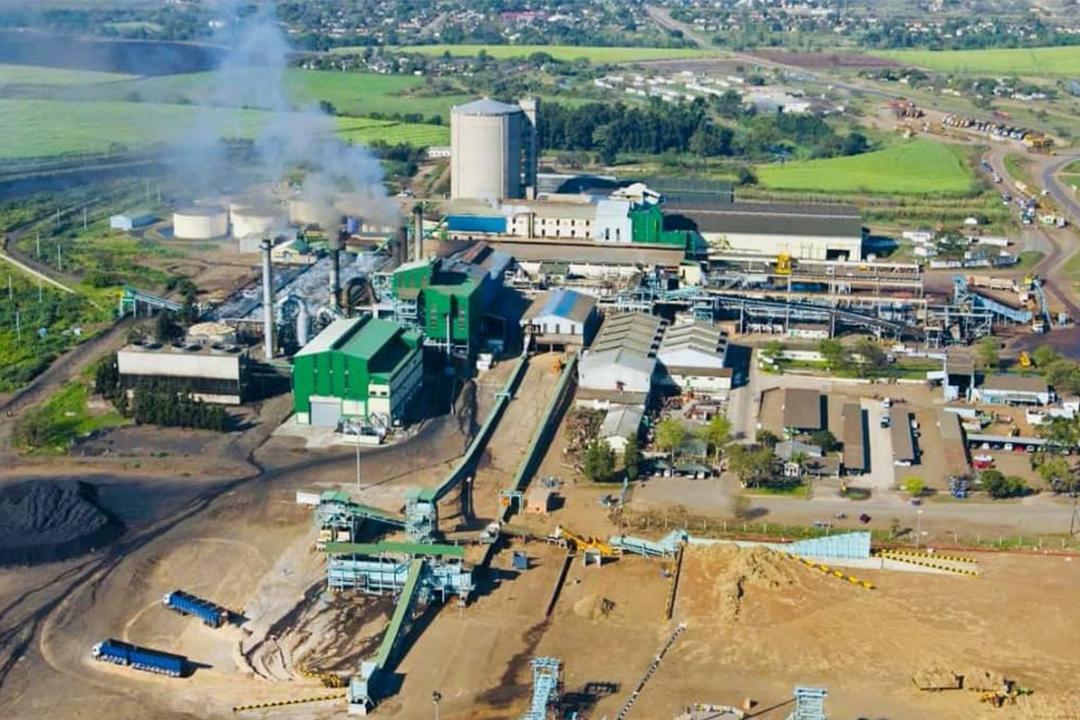
Africa-Press – Eswatini. The Eswatini Electricity Company (EEC) has invested E150 million to secure exclusive rights to purchase surplus electricity generated by Ubombo Sugar Limited, a move expected to strengthen national power supply and support energy security.
According to the EEC Integrated Annual Report for the year ended 31 March 2025, the full E150 million had been paid to Ubombo Sugar Limited by the end of the reporting period. The agreement grants EEC exclusive access to Ubombo Sugar’s surplus electricity for a contract period of 15 years, running until 30 April 2026.
The report further states that either party may elect to terminate the contract after eight years. Should early termination occur, a portion of the E150 million would be refunded to EEC, calculated according to the remaining years not utilised within the 15-year agreement.
To safeguard the transaction, Ubombo Sugar Limited issued a guarantee backed by its parent company, Illovo Sugar Limited, amounting to E150 million. In addition, Ubombo Sugar lodged performance security in favour of EEC to the same value through mortgage bond sureties over its property. This security reduces annually in line with the unamortised balance of the original payment.
Meanwhile, the report notes that E11.2 million was paid by the Government of the Kingdom of Eswatini during the construction of the Maguga Dam Hydroelectric Project. This amount is payable to government as a loan which does not bear interest and is unsecured. However, EEC is currently negotiating with government for the amount to be converted into a grant, although the outcome of these discussions remains uncertain.
In a significant development for Eswatini’s energy sector, EEC and Ubombo Sugar Limited entered into a Power Purchasing Agreement (PPA) valued at E2.4 billion on 8 December 2025. Under this agreement, Ubombo Sugar will expand its co-generation power plant, adding 24 megawatts (MW) to the national grid.
Once fully operational by June 2028, the expanded facility is expected to export up to 40MW to the grid and supply approximately 141 gigawatt hours (GWh) annually. This represents around 14 percent of Eswatini’s total electricity demand, contributing meaningfully to reduced electricity imports and enhanced energy self-sufficiency.
The partnership reflects growing collaboration between public and private sector players in strengthening Eswatini’s power generation capacity and advancing sustainable energy solutions.
For More News And Analysis About Eswatini Follow Africa-Press