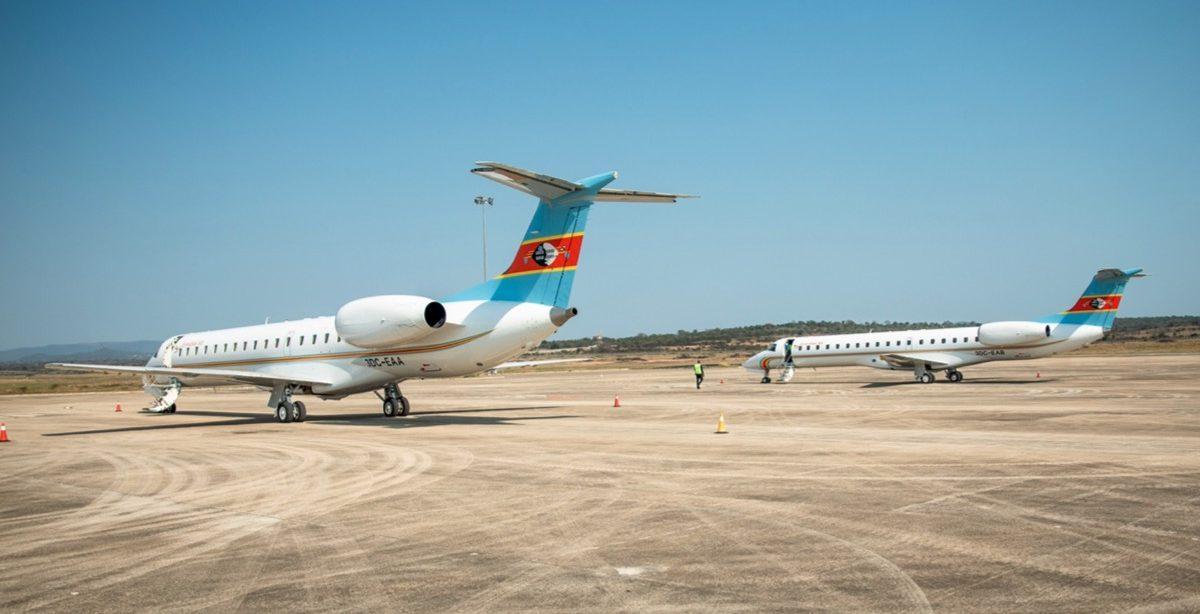
Africa-Press – Eswatini. Eswatini Air currently faces challenges from direct competition on the Johannesburg route, which has exposed the airline’s need to wrestle back the market share and strengthen its position.
The airline is faced with competition with a well-established airline that has been in the business for a very longtime and has built strong interlining (collaboration) mechanisms with several airlines outside its own network in Africa.
The airline’s collaborative mechanisms come with market credibility, a specification that Eswatini Air is tackling well, with on-time-performance and schedule completion rates hovering very close to 100 per cent.
According to Eswatini Air Marketing and Communications Manager Batsabile Nkambule, there were two main challenges on the Johannesburg route that Eswatini Air was addressing.
“The first challenge relates to slots availability,” she said.
She explained that in the airline industry, slots, which referred to arrival and departure times, were managed and that most of the highly-desirable slots are already taken-up by existing operators.
“Therefore, new entrants like Eswatini Air start from a position of disadvantage,” she stated.
Nkambule highlighted that Eswatini Air, therefore, recently rescheduled its flights.
“With its latest schedule, Eswatini Air has made some in-roads to remedy this situation and efforts in this regard will continue with each scheduling season,” she said.
Nkambule further highlighted that the second and probably the most difficult challenge related to interlining.
Airline
“Interlining refers to the airline industry framework that governs the relationship between two airlines that allows one airline to sell services provided by another airline to a customer,” she said.
Nkambule indicated that airlines used interline to sell itineraries that they would otherwise not be able to serve alone.
“Nowadays, interlining arrangements require the IATA Operational Safety Audit (IOSA) certification. In order to secure this certification an airline has to operate for a given period of time (usually, at least 6 months) and then IATA (the International Air Transport Association) certified auditors need to schedule and complete an audit,” she said.
The airline’s mouthpiece highlighted that the process usually took about a year.
“It is only after securing IOSA certification that Eswatini Air can start interlining discussions,” she said.
Nkambule further highlighted that the airline had the desire to interline, however interlining was usually dependent on traffic volumes as interlining implementation costs (system-to-system linkups) which were expensive.
“This poses another hurdle.
However, Eswatini Air has found other ways of addressing these challenges and has arranged indirect interlining facilities to ensure connecting passengers through OR Tambo and other points such as Cape Town and Harare are able to book and ticket through to their final destinations,” she said.
Nkambule added that arrangements of that kind were also under implementation to expand options for our esteemed customers.
“The feedback we are getting on our in-flight services also gives us cause for optimism,” Nkambule said.
She added that Eswatini Air believed that the airlines’ revamped schedule would give customers improved connectivity options out of OR Tambo which would enhance the popularity of the airline’s flights considering the desirability of competitive fares.
“Hence, we are optimistic the gulf between Eswatini Air and the competitor will continue to narrow,” she said.
For More News And Analysis About Eswatini Follow Africa-Press