Africa-Press – Eswatini. Eswatini has marked a major milestone in its digital transformation journey, with all financial institutions in the country now fully connected to the Eswatini Payment Switch — a breakthrough that allows every consumer to make instant payments across all banks and financial service providers.
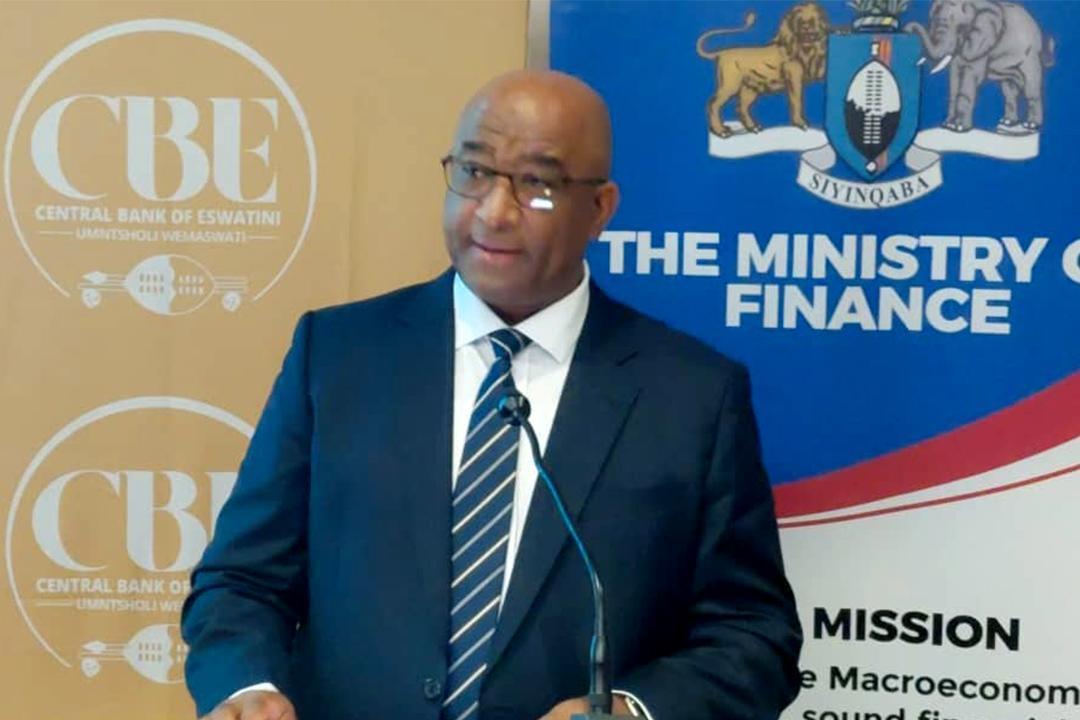
This achievement, celebrated during the launch of the Eswatini FinTech Strategy at the Royal Villas in Ezulwini on Thursday, 4 December 2025, represents a new era of financial inclusion, efficiency, and innovation. Minister of Finance Neal Rijkenberg officially unveiled the strategy, after Central Bank of Eswatini (CBE) Governor Dr Phil Mnisi delivered the long-awaited news of the switch’s full activation.
Dr Mnisi announced with excitement that as of Wednesday, 3 December 2025, every financial institution in Eswatini is able to communicate seamlessly with one another, enabling real-time payments across the national financial ecosystem. His remarks were met with enthusiastic applause from the audience, capturing the significance of this accomplishment for the country’s financial sector.
“Honourable Minister, I am pleased to say that as of today — in fact, as of yesterday — all financial service providers are now connected to the domestic switch,” he said. “One of the participants even approached our Head of IT, praising how she can now make payments in mere seconds from one bank to another.”
The Governor described the switch as a technological breakthrough and a firm foundation for the nation’s digital financial future. Since the establishment of the CBE’s FinTech Unit in 2018, the institution has worked diligently to support responsible innovation through initiatives such as the regulatory sandbox, active participation in the FinTech Working Group, and efforts to modernise national payment systems.
Dr Mnisi highlighted that the Central Bank’s commitment goes beyond enabling innovation — it also prioritises financial stability, consumer protection, and market integrity. “Our role is not to slow innovation, but to ensure it develops in a safe, secure, and sustainable way,” he emphasised.
With the Payment Switch fully operational, the Governor noted that the next phase involves strengthening supervisory tools, expanding institutional capacity, and deepening partnerships across sectors. These steps, he said, are essential to ensuring that the FinTech Strategy achieves its intended impact.
Calling for collective action, Dr Mnisi stressed that the launch of the strategy marks only the beginning. “What matters now is execution,” he said. “This requires leadership, intentionality, resources, and close coordination across public and private sectors.”
He outlined the roles of key stakeholders moving forward: government will lead implementation; regulators must remain agile; financial institutions should continue embracing new technologies; entrepreneurs are encouraged to design solutions that meet real societal needs; and academic institutions must nurture the digital skills required for a modern economy. Development partners, he added, remain vital supporters in Eswatini’s digital journey.
With the Payment Switch now fully live and the FinTech Strategy in motion, Eswatini is poised for a future defined by convenience, innovation, and growth. As Dr Mnisi concluded, “The best of good times lies ahead.”
For More News And Analysis About Eswatini Follow Africa-Press