Africa-Press – Eswatini. The European Union (EU) has invested E154.2 million (€8.2 million) in the Eswatini Livestock Value Chain Development Programme (ELVCDP), a flagship initiative aimed at strengthening the country’s livestock sector through improved skills development, food safety standards, market competitiveness and economic growth.
The investment was highlighted during the Carcass and Meat Grading Training Certificates Handover Ceremony held at Royal Villas Hotel in Ezulwini on Wednesday, June 17, 2026, where participants who successfully completed specialised training in carcass and meat grading received certificates. The programme was made possible by Govenrment, through the Livestock and Veterinary Service Department of the Ministry of Agriculture, Ministry of Health, and SAMIC, which was rfesponsible for training the meat graders.
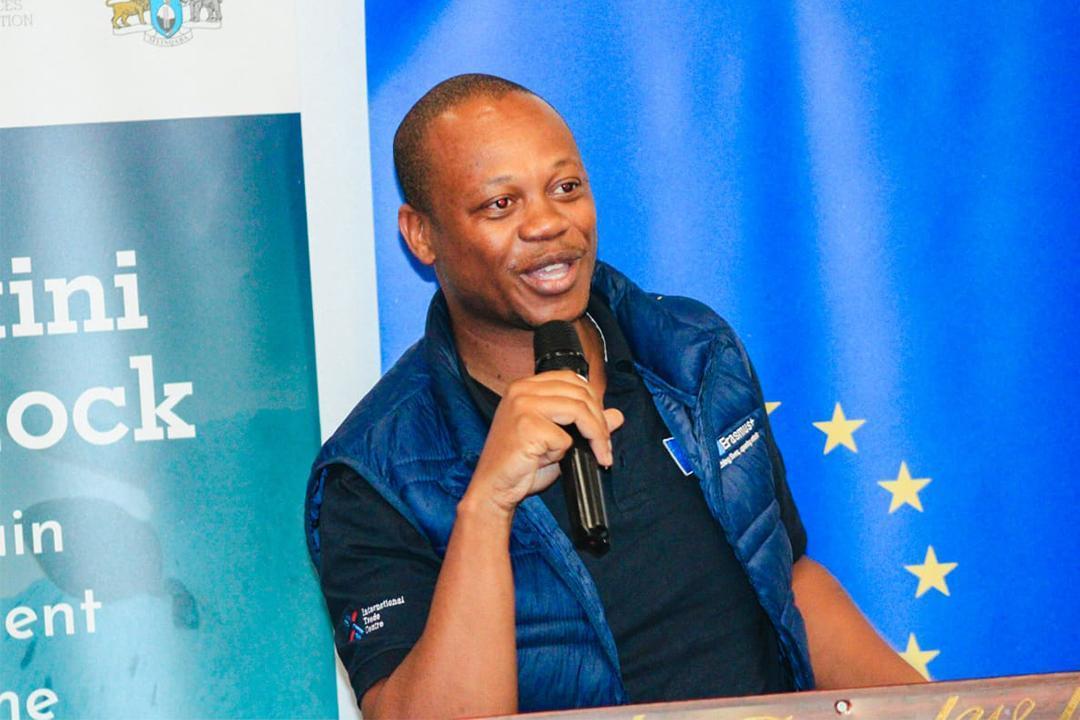
Speaking at the event, EU Eswatini Agriculture Programme Manager Bhekani Magongo said the certificates represented more than the completion of a training programme.
“The certificates you receive today represent not only the completion of a training programme, but also an investment in the future of Eswatini’s livestock sector,” said Magongo.
Strengthening the Livestock Value Chain
He said the EU was proud to support the Eswatini Livestock Value Chain Development Programme through its partnership with the International Trade Centre (ITC) and the Government of Eswatini, noting that sustainable economic growth is achieved through strengthening local capacities, improving competitiveness and creating opportunities for businesses and communities to thrive.
Magongo described the ceremony as an important milestone in Eswatini’s journey towards establishing a national meat grading system, which is expected to transform the livestock industry in several ways.
Improving Food Safety and Consumer Confidence
He said one of the key benefits of a functional grading system was improved food safety and consumer confidence.
“Consumers deserve assurance that the meat they purchase meets recognised quality and safety standards. A transparent grading system provides this confidence by ensuring consistency and accountability throughout the value chain,” he said.
Magongo further noted that the system would promote fairness and transparency within the livestock market by ensuring farmers and producers are rewarded according to the actual quality of the animals they produce rather than subjective assessments.
“This creates incentives for improved animal husbandry practices and encourages producers to invest in better livestock management,” he said.
Unlocking Market Access and Competitiveness
Magongo added that a national meat grading system would also enhance Eswatini’s access to domestic and international markets, where quality assurance, traceability and compliance with recognised standards are increasingly becoming prerequisites.
“By strengthening its meat grading systems, Eswatini positions itself to take advantage of new market opportunities, attract investment and compete more effectively within the region and beyond,” he said.
Beyond market access, he said the initiative would contribute to economic growth and job creation across the livestock value chain by benefiting farmers, traders, processors, retailers and consumers.
“It supports rural livelihoods, creates opportunities for agribusiness development and contributes to national economic resilience,” he said.
Collaboration Driving Progress
Magongo commended the collaboration between the Government of Eswatini, the International Trade Centre, the South African Meat Industry Company (SAMIC), development partners and training participants, saying the achievement demonstrated what could be accomplished through strong partnerships.
He challenged the graduates to become ambassadors of the initiative and use the knowledge and practical skills acquired through the training to support the development and implementation of Eswatini’s national meat grading framework.
“We encourage you to share your expertise with colleagues, mentor others and champion best practices in your respective institutions,” he said.
From Training to Implementation
Magongo stressed that the completion of the training marked the beginning rather than the end of the journey.
“Indeed, the completion of this training marks not the end of a learning journey, but the beginning of the implementation of meat grading under the Eswatini Livestock Value Chain Development Programme,” he said.
He revealed that alongside the training programme, the ELVCDP was supporting the development of a national grading policy for both live animals and carcasses.
According to Magongo, the policy framework will establish standards, institutional arrangements and regulatory guidance required to ensure the grading system is transparent, fair, credible and sustainable.
“Together, these efforts demonstrate a comprehensive approach, building both the human capacity and the enabling environment required for long-term success,” he said.
Building a More Competitive Livestock Sector
Magongo reiterated the European Union’s commitment to supporting initiatives that promote inclusive growth, strengthen institutions and improve the livelihoods of emaSwati.
“The journey towards a fully operational national meat grading system does not end today. Rather, today marks the beginning of a new chapter – one in which trained professionals lead the way towards improved food safety, stronger consumer trust, enhanced market opportunities and a more competitive livestock sector,” said Magongo.
For More News And Analysis About Eswatini Follow Africa-Press