
Africa-Press – Eswatini. The European Union (EU) has reaffirmed its commitment to supporting Eswatini’s efforts to build a skilled, adaptable and competitive workforce aligned with national development priorities and regional integration objectives.
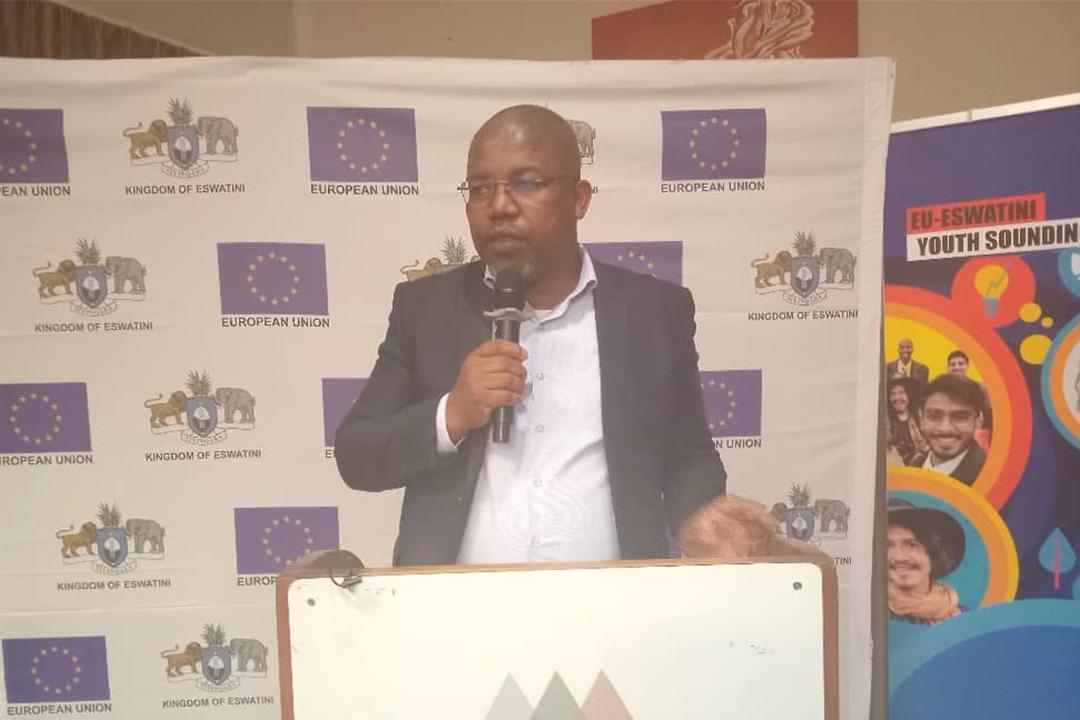
This commitment was highlighted by Allen Dlamini, Programme Manager for Skills Development at the European Union Delegation to the Kingdom of Eswatini, during a workshop held with the Ministry of Education and Training at the Mountain View Hotel on Thursday, February 12, 2026.
Speaking during the workshop, which formed part of an Erasmus+ Programme Information Session, Dlamini encouraged participants—particularly young people and youth formations—to actively engage with the opportunities presented by the programme.
“As the European Union, we remain committed to supporting Eswatini’s efforts to build a skilled, adaptable and competitive workforce, aligned with national priorities and regional integration objectives,” said Dlamini. “I encourage all participants to engage actively, ask questions and explore opportunities for cooperation during and beyond this session.”
The information session brought together the EU, the Ministry of Education and Training, education institutions, youth formations and other stakeholders to deepen awareness of the Erasmus+ Programme, with a particular focus on youth participation and Technical and Vocational Education and Training (TVET).
Dlamini expressed appreciation for the strong partnership between the European Union and the Ministry of Education and Training, describing it as a key driver in advancing education, skills development and youth empowerment in the country.
“Let me express my sincere appreciation to the Ministry of Education and Training for the strong and ongoing collaboration with the European Union, and for your leadership in advancing education, skills development and youth empowerment in Eswatini,” he said.
He noted that the Ministry had played a leading role in scaling up awareness of the Erasmus+ Programme across the country. Through joint efforts, a number of information sessions have been conducted, which, he said, were already yielding positive results.
Dlamini highlighted that institutions of higher learning such as the University of Eswatini (UNESWA), Southern Africa Nazarene University (SANU) and Limkokwing University of Creative Technology were already beneficiaries of the programme and were implementing innovative projects expected to have a meaningful impact on young people.
“As many of you might be aware, Erasmus+ is the European Union’s flagship programme for education, training, youth and sport. It is a programme that has, for many years, transformed lives and institutions across the world by promoting academic mobility, deepening cooperation and supporting the global exchange of knowledge and ideas,” he said.
In an increasingly interconnected world, Dlamini said Erasmus+ serves as a vital bridge, connecting continents, fostering mutual learning and contributing to the development of stronger, more resilient education and training systems.
He explained that EU cooperation with Eswatini places strong emphasis on human capital development, particularly in education, skills development, employability and youth inclusion. A responsive and high-quality TVET system, he noted, was critical in addressing skills shortages, supporting economic diversification and enhancing employment opportunities, especially for young people.
The information session was described as timely and important, as it provided institutions with a clearer understanding of Erasmus+ TVET funding opportunities currently available, while also encouraging the exploration of partnerships within Eswatini, the wider Sub-Saharan African region and Europe.
Dlamini outlined the scope of the Erasmus+ Programme, urging youth formations and institutions to take full advantage of opportunities to collaborate, exchange expertise and jointly develop projects that promote skills development, mobility and institutional strengthening.
“Beyond mobility, Erasmus+ supports institutional strengthening, curriculum development, staff capacity building, innovation and international cooperation,” he said. “For TVET institutions and youth organisations, the programme offers concrete opportunities to modernise training provision and align learning outcomes with labour market needs at national, regional and international levels.”
Institutions were encouraged to establish strong partnerships with other TVET institutions, universities and relevant stakeholders within Eswatini, as well as with partners across Sub-Saharan Africa and beyond. According to Dlamini, well-structured partnerships are central to successful Erasmus+ projects and essential for achieving sustainable impact.
The session also provided practical guidance on identifying partners, navigating the Funding and Tenders Opportunities Portal, and developing competitive project proposals. Participants were encouraged to view Erasmus+ not merely as a funding opportunity, but as a strategic tool for long-term institutional development and regional cooperation.
“I would also like to emphasise the importance of collaboration between youth formations, education and training institutions, industry and civil society, to ensure that skills development initiatives remain relevant and demand-driven,” Dlamini concluded.