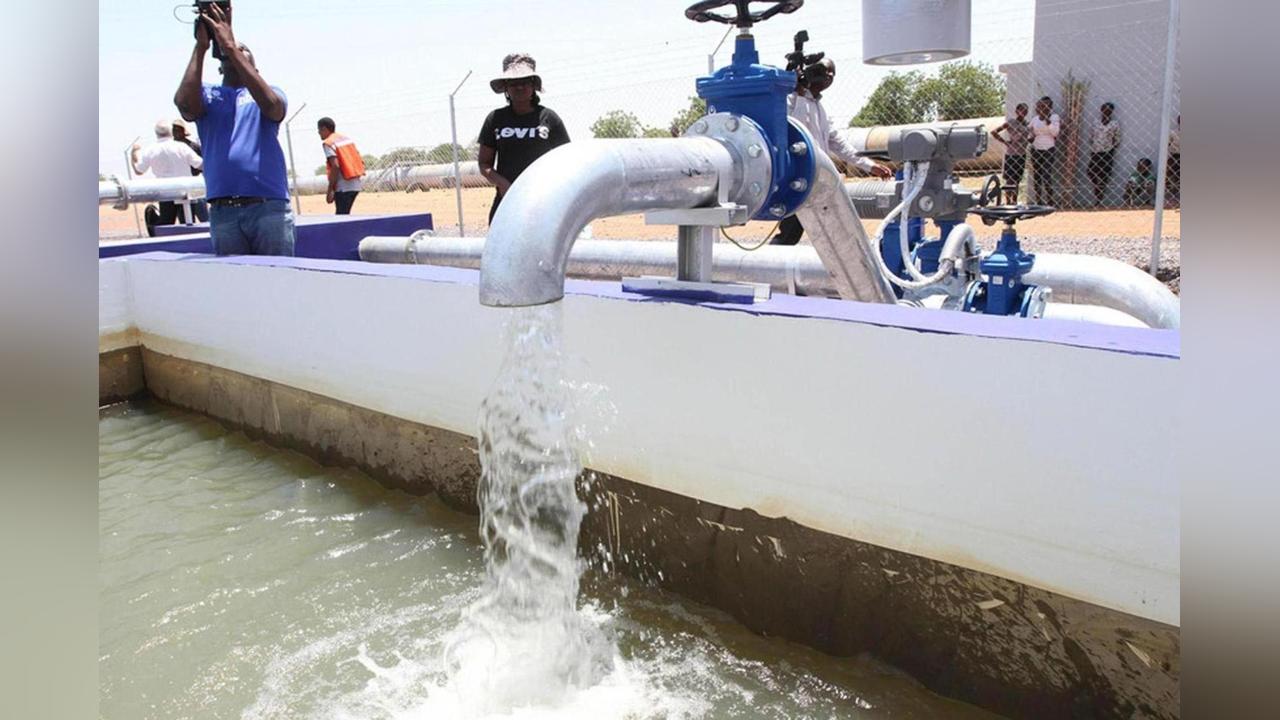
Africa-Press – Eswatini. The best evaluated contractor for the Mkhondvo-Ngwavuma Water Augmentation Project (MNWAP) will be revealed this month.
The African Development Bank (AfDB) sponsored the project, and the tendering was non-exclusive, which meant that multinational corporations were free to bid. The project is anticipated to cost E3 billion to E3.6 billion, with materials costing roughly 45 per cent of the overall tender value of E3.6 billion, or around E1.6 billion. The plant and equipment to be purchased were projected to be 15 per cent of the overall tender value, or around E540 million. Services and taxes for the tender were anticipated at 25 per cent, or approximately E800 million. Services are predicted to be worth E360 million (10 per cent), while taxes are worth E540 million (15 per cent). Because the project is co-funded by the government and AfDB, the tender is non-exclusive.
This means that both local and foreign enterprises with dam construction and networking experience, qualifications, and knowledge were allowed to bid on the procurement. The MNWAP involves the transfer and storage of irrigation water from the Mkhondvo River to the Ngwavuma River via the construction of a network of three dams (Mpakeni on the Ngwavuma River and Mahamba and Ethemba Dams on the Mkhondvo River) together with a diversion system and conveyance scheme. Project funds are to be spent primarily in the country and location where the project takes place.
Profits
This was mentioned by Eswatini Water and Agricultural Development Enterprise (ESWADE) Chief Executive Officer (CEO) Samson Sithole. He said in such a case only, the profits accrue to the investor while the expenditure occurs in the country of operation. “In the case of the Mpakeni Dam under the Mkhondvo-Ngwavuma Water Augmentation Project, the funds will be spent on the construction of the project while the profits will go to the companies undertaking the work,” he said.
The CEO stated that the monies would circulate throughout the country, specifically in the project region and nearby areas, as well as in the Southern African Customs Union (SACU) for goods and services coming from SACU countries such as South Africa.
“As more goods and services are sourced from the SACU region, Eswatini benefits directly from such funds because Eswatini is a member of SACU and receives the majority of its revenues from SACU,” he explained. ithole went on to say that the E3 billion tender was non-exclusive but open.
This came after a tender acquisition generated questions about the treatment of local businesses.Companies from Turkey, China, and South Africa were among the bidders at the time. The tender was for the construction of the dam and associated works, including the dam’s permanent access roads. It is worth noting that both local and international companies have acquired tenders locally, and companies were evaluated with the assistance of the Eswatini Public Procurement Regulatory Agency (ESPPRA).
Tender
ESWADE mentioned that local companies were given a chance to bid for the tender, but when evaluated, they did not qualify to execute the tender.
The tender was open to both local and international companies as it was non-exclusive. Bids from international companies were allowed because the project was also funded by international institutions. The prequalification of contractors began in 2021.
For More News And Analysis About Eswatini Follow Africa-Press