Africa-Press – Eswatini. It is now down to the Members of Parliament, whether they grant what seems to be an inevitable bus fare hike or they apply caution given the rising costs and inflation.
Commuters will now pin their hopes on the politicians when the proposal for the bus fare hike is tabled in parliament, otherwise their worst fears may soon be confirmed with the threat of the hike looking increasingly like a possibility.
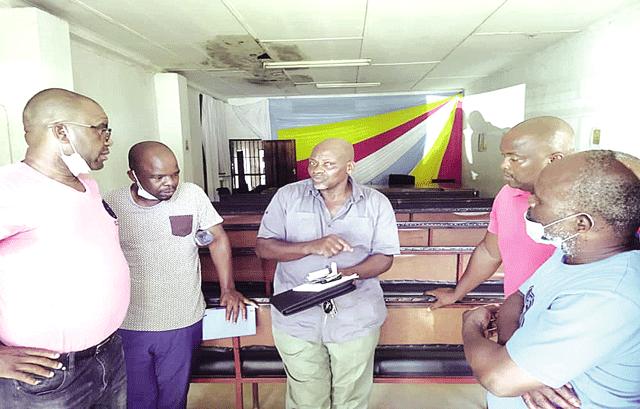
The National Road Transport Council’s (NRTC) former Chairman Sihlangu Nhlabatsi revealed that the bus fare hike proposal would be tabled in parliament tomorrow. Nhlabatsi revealed this during a meeting of public transport owners held at the Swazi Commercial Amadoda Hall yesterday.
The tabling of the bus fare hike will mark the beginning of the debate process in which parliamentarians are expected to engage before making adjustments and/or approve or disapprove the proposal.
This phase follows that the national local transport association, through the ministry of public works and transport, proposed a hike in bus fares by up to 100 per cent in November 2021, as revealed by our sister paper, the Observer on Saturday.
The justification for this proposal was that fuel prices had increased, which negatively impacted on the transport business in that it could not make enough money to pay off vehicles bought on credit, maintain the vehicles as well as pay transport workers.
increased
It should be noted that since November 2021, fuel price has increased three times with the latest time being last Thursday, March 3, 2022, where it went up by E1.40/litre from E17.15 to E18.55.
In November 2021, the price of unleaded petrol increased by E0.75/litre from E15.05/litre to E16.25/litre, and in December 2021, it increased by E0.90 to E17.15/litre.
This means that between November 2021 and March 2022, fuel has increased by E3.05 per litre. If the proposed 100 per cent hike is approved, commuters who currently pay less than E8 for short distances will have to part with E13.
Bus fares last hiked in November 2019, where Members of Parliament (MPs) made some adjustments to the proposed fares before approving the application.
For instance, it was proposed that for short distances of eight kilometres, commuters should be charged E7.50 on December 1, 2019 and another of additional E0.50 cents on June 1, 2020.
However, the MPs resolved that there should be a once-off increase of E7.70 which was rounded down to average to the nearest 10 cents of the two proposed increases. Yesterday, a five-member interim committee that will work on issues concerning the public transport sector in the absence of a council was elected.
These will work closely with two members of the former council namely Sihlangu Nhlabatsi and Sabelo Dlamini.
For More News And Analysis About Eswatini Follow Africa-Press