
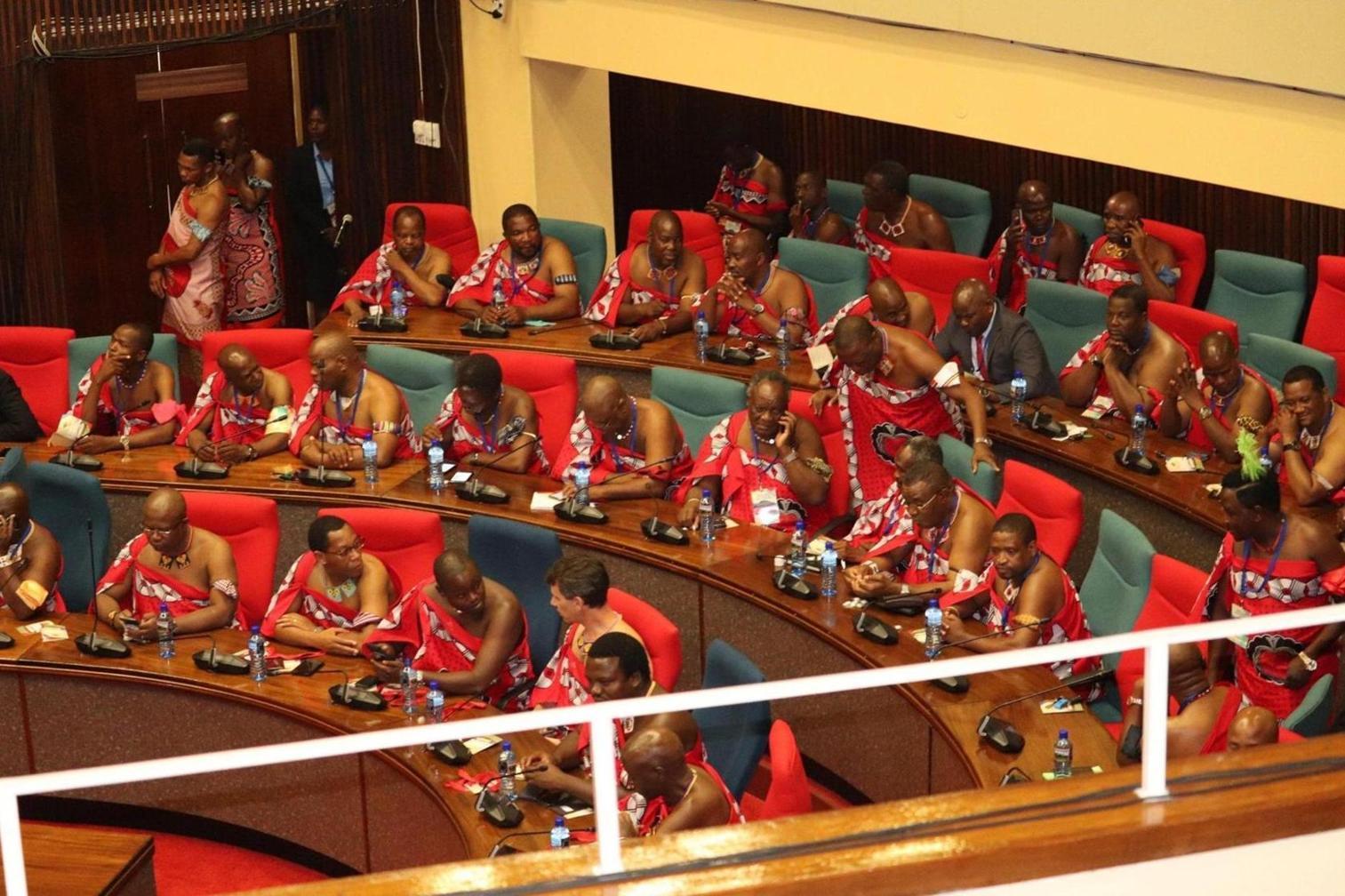
Africa-Press – Eswatini. Aspiring politicians who lost in the general elections should forget about being nominated for Senate.
The Supreme Court consisting of Judges Majahenkhaba Dlamini, Judith Currie, Mbutfo Mamba, Sabelo Matsebula and Mzwandile Fakudze yesterday put the matter to rest, ruling that parliamentary election losers would not be considered for Senate elections.
However, Judge Mbutfo Mamba issued his own separate judgment.
The Supreme Court found that Section 5 (3) of the Senate Elections Act of 2013 was not unconstitutional.
Therefore, the court set aside an order issued in November 2018 by the full bench of the High Court consisting of judges Mumcy Dlamini, Mzwandile Fakudze and Maxine Langwenya.
The High Court had found that Section 5 (3) was unconstitutional, as it discriminated against people who lost the elections. Section 20 of the Constitution is against discrimination.
This was after Lobamba MP, Michael Masilela, took the Elections and Boundaries Commission (EBC) to court, seeking an order setting aside this legislation.
inconsistent
Masilela further said he had been advised that the extent of Section 5(3) were inconsistent with provisions of Section 96 and 97 of the Constitution and that the court was seized with the jurisdiction to strike the section down, such that it was of no force or effect.
Five years later, former Prime Minister, Cleopas Dlamini, former Minister of Justice and Constitutional Affairs, Pholile Shakantu and Attorney General, Sifiso Khumalo, appealed the decision of the High Court at the Supreme Court.
The matter was heard on September 20, 2023 and the judgment delivered yesterday. The court stated that the face value discrimination of Section 5 (3) of the Senate Elections Act had no impact on any prohibited grounds of Section 20 (of the Constitution) such as gender, race and colour, among other things.
The court also mentioned that during the elections, it was not possible to regulate general elections without classifications and differentiation among voters and between the candidates of the chambers of Parliament.
What was important, according to the judgment, was that not every differentiation amounted to unequal treatment.
In the present case, the court observed that Section 5 (3) did not lead to unequal treatment of the candidates to Senate.
The objective, according to the court, was to ensure equality of the Senate candidature.
It was also to ensure the respectability of the Senate as the upper chamber composed mainly of the high ranking citizens with the implicit role of stabilising and moderating the diverse mandates and pressing needs of the people represented in the lower House of Parliament.
The court also found that Section 5 (3) did not discriminate because it did not pull an election loser from a group and treated him differently.
Under the Tinkhundla system, the court noted that no one had a right to advertise him or herself for a Senate seat.
The court said in being prevented from joining the Senate election, there was nothing unfair and observed that such a person carried a burden that differentiated him from the voters he wanted to join.
The Supreme Court agreed with Attorney General Sifiso Khumalo, who made a submission that if the people had rejected a candidate at primary level, there should be no room for that candidate to wiggle his or her way into Parliament via the Senate election process.
In the present case, the court found that the alleged discrimination was not unfair. The Act was passed after a general election under the Constitution had taken place and the need to further tighten the electoral process was noted. The judges observed that in other words, there could have been a felt objection to the election to the Senate of persons who had failed to be elected into the House.
It could have been a cause for embarrassment to the constituency, which had rejected such a person to be confronted by the same person in Parliament by the vote of the elected MPs.
On its face, the judges were of the view that such a kind of practice or conduct would discredit and cast doubt on the integrity of the general elections.
According to the Supreme Law, the elections law was discriminatory in a loose sense because it qualified others, while it disqualified others.
There was nothing special about Section 5 (3). The provision intended to enhance and bolster the electoral system and it was by no means contra-democratic, according to the judgment.
For More News And Analysis About Eswatini Follow Africa-Press