Africa-Press – Eswatini. Taiwan Associate Researcher for Hsinchu Science Park Bureau Scott Huang has disclosed how science parks can play a major development role for their countries.
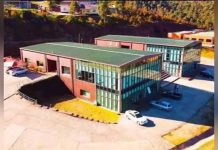
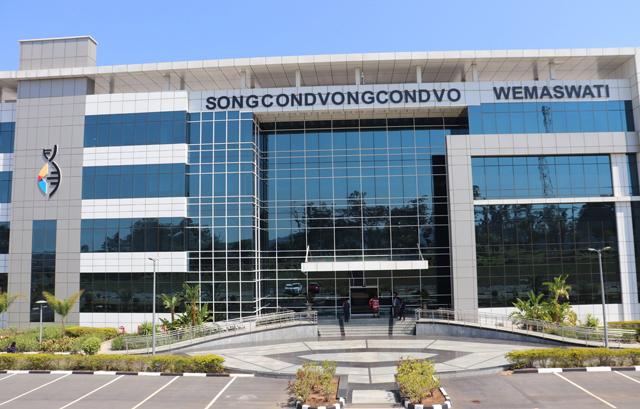
In the country there is the Royal Science and Technology Park (RSTP) which has been designated as a special economic zone (SEZ) which will afford unique incentives to attract foreign direct investments.
Huang disclosed that they had a meeting with officers from RSTP where they discussed a number of issues in terms of how the parks could work together for further development.
This was during a media tour for international journalists which took place in Taiwan recently. Huang shared on how they were willing as Taiwan to assist RSTP to grow and be one of the contributors of GDP in the country. Sharing statistics of HSP in terms of economic contributions Huang said the GDP shared of 2021 revenue for HSP was 17.1 per cent.
According to Huang the start of the new millennium saw emulation of the HSP’s success story in the form of the Southern Taiwan Science Park and the Central Taiwan Science Park.
He stated that in the first eight months of 2020, the three science parks recorded combined revenue of NT$1.9037 trillion, 871 tenant companies, an occupancy rate of 96.26 per cent and 285 345 employees, according to statistics compiled by the (HSPB).
It was disclosed that coupled with the fact that the three collectively account for 14 per cent of Taiwan’s GDP, these numbers offered a powerful testimony not only to their vigorous development but also to the HSP’s contribution to enhancing national strength through branching out far and wide.
Under Taiwan Vision 2030, the country is set to strive for innovation, inclusion and sustainability.
This pursuit is pitted against a number of challenges: a low birth rate in an aged society inequitable distribution of wealth, emergence of innovative technologies, environmental change and energy deficiency.
The associate researcher explained that in Taiwan they had through science parks trained a lot of young people. He disclosed that the park has different park industries which provide high tech solutions for challenges faced by the population and also ensures development of the country. Huang said they had embarked on precision health whereby they work on medical devices to help their population.
In a bid to ensure that the dpecial economic zone regime is successful, the Royal Science and Technology Park continually partners with similar entities with common mandate. Recently, RSTP had a knowledge sharing sessions with the export processing zone Authority of the Republic of China Taiwan,the latter proposed two video conferencing meetings with RSTP to facilitate same.
The first meeting was held on September 22, whose main objective was to scan RSTP operations. EPZA received a presentation on RSTP’s Ecosystem namely; the implementation of the strategic plan, challenges and proposed interventions to meet the entity’s mandate.
The second meeting was held on September 26, where EPZA gave a presentation on their success story especially the operations of the One Stop Shop Service Centre and the science park functionality holistically.
RSTP Chief Executive Officer Vumile Dlamini mentioned that from the presentation made by their Taiwanese counterparts, it was clear that there was a need for all stakeholders to harmonise their processes so that the process of acquiring licenses and services is more effective and efficient.
Dlamini thanked His Majesty King Mswati the III for his vision in establishing the RSTP and fostering bilateral relations with countries like Republic of China on Taiwan so that the kingdom can learn from their experiences as their special economic zones and science parks are well established while the kingdom is fairly new in this industry.
For More News And Analysis About Eswatini Follow Africa-Press