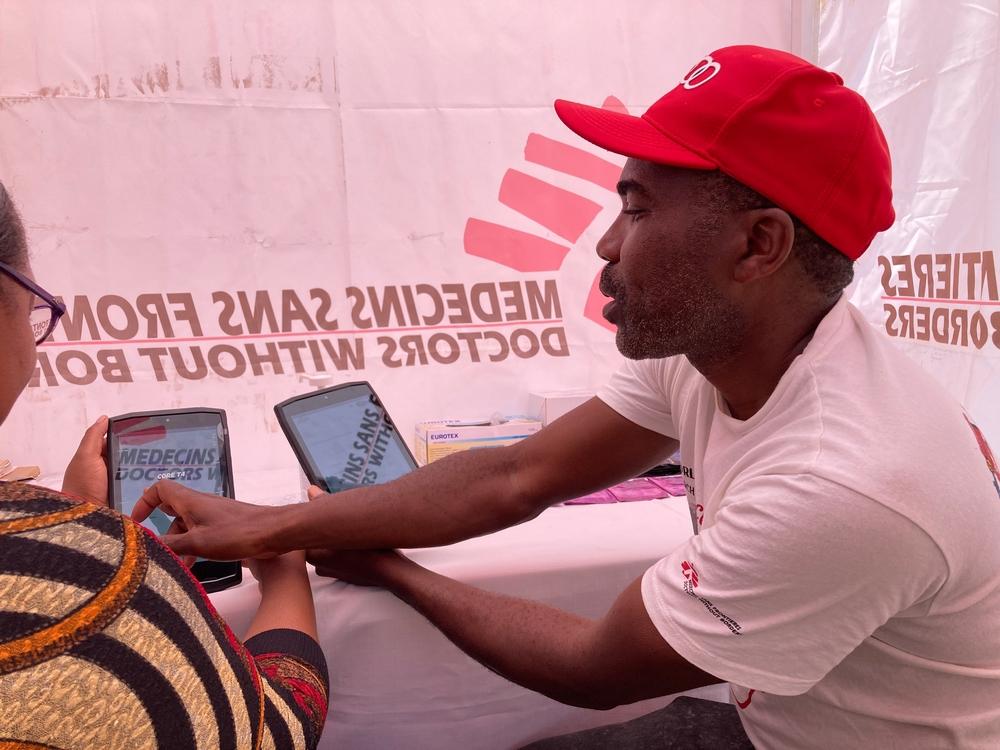
Africa-Press – Eswatini. Eswatini has one of the highest HIV incidences in the world. Médecins Sans Frontières (MSF) teams introduced self-testing to identify the presence of the virus in 2016. This was done with the aim of empowering people, as they can get tested wherever they want, at their convenience. The self-test kit is a tool that allows a person to test for HIV and then go to a health facility to confirm their status. This is empowering as you are in control of your testing experience.
At the start of the HIV self-test initiative, both urban and rural populations were guided with information when they received self-test kits. Each and every one had the option of being tested unassisted or with counseling on site.
This was done by integrating awareness-raising educational sessions, which aimed to encourage seeking healthcare by explaining the effectiveness of self-test kits. For those who opted for unattended home testing, follow-up appointments were held to confirm results and offer referrals for treatment and care as needed.
People who had tested negative for HIV were referred to receive information and access to other preventive measures, such as condoms and HIV pre-exposure prophylaxis (PrEP)*. People who tested positive for HIV were referred to the nearest hospital for confirmatory testing and initiation of antiretroviral therapy (ART).
Community feedback revealed that some people preferred self-referrals, meaning they would refer to their health facility of choice when in need of treatment and care. However, this compromised the quality of post-test counseling and the length of time until relevant services could be accessed.
• Read also: Seven questions and answers about HIV/AIDS
Digital tool to support self
-testing Realizing the need to reduce contact with healthcare professionals during HIV testing, but still seeking to offer an exceptional self-testing experience, in October 2022, MSF adapted the “Pocket Clinic”. Pocket”, in free translation), a digital approach to HIV testing.
This innovative tool focuses on people’s needs by providing pre- and post-test counseling digitally using a tablet. People are guided through the HIV self-testing journey while watching self-explanatory videos with guidance on what HIV is, why an HIV test is important and what happens after a result, whether negative or positive.
As part of its first phase, the “Pocket Clinic” is currently offered at the testing site and can be equally effective online and offline.
“Before the ‘Pocket Clinic,’ we weren’t able to really help people who had picked up the HIV self-test kit. The clinic allows us to effectively refer and support you after the test. In addition, a person would have to wait until we finished an appointment to be seen; with the ‘Pocket Clinic’ I am able to see more than one person at a time. All I have to do is log and monitor. Everything else, everyone is able to do independently,” says Ivy Nxumalo, MSF adviser in Shiselweni, Eswatini.
Considering proximity to the people it cares to be one of MSF’s most cherished values, the “Pocket Clinic” is available in both urban and rural settings. To provide optimal support for people living in rural communities, the clinic is mobile and can be accessed by residents from multiple locations on different days. If necessary, communities can contact MSF teams to request services during community campaigns.
Currently, the “Pocket Clinic” serves about nine people a day and approximately 135 used the service in the first month.
“What I like most about ‘Pocket Clinic’ is that I get to do things privately without feeling rushed. Also, if I don’t understand any information, I feel free to rewind the video, whereas if I’m in a hospital, I always pay attention not to waste the nurse’s time when I ask to clarify certain information. Yes, much has been said about HIV testing, but the ‘Pocket Clinic’ concept prioritizes the benefits of getting more accurate information, as I am a visual learner and therefore prefer visual guidance to listening to a healthcare professional. I am happy with the service”, says Khosi, who accessed the “Pocket Clinic”.
The “Pocket Clinic” adds to some digital initiatives already implemented in MSF’s projects in Eswatini, which guarantees the provision of better and easier services for the people served.
*Pre-Exposure Prophylaxis (PrEP) – a once-daily pill indicated for HIV-negative individuals who feel they are at increased risk of acquiring the infection, in order to prevent it.
For More News And Analysis About Eswatini Follow Africa-Press