Africa-Press – Eswatini. Africa’s digital economy is growing fast, and America and China have been sure to get a foothold. To compete, the EU’s Global Gateway needs to make a better offer to African partners.
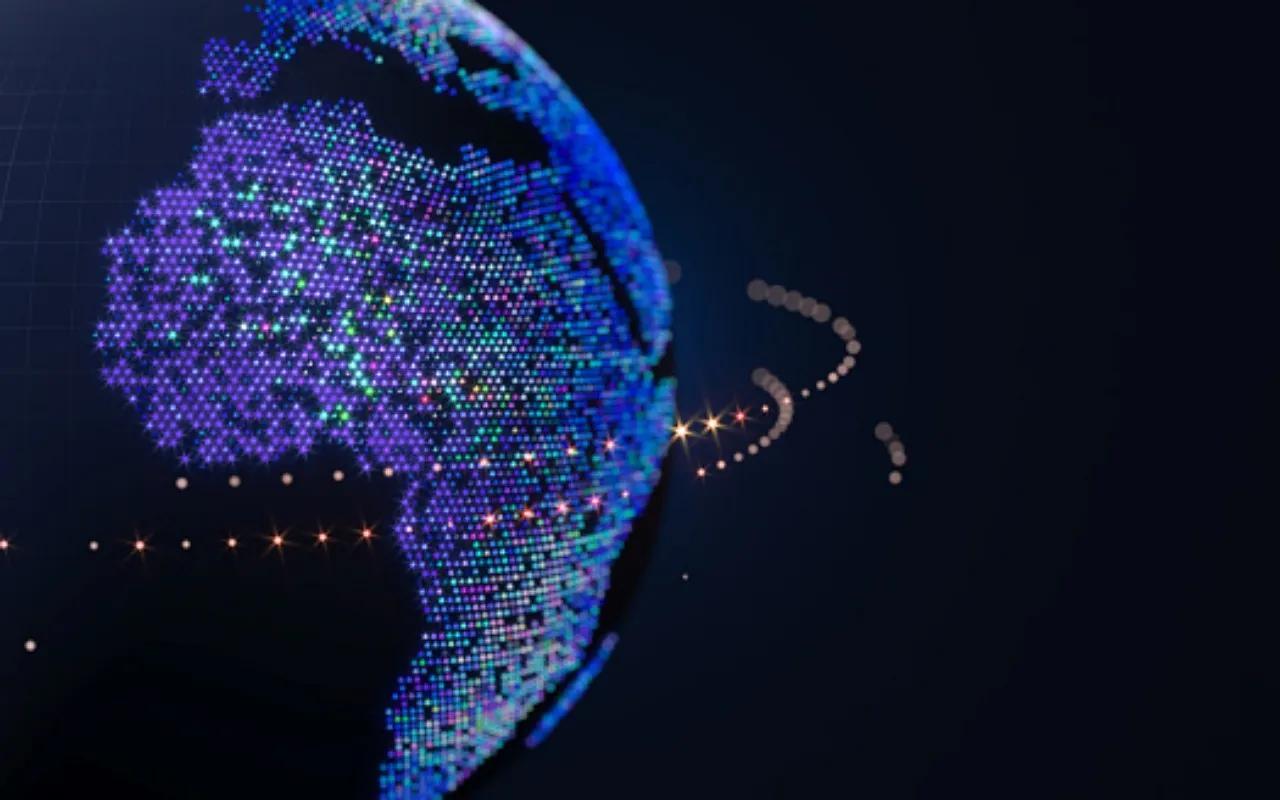
Africa’s digital economy is having a growth spurt. By the end of 2025, it is projected to make up 5.2% of the continent’s GDP and grow to 8% by 2030, reaching an estimated $2.9trn. Sustaining this trajectory requires a massive overhaul and extension of infrastructure, from internet cables to data centres, especially if this growth is to reach rural areas.
The EU is aiming to meet some of these needs. Its Global Gateway connectivity initiative, launched in 2021, identifies Africa as a strategic priority, owing to the continent’s geographical proximity, its booming demographics and rapidly expanding middle class. Under the Global Gateway framework, digital projects account for 19 flagship initiatives in Africa, making it the most supported sector after energy which has 85 projects.
The European Commission’s ambitions are well intentioned but vague. They more or less centre around bridging Africa’s digital divide, connecting Europe’s digital ecosystem with Africa’s and providing secure and sovereign digital services to African partner countries. This commitment is intended to bolster Europe’s position in digital competition, make it a trusted and impactful partner of choice in African development initiatives, and give its standing in the global south a much-needed boost. Global Gateway’s digital projects will also provide new commercial opportunities for European companies in the continent’s rapidly growing digital economy.
The commission’s plans are already being tested by stiff competition from America and China, both of which have secured deep footholds in digital sectors across the continent. The critical question, then, is whether Global Gateway can rise up to the challenge and stand out by genuinely addressing African priorities.
Europe’s modest footprintEurope’s most notable contribution to Africa’s digital landscape is submarine cables, for example the extension of the Blue-Raman undersea cable to East Africa. This high-speed fibre optic connection, which links Europe with India via the Gulf, will be extended to Somalia, Kenya and Tanzania. This will deliver reliable, fast connectivity to a region with soaring demand. The initiative is spearheaded by the Italian telecommunications firm Sparkle and has been a flagship announcement of the Global Gateway forum.
Beyond this, however, the EU is a latecomer to African digital connectivity and has ample potential to expand its current approach. Its efforts lack the necessary breadth and depth; by crafting a detailed strategy, it can better cater to Africa’s unique geographical and digital landscape. The current projects focus primarily on the Mediterranean region, with only one dedicated initiative for East Africa and one for West Africa. These routes tend to utilise well-known and crowded landing points in countries where diplomatic ties are usually more established.
But taking the easy option will land the EU short of its goals. Its current approach requires more ambition to unlock connectivity for new, underserved countries. This limited scope—coupled with a notable European absence from terrestrial fibre optic laying initiatives—risks diminishing the appeal of Global Gateway for African leaders. Rather, Europeans will need to support their ambitions to rapidly industrialise and have more sovereign control over strategic assets like data storage. The EU’s current approach also means the bloc’s firms will miss out on more nascent, but fast-growing digital industries with the potential to boost the continent’s industrial development.
The digital laggard
Beijing has a long history of engagement in African connectivity. Back in the 1990s China’s first internationalised its companies, but its approach dramatically accelerated in 2015 with the launch of the Digital Silk Road, part of its Belt and Road Initiative. Beijing seeks to establish Chinese firms in the entire value chain of telecommunications, from infrastructure to digital services, to consolidate its standards. This cements Chinese companies’ footprint in African connectivity, creates dependencies and reinforces Chinese geoeconomic clout in the continent. By 2022, China reached a milestone when the PEACE cable—the first submarine link wholly owned by a Chinese entity—went live, connecting Kenya with Europe, the Gulf and South-East Asia. China is also leading the SAIL link connecting Cameroon to Brazil, and Chinese firms are increasingly involved in international undersea cable consortia.
The US on the other hand, has established a significant hold in Africa’s digital economy via its big tech companies. President Donald Trump’s pivot from the developmental approach of the Biden administration to a more transactional attitude is expanding the role of big techs in the continent’s connectivity, where there is profit to be had. These companies have an unrivalled capacity to offer diverse connectivity forms (terrestrial and satellite) and establish hyperscale data centres.
Both China and the US hold distinct advantages over Global Gateway in both scope and scale. Microsoft and the Emirati firm G42 have invested $1bn to build a data centre in Kenya while China’s Huawei has built 70% of Africa’s mobile connectivity and laid 10,000km of fibre optic cables in Nigeria alone.
The EU is also missing opportunities to establish itself in the key domain of satellite connectivity, as it lacks a concerted effort to provide African countries with low earth orbit satellite links. Meanwhile, China is exploring the launch of its own constellation, which would easily integrate with its existing Belt and Road infrastructure, while the US satellite company Starlink is aggressively expanding its presence.
Connecting with Africa
Africa’s burgeoning market for tech infrastructure presents a significant opportunity both commercially and geopolitically. Global actors can establish a powerful presence by securing contracts across the entire value chain, from the “first mile” infrastructure to consumer and business hardware like PCs and smartphones. Serving the “next billion users” would also confer substantial influence on international standard-setting, allowing providers to influence technical norms and protocols, as China is already doing.
The massive flux of data generated by this expansion must be managed, too. Relying on a single provider for data harvesting and processing, like Senegal is with Huawei’s new data centre, leads to geopolitical and security concerns. European firms could offer diversification alternatives and develop joint industrial projects to enhance Africa’s digital sovereignty.
To become a significant geopolitical actor in Africa, the EU must seize these commercial, standard-setting and geostrategic opportunities. And while America’s and China’s headstart means Europe has some catching up to do, Europe can stand out with a better offer than an erratic US administration, which has put massive tariffs on African partners, and than China’s regime-agnostic approach. African countries may be keen to explore other options for digital cooperation if the European offer comes with guaranteed transparency and stability.
First, however, the EU must fully match its Global Gateway rhetoric with faster decision-making, clearer institutional coordination, and financing tools that can compete with China’s speed and the America’s technological scale. African governments will ultimately assess partners based on who can provide timely infrastructure financing, reliable implementation and long-term system stewardship.
A reformed Global Gateway should enhance transparency on the composition and allocation of funds, and clarify the confusing processes for permits and implementation. This means providing more information about the financing of projects, explaining the criteria for project selections, and disclosing more details about implementation and local partner involvement.
It should also improve European companies’ predictability, speed and scale. Satellites are a practical example of where the EU could start: the European Space Agency plans to establish a high-quality reconnaissance network. While its current focus is defence, offering African nations access to a part of this network for critical tasks like managing natural disasters and earth observation for agriculture would boost Europe’s standing. African countries including Malawi, Mozambique and Zambia already participate in the Copernicus Earth Observation programme, and non-EU countries were previously invited to join the IRIS2 telecommunications constellation. Extending this invitation to selected African partners could improve Europe’s footprint by providing the continent with satellite connectivity (including internet) without breaking the bank. Leveraging such synergies would help bridge the financial and scope gap between the EU and its competitors. A policy that prioritises stable and transparent communication with recipients would also underscore the bloc’s reliability, giving it an edge over the US and China.
European Council on Foreign Relations
For More News And Analysis About Eswatini Follow Africa-Press