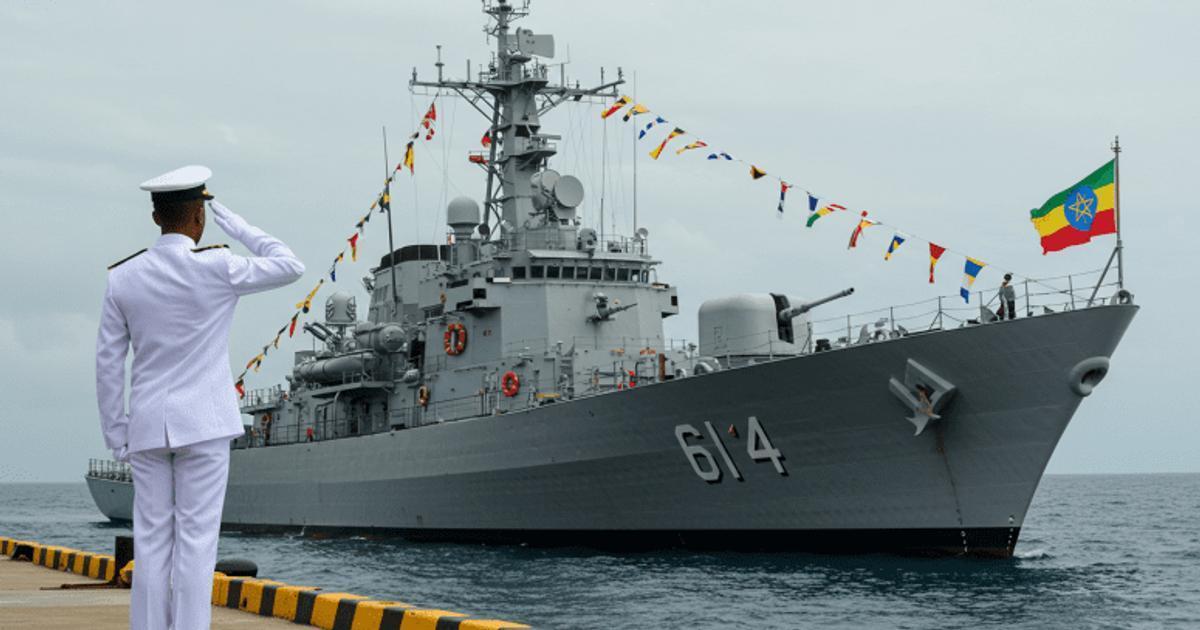
Africa-Press – Ethiopia. The Ethiopian Maritime and Logistics Authority announced that Ethiopia intends to purchase 16 new ships at a cost exceeding 83.1 billion birr, in addition to its current fleet of 10 ships, while procedures for purchasing six more ships are ongoing.
Sintayehu Hailemariam, Director of Planning and Monitoring at the authority, stated that Ethiopia plans to acquire 16 additional ships over the next five years, alongside the ten currently used for transporting goods related to export and import.
He explained that the government has allocated a budget of 83.1 billion birr to implement the ship purchase plan, noting that enhancing the maritime fleet is one of the strategic plans of the authority. He added that legal and administrative procedures related to the purchase of six new ships are currently underway.
Sintayehu indicated that the total carrying capacity of the currently operating ships ranges between 25,000 and 28,000 tons, while the carrying capacity of the new ships will range between 50,000 and 63,000 tons, representing a significant increase compared to current capabilities.
The expansion of the fleet is expected to improve the efficiency of logistics operations by enhancing Ethiopia’s ability to transport various products, including resources and strategic goods, to the country, as well as supporting export operations more efficiently and on time.
In this context, he clarified that the authority plans to transport 4.2 million tons of incoming goods, including bulk goods, using its own ships, ships designated for port services, and chartered vessels, noting that it has so far managed to transport about 3.9 million tons.
Sintayehu confirmed that Ethiopia is working on several fronts to enhance its capabilities in maritime transport and logistics, pointing out that the country’s aspiration to possess a seaport remains present in the future plans and ambitions of the institution.
Since Eritrea’s separation in 1991 following a decades-long civil war, Ethiopia, a landlocked country, has increasingly sought to establish a permanent presence on the Red Sea, including through a controversial memorandum of understanding signed in 2024 with Somaliland, a separatist region within Somalia.
Under this agreement, Addis Ababa would gain access to the port of Berbera in exchange for the possibility of recognizing Somaliland’s independence.
The agreement has drawn strong condemnation from Somalia, which considers Somaliland part of its sovereign territory, accusing Ethiopia of violating its territorial integrity.
The implementation of the 2024 agreement has since stalled amid international pressure and Turkish-mediated talks between Mogadishu and Addis Ababa. Addis Ababa has not officially recognized Somaliland to date, and no final agreement granting access to the ports has been reached.
Repeatedly, Ethiopian Prime Minister Abiy Ahmed has stated that lasting peace in the Horn of Africa cannot be achieved as long as Ethiopia lacks direct access to the sea, reiterating his country’s long-standing strategic ambition for a maritime outlet.
On several occasions, Abiy Ahmed has considered that the absence of direct access to ports restricts Ethiopia’s economic expansion and its ability to compete internationally, describing maritime access as a vital element for achieving sustainable development and self-sufficiency.