Africa-Press – Ethiopia. The Sudanese army accused the Ethiopian government of assisting the Rapid Support Forces and enabling them to launch attacks on the country from within Ethiopian territory. In response, Addis Ababa accused Khartoum of aiding the Tigray Liberation Front fighters and targeting the border city of Kurmuk between the two countries.
The Sudanese army has frequently accused Ethiopia of supporting the Rapid Support Forces, but this is the first time Addis Ababa has responded to Sudan’s accusations with similar allegations, according to a local source in Addis Ababa.
Addis Ababa has often ignored or denied Sudanese accusations, but this time it quickly accused Khartoum of aiding Tigray fighters and facilitating their incursion across the border.
Repeated Sudanese Accusations
The Sudanese army has previously accused Ethiopia on multiple occasions of launching attacks with drones from its territory, claiming to have evidence of this while also hinting at the possibility of escalation.
A local source in Khartoum reported that the Sudanese Foreign Ministry has repeatedly made these accusations on several occasions, and the Sudanese army issued two separate statements confirming that attacks by the Rapid Support Forces originated from within Ethiopia.
The source explained that recent days have seen intensified drone attacks, which the Rapid Support Forces targeted at major cities such as Kurmuk and Qaisan.
In March, the Foreign Ministry held a press conference in which it explicitly accused Ethiopia of helping and opening its territory to the Rapid Support Forces attacking the Blue Nile region, according to the source, who noted that the Sudanese army previously presented images and technical data claiming they were of a drone that launched from Bahir Dar Airport in Ethiopia and struck Khartoum Airport.
The local source also mentioned that the army displayed a type of drone it claimed was used to attack Sudanese territory, describing it as a blatant aggression, and called on the international community to stop these violations of Sudan’s sovereignty by a neighboring country.
Sudan has repeatedly demanded that the Ethiopian government cease this activity and stop the direct support it provides to the Rapid Support Forces. It also issued a statement earlier claiming that these forces are transporting soldiers through Ethiopia to launch attacks on the Blue Nile state, enabling them to advance in the cities of Kurmuk and Qaisan and other areas, resulting in significant humanitarian impacts, according to the local source.
An advisor to the head of the Sovereignty Council for political affairs and foreign relations stated that the attacks launched by the Rapid Support Forces on the Blue Nile originate from the Sous military base within Ethiopian territory.
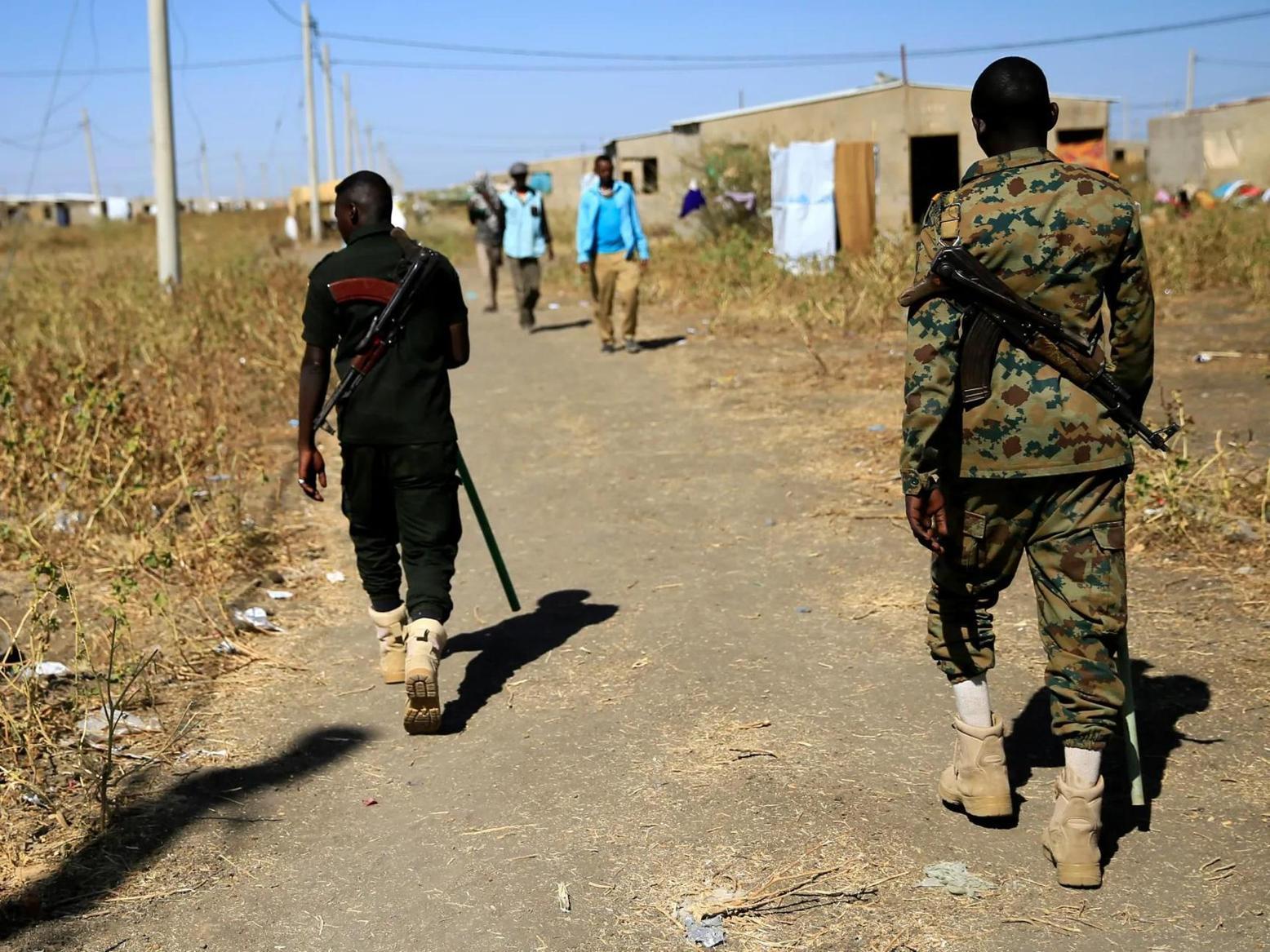
Military sources reported that the Sudanese army has deployed military reinforcements from the capital Khartoum and the states of Al-Jazeera and Sennar towards the city of Damazin, the capital of the Blue Nile region, to regain areas controlled by the Rapid Support Forces.
Denial and Counter-Accusation
On the other hand, the Ethiopian Prime Minister’s advisor for East African affairs denied the Sudanese accusations, describing them as false claims lacking any facts, stating that the Ethiopian region of Kurmuk has been subjected to several attacks by the Sudanese army.
The Ethiopian advisor claimed that Ethiopia has prisoners from the Ethiopian opposition supported by Sudan, referring to what is known as the 70th Brigade file, which the local source in Addis Ababa explained involves the transfer of more than 7,000 fighters from Sudan to Ethiopia.
The local source in Addis Ababa noted that the Ethiopian advisor spoke of substantial evidence of Khartoum’s support for the Ethiopian opposition, stating that all diplomatic efforts have failed to convince Khartoum to stop this support.
The source clarified that this is the first time Ethiopia has officially revealed the existence of Sudanese attacks on Kurmuk, pointing out the advisor’s mention of drone strikes that targeted a gold factory, private farms, and extensive areas in the city.
There are three border states between the two countries, but tensions are currently escalating in Benishangul and the Blue Nile, where the advisor confirmed that the Popular Movement-North forces allied with the Rapid Support Forces had been present in this area for years, asserting that Khartoum’s current statements are merely an attempt to internationalize its internal crisis.
The Ethiopian advisor also demanded that Sudan repatriate 50,000 refugees of Tigrayan ethnicity residing in Qadarif, stating that “among them are dozens of armed groups that operate within an axis hostile to Ethiopia.”
The advisor affirmed Ethiopia’s respect for Sudan’s sovereignty and called on Khartoum to resolve the disputes between the two countries and refrain from interfering in each other’s internal affairs, according to the local source.
For the first time, the advisor revealed that areas in the border city of Kurmuk have been subjected to attacks by the Sudanese army, causing significant damage to the bordering areas.