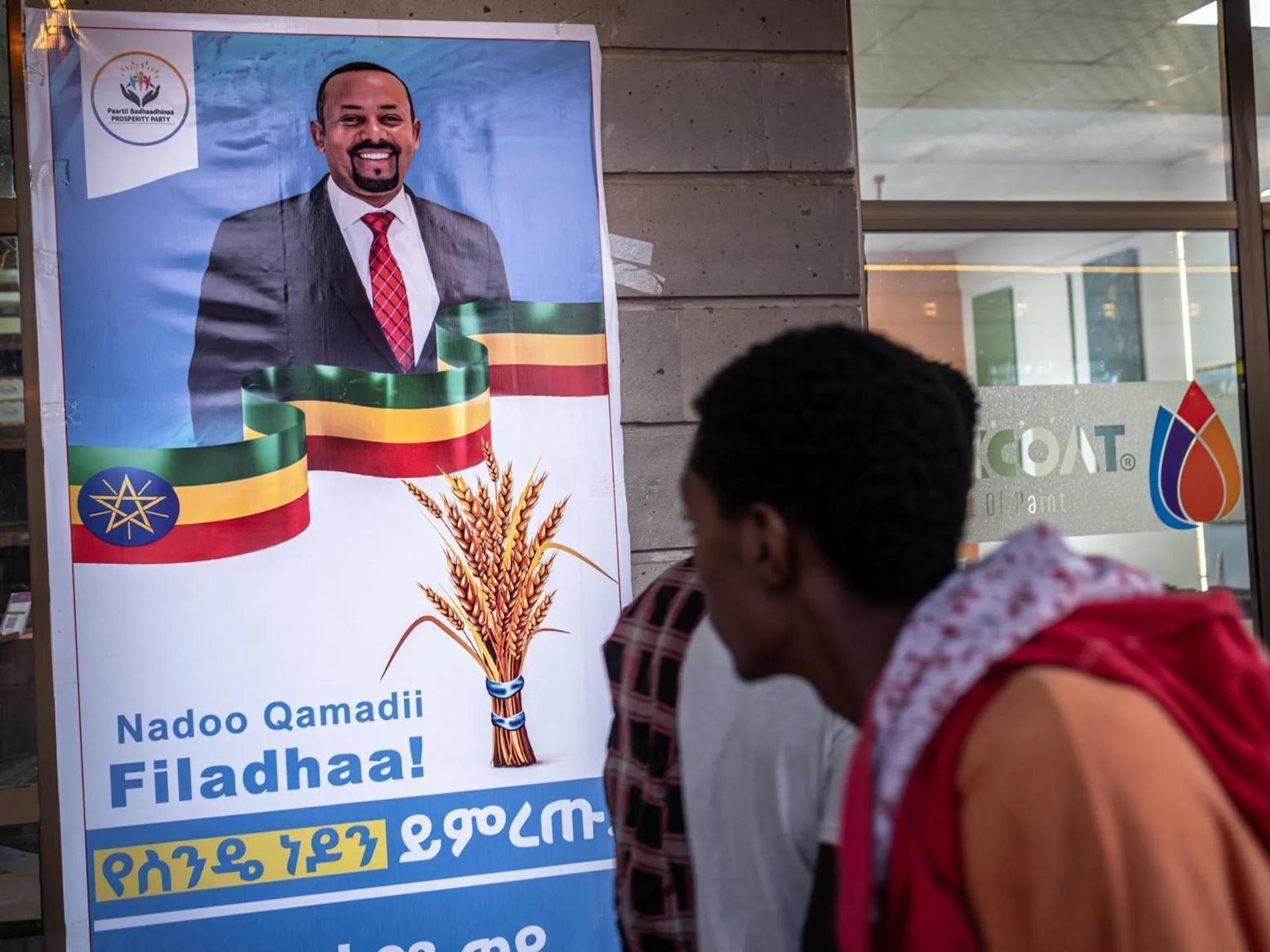
Africa-Press – Ethiopia. Millions of Ethiopians are heading to the polls on Monday to participate in the seventh general election since the adoption of the 1995 constitution, at a time when the country faces multiple internal issues, alongside regional matters related to Sudan, Eritrea, and Somalia, as well as issues concerning the Nile River and the Red Sea, making the election results of interest beyond Ethiopia’s borders.
Electoral Geography
The number of registered voters exceeds 50.5 million, according to a local source, marking the highest number of voters in the country’s electoral history. Forty-two political parties are participating in the electoral process, competing for 547 seats in the federal parliament, in addition to 2,764 seats in regional parliaments.
Elections are being held in 11 out of 12 regions, as well as in the cities of Addis Ababa and Dire Dawa, which have special administrative status. The Tigray region is absent from the elections after the local electoral authority decided to cancel the legal registration of the Tigray People’s Front, the historically dominant party in the region, preventing elections from taking place there.
Ethiopia adopts a republican system based on the principle of ethnic federalism established by the 1994 constitution, granting regions extensive powers to manage their local affairs to enable ethnic groups to govern within the framework of the federal state.
Currently, Ethiopia comprises 12 regions, along with the cities of Addis Ababa and Dire Dawa, which have special administrative status. The regions include Oromia, Amhara, Tigray, Somali, Afar, Sidama, Southern Nations, Nationalities, and Peoples, Benishangul, Gambela, and Harari. These regions have governments and parliaments that manage a number of powers stipulated in the constitution within a federal system that grants them a wide degree of autonomy.
Chances of Participating Parties
Forty-two parties are contesting at both the federal and regional parliamentary levels. Despite the multitude of parties, the political landscape remains characterized by disparities in political capabilities and resources among them.
The Prosperity Party, led by Abiy Ahmed, dominates the political scene, entering the elections based on its government’s record over the past years, which includes major infrastructure projects, economic reforms, and the completion of the Grand Ethiopian Renaissance Dam, a significant symbol of development in the country.
In contrast, opposition parties are entering the elections with varied programs and political visions, while parties with similar orientations have formed electoral alliances in an attempt to unify their voters’ voices and increase their chances of securing as many seats as possible in both the federal parliament and regional parliaments.
Ethiopian affairs researcher Jabir Ali states that the candidate lists put forward by various parties indicate that the Prosperity Party has not nominated candidates in about 15% of the electoral districts, suggesting that this move may provide opposition forces with greater opportunities to win these seats. Additionally, the alliances formed by some parties may contribute to increasing their share of seats.
Jabir explained that this trend reflects a desire to enhance the presence of an effective opposition within state institutions, including holding ministerial positions, as occurred after the 2021 elections, as well as enabling the opposition to play a more influential role and actively participate in anticipated constitutional amendments following the elections.
The Future of Ethiopian Federalism
Numerous issues have emerged during the electoral campaigns, prominently featuring the future of the federal system and the potential for constitutional reforms. This debate has been clearly reflected in the electoral debates, which have shown a divergence of opinions and positions regarding the shape of the state and the nature of the political system in the upcoming phase.
The electoral debates have also highlighted an increasing interest in foreign policy issues, particularly concerning the Nile River, access to the Red Sea, and relations with neighboring countries. Therefore, the significance of the elections extends beyond determining winners and losers; it also shapes the policies that the state will adopt in the future.
Arrangements and International Monitoring
The local electoral authority has announced the completion of logistical arrangements, including the preparation of 52,000 polling centers across the country and the deployment of 359,000 staff. In terms of monitoring, the African Union has sent a mission comprising 59 observers led by the former Kenyan president Uhuru Kenyatta, while IGAD has deployed a mission of 26 observers headed by the former Ugandan vice president Specioza Wandira Kazibwe.
Political analyst Ali Omar stated that the importance of the elections is not limited to Ethiopia’s internal affairs but extends to its regional context, considering Ethiopia as one of the key players in the Horn of Africa and the Nile Basin. He noted that Sudan and Egypt, for example, are closely monitoring the election results due to their connection to the Nile River issue, where any incoming government is expected to continue adopting a position that supports the utilization of Ethiopian water resources.
Ali also pointed out that the elections hold significant importance for neighboring countries due to the intertwined security and economic interests with Ethiopia, alongside the issue of access to the Red Sea, which has gained prominence in Ethiopian political discussions as Addis Ababa seeks to secure a maritime outlet. Consequently, there is anticipation surrounding these elections and the potential implications for security, development, and regional cooperation.