Africa-Press – Gambia. Sub-Saharan Africa’s economic recovery from a decade of global shocks is showing signs of slowing, with growth projections for 2026 revised downward by 0.3 percentage points from October 2025 estimates, according to the latest Africa Economic Update, the World Bank Group’s biannual report on the region.
Geopolitical tensions, including the conflict in the Middle East, high debt burdens, and longstanding structural constraints, continue to limit the region’s capacity to boost growth and create jobs.
The report, formerly known as Africa’s Pulse, projects growth in Sub-Saharan Africa at 4.1% in 2026, matching 2025 levels, but warns that downside risks are mounting.
Rising fuel, food, and fertilizer prices, coupled with tighter financial conditions, are expected to push inflation higher, disrupt economic activity, and disproportionately affect vulnerable households that spend a larger share of their income on essentials.
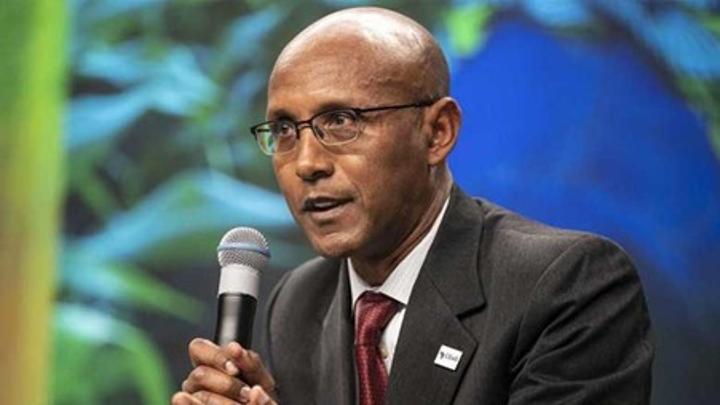
“In the short term, governments should target scarce resources to protect the most vulnerable households. At the same time, maintaining macroeconomic stability—by controlling inflation and exercising prudent fiscal management—will be essential to navigate the current shock and position African countries for a faster recovery once the crisis subsides,” said Andrew Dabalen, World Bank Group Chief Economist for the Africa Region.
High public debt and increasing debt service costs continue to constrain governments’ ability to fund development priorities and invest in infrastructure needed to create jobs.
Public capital investments remain about 20% below 2014 levels, while the ratio of external public debt service to revenue has doubled over eight years, rising from 9% in 2017 to 18% in 2025.
Inflation is projected to reach 4.8% in 2026, largely due to the Middle East conflict, while declining external financing, including reduced development assistance, adds pressure on low-income countries.
With more than 620 million people expected to enter Africa’s labour force by 2050, the report stresses the need for growth that is more productive, diversified, and led by the private sector. Achieving this will require coordinated regional, national, and sectoral action, supported by investments in infrastructure, skills, and institutions that lower the cost of doing business and attract private investment.
The Africa Economic Update highlights industrial policy as a tool for economic growth and job creation. Governments can use it to expand key industries and benefit from rising demand for African goods, including minerals for emerging technologies and pharmaceutical products.
Policies should promote rapid learning, shift economies toward higher-value goods and services, and be backed by strong implementation capacity, infrastructure, skilled labor, access to finance, and regional market integration.
“Getting industrial policies right depends on disciplined implementation, clear performance benchmarks, credible exit strategies, and deeper regional integration, including through the African Continental Free Trade Area,” the report says.
Without these foundations, industrial policy risks creating isolated enclaves rather than broad-based economic transformation.
For More News And Analysis About Gambia Follow Africa-Press