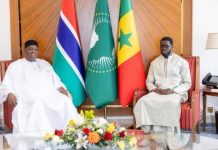
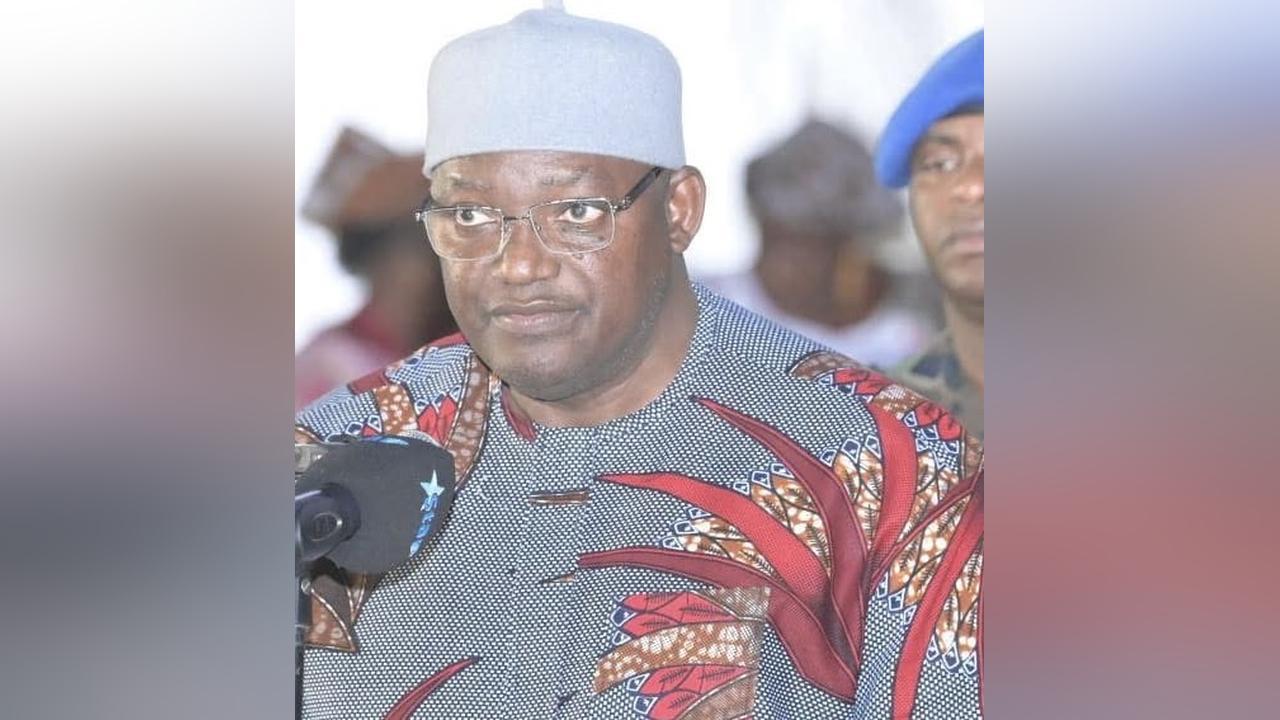
Africa-Press – Gambia. President Adama Barrow on Sunday, February 8, 2026, announced that a total of 719 communities across The Gambia have now been connected to electricity, marking a major milestone in the country’s national electrification drive.
Speaking in Njongon village during the inauguration of an electricity access project, the President disclosed that 209 communities in the North Bank Region alone have gained access to power.
He noted that for decades many rural communities lived without electricity, placing a heavy burden on women through long hours of manual labor while limiting opportunities for entrepreneurs and local businesses.
“It is for this reason that children struggle to study by candlelight, outdated lamps, or other sources of light. We are changing this narrative,” he stated.
Describing the electricity expansion as unprecedented, he said the achievement represents hope for improved living conditions, dignity, and expanded opportunities for rural communities. He added that access to power would directly transform daily life for families across the region.
The President said the progress reflects his administration’s firm commitment to ensuring electricity is no longer a privilege for a few but a basic service accessible to all Gambians and residents.
He further revealed that the country is on track to achieve universal electricity access by the end of 2026—four years ahead of the global 2030 target.
“With the completion of our ongoing inaugural ceremonies, The Gambia is poised to be among the first countries within ECOWAS to attain universal access to electricity,” he stated. “Our national electrification rate will now rise from seventy-three (73) percent to about ninety (90) percent, marking a transformative moment in our development journey.”
President Barrow announced that D400 million has been allocated in the 2026 national budget to support the ongoing expansion, while additional financing is being mobilized through the National Energy Compact initiative in partnership with the World Bank, African Development Bank, and other development partners.
He emphasized that the achievement goes beyond infrastructure. “It is worth mentioning that this achievement is far more than just infrastructure development. Electricity is a catalyst for socio-economic transformation. It powers schools and health facilities, drives agro-processing and small businesses, supports industrialization, and unlocks opportunities for jobs, innovation, and inclusive growth, particularly for rural communities,” he said.
Calling for renewed collective commitment to inclusive development, the president said the initiative aligns with national and continental goals. “Our beloved homeland, and in alignment with our continental initiatives, we are not only lighting homes but also empowering communities and building a brighter and more prosperous Gambia for posterity.”
He assured communities still without electricity that his government has mobilised both domestic and donor resources to reach the remaining 10 percent of the population by the end of 2026.
President Barrow expressed appreciation to the World Bank, European Union, European Investment Bank, and ECOWAS for their continued support and partnership, and urged sustained collaboration to improve livelihoods nationwide.
Addressing residents of Njongon and surrounding communities, he concluded: “To the people of Njongon and all communities across the region, I say: This project is yours. It marks progress, partnership, and a future where no Gambian is left behind. Embrace it as much as you can,” he concluded.