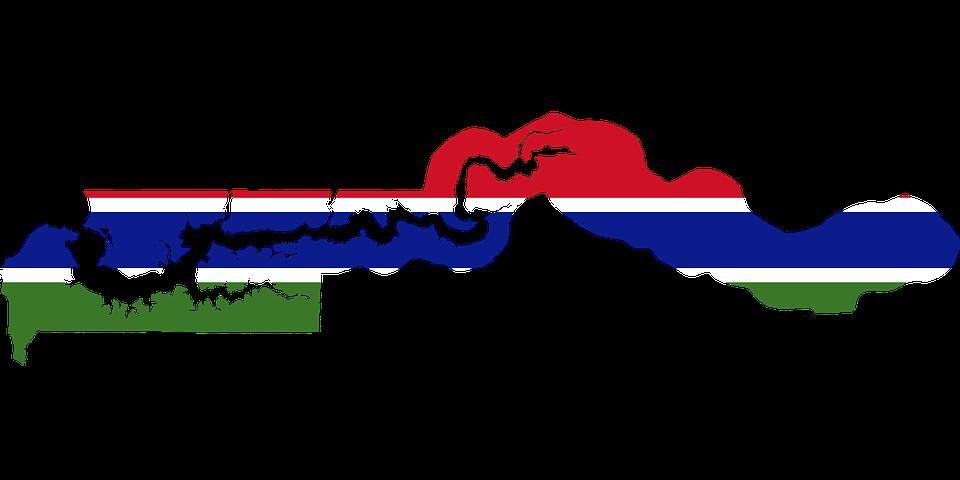
Africa-Press – Gambia. While Gambians remain understandably preoccupied with our own high stakes 2026 presidential election, we risk overlooking a political volcano erupting next door in Senegal, one whose eventual explosion may shake the entire sub-region, but most critically The Gambia. Since 2017, Senegal has been a pivotal guarantor of The Gambia’s political and security stability. Our domestic affairs have never been insulated from Dakar, and today, more than ever, our futures are intertwined.
The fall of the once-celebrated triad, Macky Sall, Adama Barrow, and Umaro Sissoco Embaló, should alarm any serious observer of West African politics. Their so-called “brotherly” bond, sometimes criticised as a budding Fulani political axis, shaped regional diplomacy for nearly a decade.
But the 2024 Senegalese election shattered that alliance. Macky Sall, defeated by the Pastef political tidal wave, now lives in quiet exile in Morocco.
Embaló, toppled just weeks ago in Bissau, has reportedly joined Sall in the same North African refuge. Only President Barrow remains in office, heading into a difficult election season without his former political benefactors.
Barrow’s dependence on Macky Sall’s advice and regional clout was never a secret. Thus, Pastef’s violent clash with Macky Sall’s regime in 2024 raised early alarm bells in Banjul. Sonko and his movement repeatedly accused Barrow and Embaló of loyally supporting Macky Sall’s anti-Pastef agenda.
Those accusations matter today, because the Pastef revolution that swept away Macky Sall is now showing worrying signs of imploding from within.
When Ousmane Sonko was controversially barred from contesting the 2024 elections, the Senegalese public expected chaos. Instead, Sonko made a historic, selfless decision and nominated his trusted party secretary general, Bassirou Diomaye Faye, insisting that “Sonko is Diomaye, and Diomaye is Sonko”.
That slogan electrified Senegal. But today, it feels like a bitter irony.
Diomaye Faye’s deviation from the Pastef doctrine is now visible to the naked eye, and to the growing anger of Pastef supporters at home and abroad.
Sonko himself has publicly stated that Faye is ignoring party principles; that his private meetings to resolve their differences have failed and even the presence of the National Assembly President, El Malick Ndiaye, failed to deter Faye from entrenching himself.
Matters worsened dramatically after Sonko’s massive Dakar rally on 8th November, 2025, where he accused Faye’s government of drifting dangerously away from its revolutionary mandate. Two days later, Diomaye issued a political statement contradicting Sonko, an unprecedented act of open defiance.
From that moment, the rupture became irreversible.
Reports now suggest Diomaye is claiming that Sonko “does not respect him” and that Sonko is “not more educated” than he is.
Whether stated in frustration or arrogance, such remarks, never denied, say a great deal about the mindset of Senegal’s young president.
I have followed Sonko since 2020. Every attempt to discredit his integrity collapsed under scrutiny. His political stature was never built on academic titles, but on his moral clarity, pan-Africanist principles, and uncanny resemblance to the ideological commitments of figures like Modibo Keïta, Thomas Sankara, Julius Nyerere, Cheikh Anta Diop, and Kwame Nkrumah.
If Diomaye thinks he can match that legacy by dangling academic credentials, then power has clearly clouded his judgment.
History teaches us that Senegal’s most educated leaders, Léopold Senghor included, often ended up advancing France’s neocolonial interests. Diomaye’s recent actions suggest he may be sliding into the same mold, abandoning Pastef’s transformative vision for a more “comfortable” neocolonial posture.
Nothing exposed Diomaye’s drift more clearly than his secretive attempt to welcome Umaro Sissoco Embaló to Senegal, barely days after Embaló orchestrated a coup in Bissau. Sonko immediately condemned the move, and Embaló quietly fled, straight to Macky Sall in Morocco.
That single episode revealed two things:
1. Diomaye is making alliances contradictory to Pastef’s ideology, and;
2. Sonko is the moral compass of the movement, still refusing to compromise its principles.
That said, I think Senegal is entering a dangerous phase in which a sitting president is rapidly losing legitimacy within his own revolutionary base.
That the most popular political figure in the country, Sonko, is furious, increasingly isolated from decision-making, and openly challenging the presidency.
Millions of young Senegalese who voted for Pastef feel betrayed and the fissure is widening at a time when the state faces regional instability, economic pressure, and rising public impatience.
This is the classic recipe for political rupture, possibly on a scale unseen since the 1962 Senghor–Mamadou Dia crisis that nearly tore Senegal apart.
It is however obvious that The Gambia’s stability has long been tied to Senegal’s.
If Senegal descends into political chaos or institutional paralysis, The Gambia, surrounded entirely by Senegal, will inevitably feel the tremors:
Cross-border tensions may rise; security cooperation could collapse; economic and trade disruptions could intensify; refugee movements could occur and Gambian political actors may be directly influenced by such instability.
President Barrow himself, already politically vulnerable, may face further complications without the stabilising influence of Dakar.
It is therefore prudent, and urgent, for Gambians to monitor developments in Senegal with a level of seriousness equal to, if not greater than, our 2026 election.
President Faye is standing at the edge of a dangerous political cliff. Unless he resigns, calls fresh elections, or restores full adherence to the Pastef doctrine, championing Sonko’s leadership, the ground beneath him will give way. And when he falls, the impact will not stop at Senegal’s borders.
As unpleasant as the prediction sounds, a political and security rupture in Senegal is brewing, one whose consequences may be too dark and far-reaching for both Senegal and The Gambia.
The question, therefore, is no longer if, but when, and whether we in The Gambia are adequately preparing for the shockwave.
Lt Col Samsudeen Sarr (Rtd) was a former Commander of The Gambia National Army, diplomat and author of several books.
Source: The Standard Newspaper | Gambia
For More News And Analysis About Gambia Follow Africa-Press