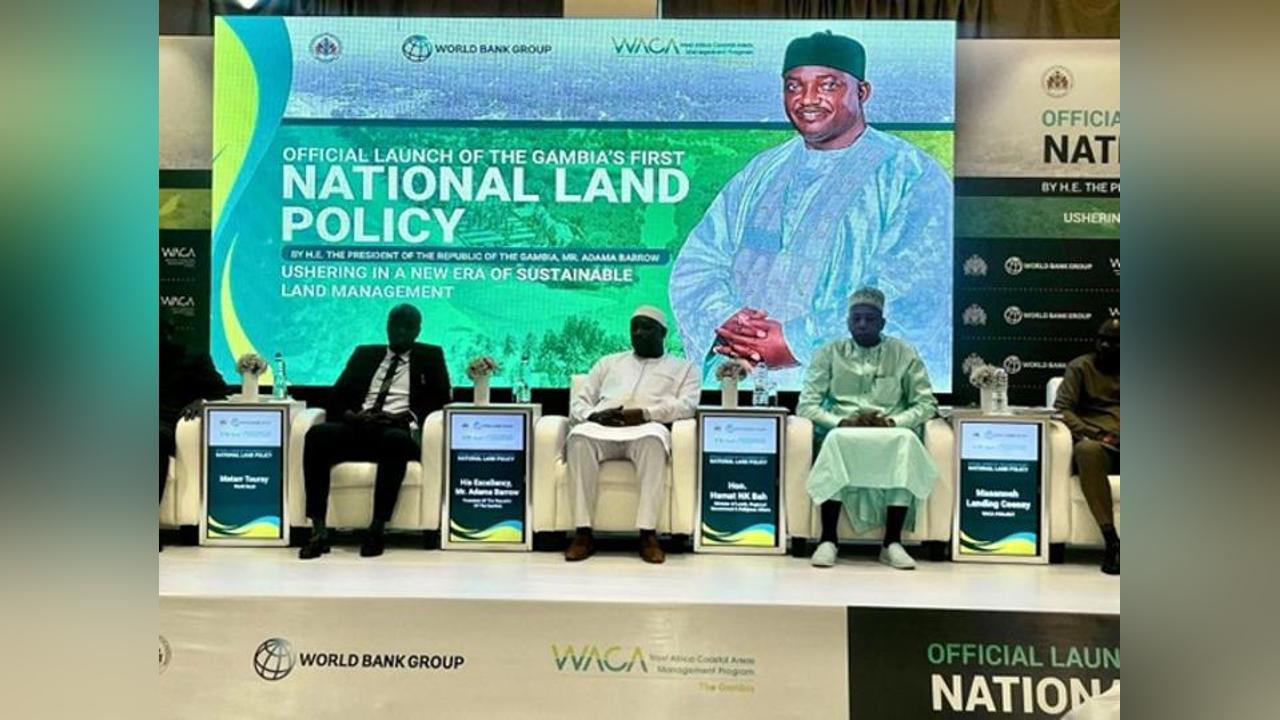
Africa-Press – Gambia. President Adama Barrow on Monday officially launched The Gambia’s National Land Policy 2026–2035, describing it as a cornerstone reform aimed at securing land rights, reducing conflicts, and strengthening sustainable development over the next decade.
Speaking at the launch ceremony at Sir Dawda Kairaba Jawara Conference Centre in Bijilo, attended by private sector representatives, young people, government officials, development partners, and civil society groups, President Barrow said the policy reflects his government’s broader reform agenda and national development priorities.
He noted that the new policy aligns with international and regional frameworks, including the Sustainable Development Goals, African Union land policy guidelines, and voluntary principles on responsible land governance.
“The National Land Policy provides a comprehensive and forward-looking framework to address longstanding and emerging challenges in land governance,” President Barrow said. “It is designed to ensure access, security, and sustainable land management for all Gambians.”
The President said the policy was developed through an inclusive and consultative process involving stakeholders from all regions and sectors, recognising the country’s diverse land tenure systems. He says it seeks to improve land administration, promote responsible land use, strengthen institutions, and mobilise both national and international resources for effective implementation.
According to him, the policy addresses key governance areas including access to land, tenure security, land use planning, special land issues, land administration structures, dispute resolution, and constitutional alignment. It also incorporates cross-cutting principles such as transparency, inclusivity, climate resilience, gender responsiveness, and respect for human rights.
The policy is organised into seven interrelated chapters and introduces reforms such as harmonising statutory and customary laws, improving dispute resolution mechanisms, addressing informal settlements, and protecting vulnerable groups, including women, youth, and persons with disabilities.
President Barrow announced that implementation would be guided by a detailed three-year action plan starting in 2026, with support from local and international partners. He thanked the World Bank and other partners for financing and technical support throughout the formulation process.
Delivering a statement on behalf of the local consultants, Abdou Touray said the policy was the result of an 18-month nationwide process involving more than 5,000 people through workshops, interviews, focus group discussions, and validation sessions across all regions.
He said over 75 public, private, and civil society institutions participated, making the policy one of the most inclusive land reform efforts in the country’s history.
Representing the World Bank-funded West Africa Coastal Areas (WACA) Project, Masanneh Landing Ceesay described the policy as a historic milestone that would help prevent land conflicts, protect rights, and build resilience through strong institutions.
“The National Land Policy brings Gambians together around a shared understanding of how land should be managed for the collective good,” he said.
For More News And Analysis About Gambia Follow Africa-Press