
Africa-Press – Ghana. The Crops Research Institute of the Council for Scientific and Industrial Research (CSIR-CRI) has raised serious concerns about Ghana’s rice sufficiency, warning of looming challenges in local rice production if urgent interventions are not made.
Professor Maxwell Darko Asante, Director of CSIR-CRI, said Ghana was on the verge of facing significant difficulties in rice production, which could adversely affect food security.
He called on the Ministry of Food and Agriculture to, as a matter of urgency, support rice producers across the country to sustain and scale up production.
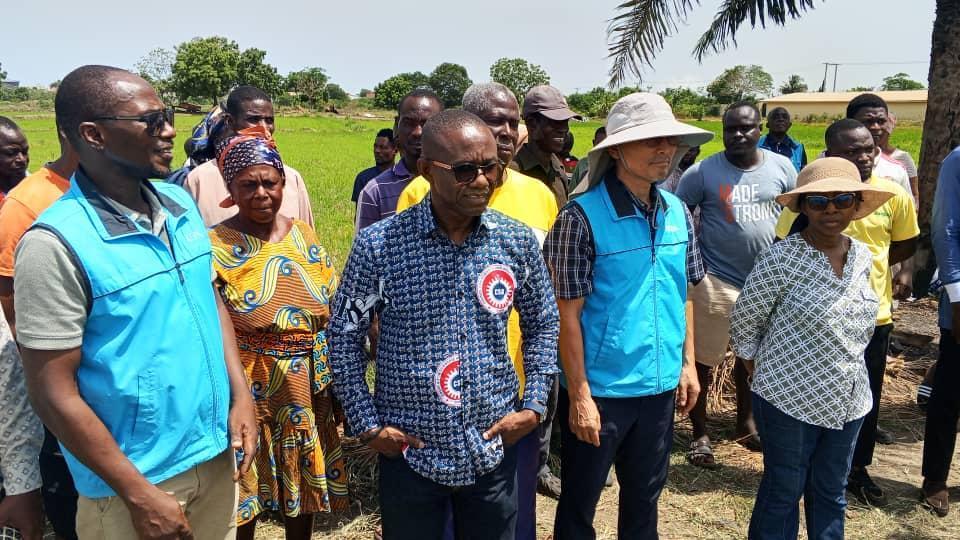
Professor Asante revealed that the Dawhenya Irrigation Scheme remained the only centre where farmers produced certified rice seedlings but expressed concern over what he described as a lack of government interest in supporting their efforts.
According to him, large quantities of certified seedlings had been produced by farmers, yet the government had failed to purchase them, a situation he said was negatively impacting farmers who had invested heavily in production.
“This is affecting the farmers because they have committed their resources to producing these seedlings, yet there is no ready market from the government to absorb them,’ he said.
The CSIR-CRI Director further alleged that some players within the rice and maize value chains were deliberately creating gluts to sustain their importation businesses at the expense of local farmers.
He stressed the need for policy direction and stronger regulation to protect local producers and promote domestic rice production.
Mr Richard Afleh, Chairman of the Dawhenya Irrigation Scheme, also painted a grim picture of the situation on the ground, indicating that farmers were going through difficult times.
Mr Afleh identified high electricity tariffs as a major threat to farming activities, disclosing that a bill of GH¢90,000 had been served on the scheme by the Electricity Company of Ghana.
He warned that failure by the government to intervene could lead to a complete shutdown of operations at the irrigation scheme.
“If nothing is done about the electricity tariffs, we may be forced to shut down the scheme, and that will have serious implications for rice production in the country,” he cautioned.
He further raised concerns about encroachment on the irrigation lands by private developers and called on duty bearers to take immediate action to protect the facility.
The concerns raised come at a time when Ghana continues to pursue strategies aimed at achieving self-sufficiency in rice production and reducing dependence on imports.
For More News And Analysis About Ghana Follow Africa-Press