
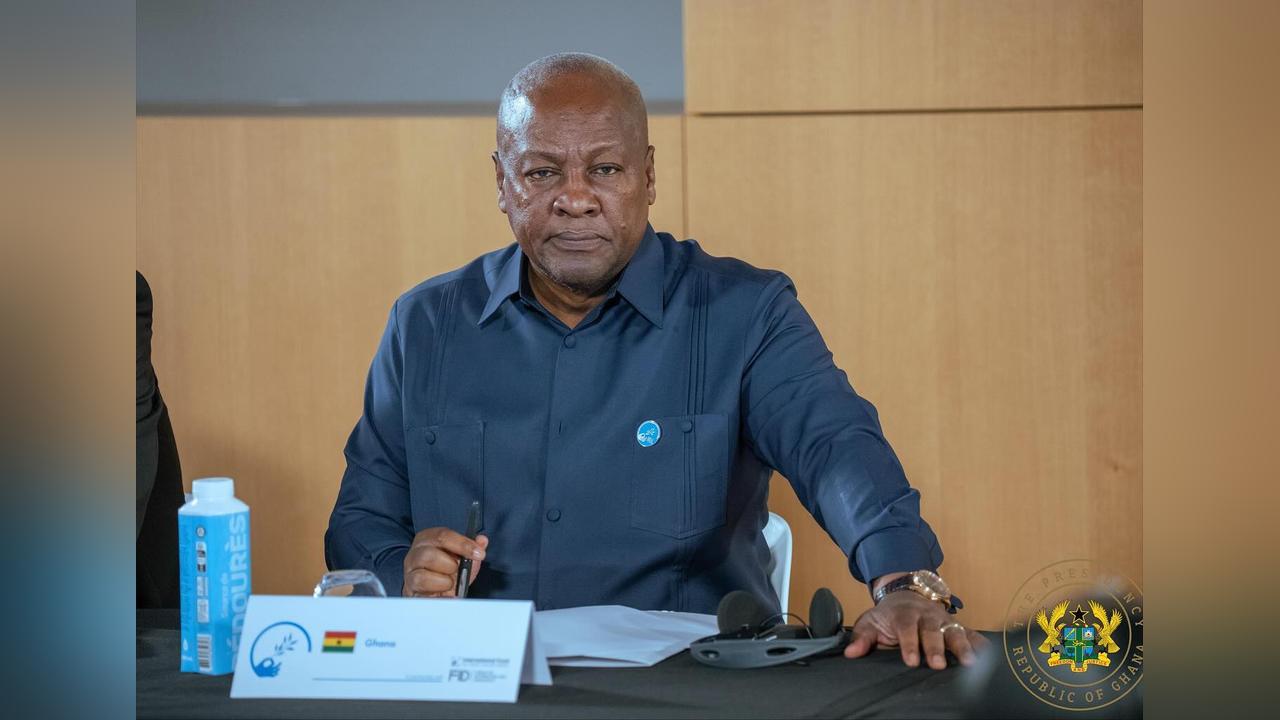
Africa-Press – Ghana. President John Dramani Mahama has reiterated plans to establish an Independent Emoluments Commission (IEC) to manage public sector pay and remuneration.
Addressing labour unions at the Flagstaff House on Tuesday, he said the IEC would, among other things, develop a comprehensive National Emoluments Policy to address pay disparities and align public sector pay with the country’s long-term development and fiscal priorities.
“Through this reform the Government intends to address longstanding inequities within the public sector, rationalise allowances and benefits, and strengthen the link between pay and productivity…
“Our goal is to move from the fragmented and adhoc wage decisions towards a system that is fair to workers, responsible to taxpayers, and sustainable for future generations,” he stated.
President Mahama said the existing Fair Wages and Salaries Commission (FWSC) would be instrumental in attaining the proposed institutional arrangement.
“We will reinforce and reposition the FWSC Commission both financially and in terms of human resources so that it becomes the technical corner stone of a modern independent commission capable of managing public sector pay with professionalism, independence and credibility,” President Mahama said.
He acknowledged the disparities in public sector remuneration, which had resulted in labour disputes over the years, stressing that it was time for “bold public sector reforms on how public sector emoluments are determined and managed.”
The President explained that the reform would be carried out in phases and in consultation with Organised Labour, begining with public sector institutions, agencies and state-owned enterprises “with an approach that reflects the financial capacity of each institution.”
He said the inclusion of Article 71 office holders would be undertaken after the necessary constitutional amendments and legislative processes had been completed.
“At that stage the IEC would be elevated into a fully-fledged constitutional authority that will be responsible for determining the emoluments of all public office holders from the President to the least paid worker,” he said.
“For this reason, 2026 will not be a year for full re-negation of conditions of service in the public sector. Instead, the government will carry out targeted modest adjustments to specific allowances as an interim measure.”
“This approach is necessary to maintain micro-economic stability, manage expectations responsibly and create the space needed to build a credible and sustainable nation emoluments framework.”
President Mahama described the new approach as “a strategic pause to address the structural foundations of our compensation system in the interest of everybody,” emphasising continued engagement with labour unions in the country to know their concerns and proffer the best solutions.
“IEC will set a transparent rule-based and evidence driven system for setting public sector pay under a framework guided by labour market realities, productivity, fiscal sustainability and strategic national priorities,” he said.
“Ultimately we seek a system in which rewards are aligned with productivity, fairness and national development goals,” he noted.
The meeting with Organised Labour followed agitation by Members of the Civil and Local Government Staff Association of Ghana (CLOGSAG) over the implementation of a new salary structure. The Union, as of Tuesday, March 17, 2026, had called off a strike they had embarked on over the issue.