
Africa-Press – Ghana. The Integrated Social Development Centre (ISODEC), a civil society organization, has congratulated President John Dramani Mahama and the African Union for leading the successful passage of the UN resolution on reparative justice.
The organization said for many years, reparative justice had remained in the corridors of global politics, which often lacked the needed agency and acknowledgment.
This was in a statement by Mr Samson S. Danse, the Executive Director, ISODEC, and was issued to the Ghana News Agency.
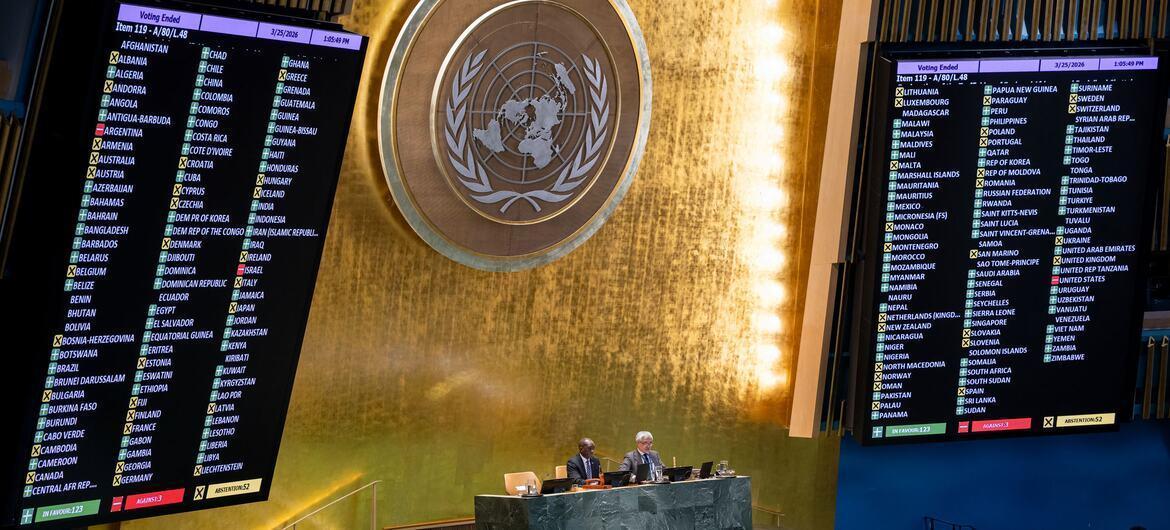
The UN General Assembly on March 25, 2026, adopted a resolution to recognize the transatlantic slave trade as “the gravest crime against humanity.”
The resolution urges member states of the UN to consider making formal apologies for the slave trade and to contribute to reparations aimed at addressing the lingering social, economic, and racial inequities that stem from this tragedy.
Passed on the International Day of Remembrance of the Victims of Slavery, 123 member countries voted in favour, three voted against, and 52 countries abstained.
The statement said the historic resolution by the Assembly was a major win not only for people of Africa and African descent but also for all those who strive for justice in the world.
“The passage of this resolution is a victory for justice, but it is not the destination. Resolutions without implementation are mere paper; the real work begins now,” it said.
The statement called on all member states to move beyond rhetoric and translate the resolution into concrete action.
The statement also called on member states to champion the establishment of a formal UN mechanism for reparative justice, a body with a mandate to facilitate negotiations, document ongoing harms, and coordinate the repatriation of cultural artifacts.
“We urge states that opposed or abstained to reconsider their positions and engage constructively in the reparative process. The refusal to accept legal liability cannot be a permanent shield against moral responsibility.
“We call on the international community to adopt the Caribbean Community’s 10-Point Reparations Plan as a working framework.
“This includes full formal apologies, debt cancellation, investment in public health and education, cultural repatriation, and the establishment of development programs for affected communities,” the statement said.
It called on civil societies, scholars, and advocates to demand that governments develop concrete domestic and foreign policies that advance reparative justice.