
Africa-Press – Ghana. Mahatma Gandhi, a prominent figure in India’s struggle for independence, once said: “The greatness of a nation and its moral progress can be judged by the way its animals are treated.”
This profound assertion does not only call for compassion towards animals but also underscores the significant role livestock play in strengthening national dignity and fostering socioeconomic development.
A 2024 report by the research department of the Statistical service shows that livestock in Ghana contributed about GH¢5.4 billion, approximately US$348.4 million, to the country’s Gross Domestic Product (GDP), representing nearly 13 per cent of agriculture’s share of national output.
Again, data from the Ministry of Food and Agriculture (MoFA) for 2023 further indicates that livestock contributes an estimated 1.3 per cent to total national GDP.
These figures highlight the immense value of the livestock sub-sector and reinforce the urgent need to improve animal welfare, particularly among rural smallholder farmers, to unlock the full potential of the industry. Yet in many rural communities in Ghana, animal welfare is far from being a priority.
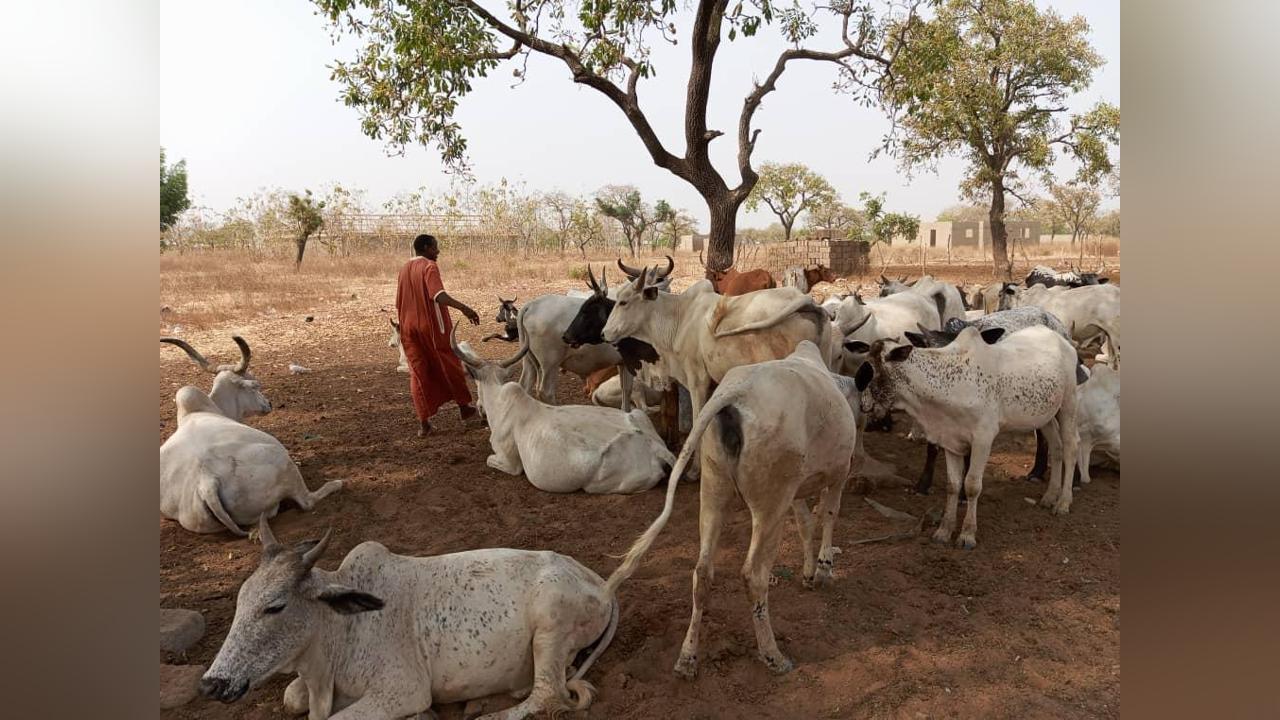
Livestock are often grazed carelessly, housed poorly, fed irregularly, and seldom given veterinary attention.
In some communities, animals are treated as communal property, with ownership asserted only when they are to be sold, stolen or involved in an accident.
This neglect has deepened the poverty cycle in many households. For instance, findings from the Ghana Living Standards Survey (GLSS 7) have shown that more than 66 per cent of poor households engage in livestock production. This means that welfare-related losses would significantly affect rural livelihoods and food security.
Concerned Scenarios
At Yankazia in the Gushegu Municipality, Mr Kungma Kulimah, a smallholder farmer, told the Ghana News Agency (GNA) that he continously loses his goats and sheep to disease outbreaks and rampant theft, largely because of poor housing and inadequate veterinary services.
“What we do here is that our animals roam to find their own feed. They move in groups as though they all belong to one person. The danger is that some get stolen without anyone noticing, while others die from diseases or harsh weather conditions,” he lamented.
He added that anytime diseases strike in the community, owners seldom get support services from experts and vertinary officials. “By the time I realise, three or four goats are gone,” he said, noting that the losses have deepened his household’s financial vulnerability.
At the Nagbagu Livestock Market in the Sagnarigu Municipality, livestock trader Mohammed Alhassan shared similar concerns, saying he often recorded losses due to poor transportation conditions.
“Sometimes by the time the animals arrive, they are too stressed to be sold at a good price. Some even die before offloading,” he said, adding that improved transport systems would help preserve animal value and enhance market earnings.
A visit by the GNA to the Aboabo Market in Tamale further revealed that butchers were worried about how poor animal welfare affected meat quality.
Alhaji Alhassan Alidu, a butcher at the market, stressed that poorly treated animals compromise the quality of meat produced. “If farmers do not take good care of their animals, it reflects the meat. Stressed or diseased animals produce poor-quality meat, and it affects our business.
He called for stronger enforcement of welfare standards to protect both consumers and the meat traders.
The gaps in animal welfare, protein, and nutrition
The Center for International Forestry Research and World Agroforestry (CIFOR – ICRAF) report on Protein Supply in Ghana and Low Emission Food System Pathway in 2023 estimated that Ghana’s average protect supply stood at 67.9g/person with animal source protein contributing about 26.3 percent of the total intake.
However, the Food and Agriculture Organization (FAO) 2022 Food Balance Sheet in Ghana which provided a breakdown of animal protein source, included beef, pork, goat,sheep, poultry meat and eggs as the major source of protein.
Meanwhile, UNICEF Ghana’s 2022 – 2024 Nutrition Country Briefs highlight inadequate dietary diversity and low intake of animal source foods among infants and children.
FAO 2021 report on Livestock and Sustainable Food Systems shows how poultry, small ruminants and aquaculture can deliver high quality protein with low environmental impacts.
Again, studies from the International Livestock Research Institute on Gender, Livestock and Food Security shows that empowering women livestock keepers improves animal survival and protein availability.
Animal Welfare and the Law
Animal welfare refers to the physical and psychological wellbeing of animals, including the conditions under which they are housed, handled, transported, and used by humans.
Ghana’s legal framework makes provisions to protect animals. The Criminal and Other Offences Act, 1960 (Act 29) prohibits acts of cruelty, including beating, overworking, starving, abandoning or keeping animals in unhealthy or overcrowded environments. Offenders may face fines or imprisonment.
Not only that, the Animal Health and Production Act, 2021 (Act 1047) mandates proper animal health systems, including disease control, humane handling practices and strengthened veterinary structures, provisions that complement welfare objectives even though the Act is broader in scope.
Expert Perspectives
Mr Abdul Rahman Safian, Director, West African Centre for the Protection of Animal Welfare and Country Coordinator of the International Society for Applied Ethology, described animal welfare in Ghana as “deteriorating,” attributing the trend to widespread ignorance and limited access to reliable information on proper animal care.
He said many smallholder farmers lacked knowledge about minimum standards for feeding, housing, hygiene and handling. “As long as animals are viewed merely as numbers rather than living beings with welfare needs, rural families will continue to lose income without understanding why,” he said.
“It is important for the Ministry of Food and Agriculture to prioritise setting up an animal welfare Department at the Ministry to be tasked to address issues of animals welfare in Ghana, especially at a time when the government is investing so much in poultry and livestock development”.
Mr Salifu Hafiz, Veterinary Technologist and Meat Inspector at the Tamale Abattoir, stressed that poor animal welfare directly reduces household incomes, because animals raised under stress grow slowly, reproduce poorly, produce inferior meat, or die prematurely.
Factors that perpetuate rural poverty
A Senior Lecturer at the Department of Agricultural Economics at the University for Development Studies (UDS), Professor Mabe Nantui Franklin, said strengthening animal welfare could significantly enhance livestock productivity and contribute meaningfully to Ghana’s GDP.
He explained that healthy, well-fed and properly housed animals yield higher-quality meat, get increased milk production, better reproduction rates, and improved survival. These outcomes, he indicated translate into higher market value, increased income for farmers, and stronger food security.
“When animals thrive, families thrive. Better welfare leads to higher productivity, and higher productivity leads to improved livelihoods,” he emphasized.
Recommendations
To address these challenges, Mr Baba Issah, Veterinary Officer at the Tamale Metropolitan Directorate of MoFA, called for intensified awareness creation through community extension services and rural radio to educate farmers on basic livestock care.
He recommended expanding veterinary infrastructure, including establishing rural clinics and mobile veterinary services to ensure timely care.
Mr. Issah advocated support for farmers with microcredit facilities to build simple livestock sheds and access affordable feed, while communities are encouraged to promote local fodder production.
He further urged improvements in transport and market infrastructure, particularly rural roads, livestock holding pens and slaughter facilities to minimise animal stress and preserve market value.
He emphasized that It was important to integrate animal welfare into national agricultural and poverty-reduction policies, with stronger collaboration among MoFA, District Assemblies, NGOs and development partners, to ensure coordinated nationwide compliance.
Conclusion
As livestock remain central to rural survival and national food security, poor animal welfare threatens not only animal lives but the economic foundations of thousands of Ghanaian households.
Without deliberate investment in humane care, Ghana risks continued livestock losses, weakened meat quality, declining incomes and deepening rural poverty.
Improving animal welfare is not just a moral responsibility; it is a crucial pathway to unlocking productivity, strengthening GDP, and transforming livelihoods.
Source: Ghana News Agency
For More News And Analysis About Ghana Follow Africa-Press