
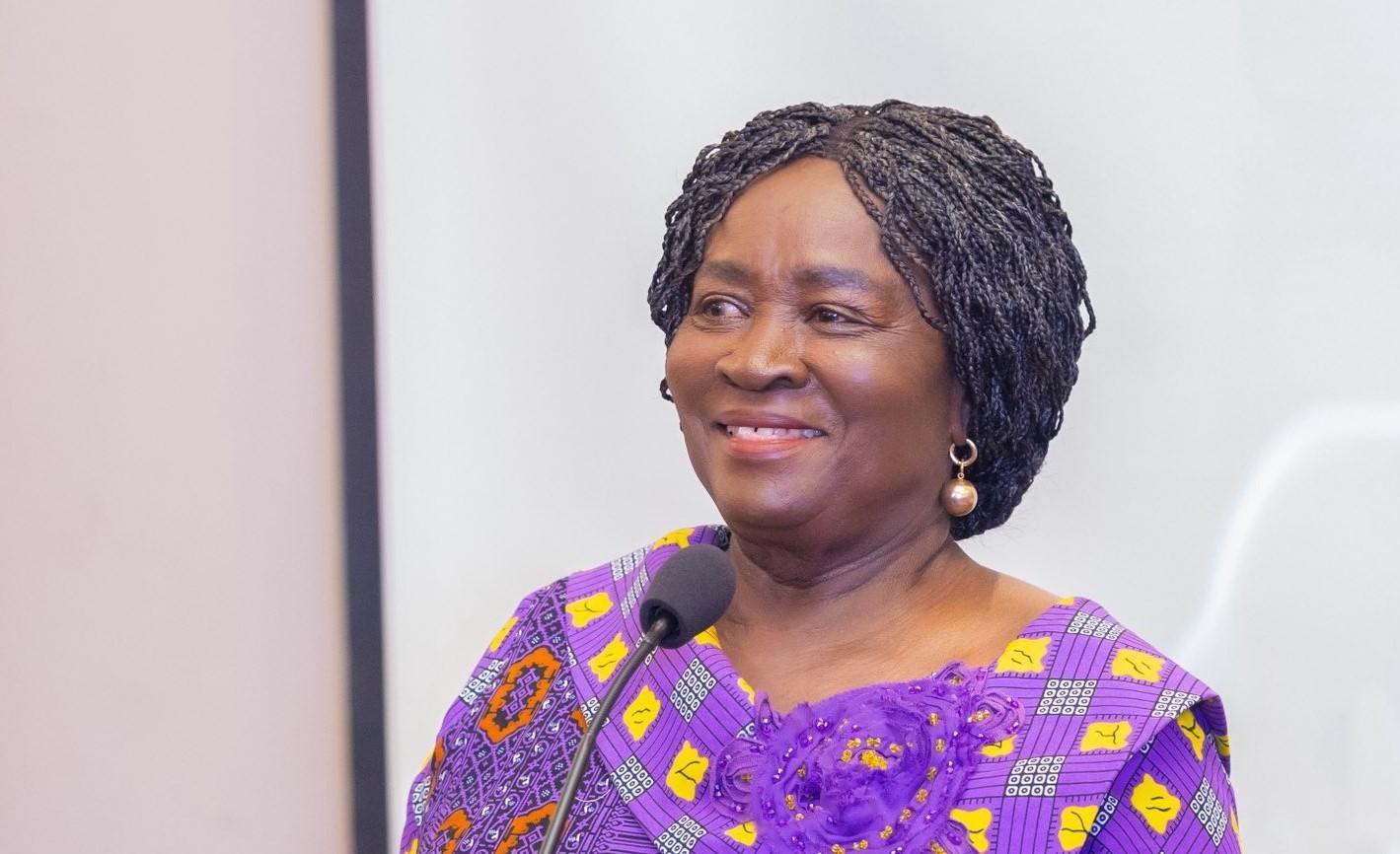
Africa-Press – Ghana. Vice President Professor Jane Naana Opoku-Agyemang has called on African countries to take decisive steps to move from dependency to integration to unlock shared prosperity for the continent.
She said Africa’s future must be intentionally shaped to empower small and medium-sized enterprises (SMEs), women and young people to achieve their goals, stressing that any development path that excluded these groups was unsustainable.
The Vice President made the call at the opening ceremony of the 2026 Africa Prosperity Dialogues (APD26) in Accra, which was monitored by the Ghana News Agency.
The Dialogue is on the theme: “Empowering SMEs, women and youth in Africa’s market: innovate, collaborate and trade.”
“A future that excludes young people, women and small enterprises is not one we can afford to sleepwalk into,” Prof. Opoku-Agyemang said.
She explained that the idea of a continental “reset” was to move Africa from fragmentation to integration and from exporting potential to building prosperity at home, noting that the vision of Africa as a single integrated economic space remained unfinished.
Prof. Opoku-Agyemang described the African Continental Free Trade Area (AfCFTA), headquartered in Accra, as a historic opportunity to deepen intra-African trade, investment and mobility, and emphasised that borders should serve as connectors rather than barriers.
She said SMEs accounted for more than 80 per cent of employment on the continent, women made up nearly half of Africa’s workforce, and young people constituted over 60 per cent of the population, yet their participation in cross-border trade remained limited.
Fewer than 20 per cent of African SMEs, she added, were engaged in export trade, while women and youth continued to face constraints in access to finance, skills, mobility and markets.
The Vice President said Ghana was supporting Africa’s integration agenda through initiatives such as the 24-hour economy policy and the “Big Push” infrastructure development programme, aimed at boosting productivity, trade and industrial growth in line with ECOWAS and African Union priorities.
She called for stronger institutions, effective governance, sustained investment in infrastructure and connectivity, and industrial strategies that promoted innovation and value addition across the continent.
Mrs Matilda Asante-Asiedu, the Second Deputy Governor, Bank of Ghana, said efficient cross-border payment systems were critical to the success of Africa’s single market.
“Trade agreements alone do not create trade; payments make trade possible,” she added.
High transaction costs and fragmented payment systems disproportionately affected SMEs, women and young people, she said, and highlighted Ghana’s participation in the Pan-African Payment and Settlement System to facilitate trade in local currencies.
Dr Nkosazana Dlamini-Zuma, Chairperson of the Africa Prosperity Network Advisory Council, said empowering SMEs, women and youth was essential to the success of the AfCFTA and Africa’s long-term development.
She said Africa’s progress would be measured not by declarations or summits, but by jobs created, businesses scaled, borders opened and rising prosperity for its people.
The Africa Prosperity Dialogues is an annual high-level platform convened by the Africa Prosperity Network to advance practical solutions for economic integration.
It focuses on accelerating AfCFTA implementation, promoting intra-African trade and investment, and removing barriers to trade and mobility across the continent.
For More News And Analysis About Ghana Follow Africa-Press