
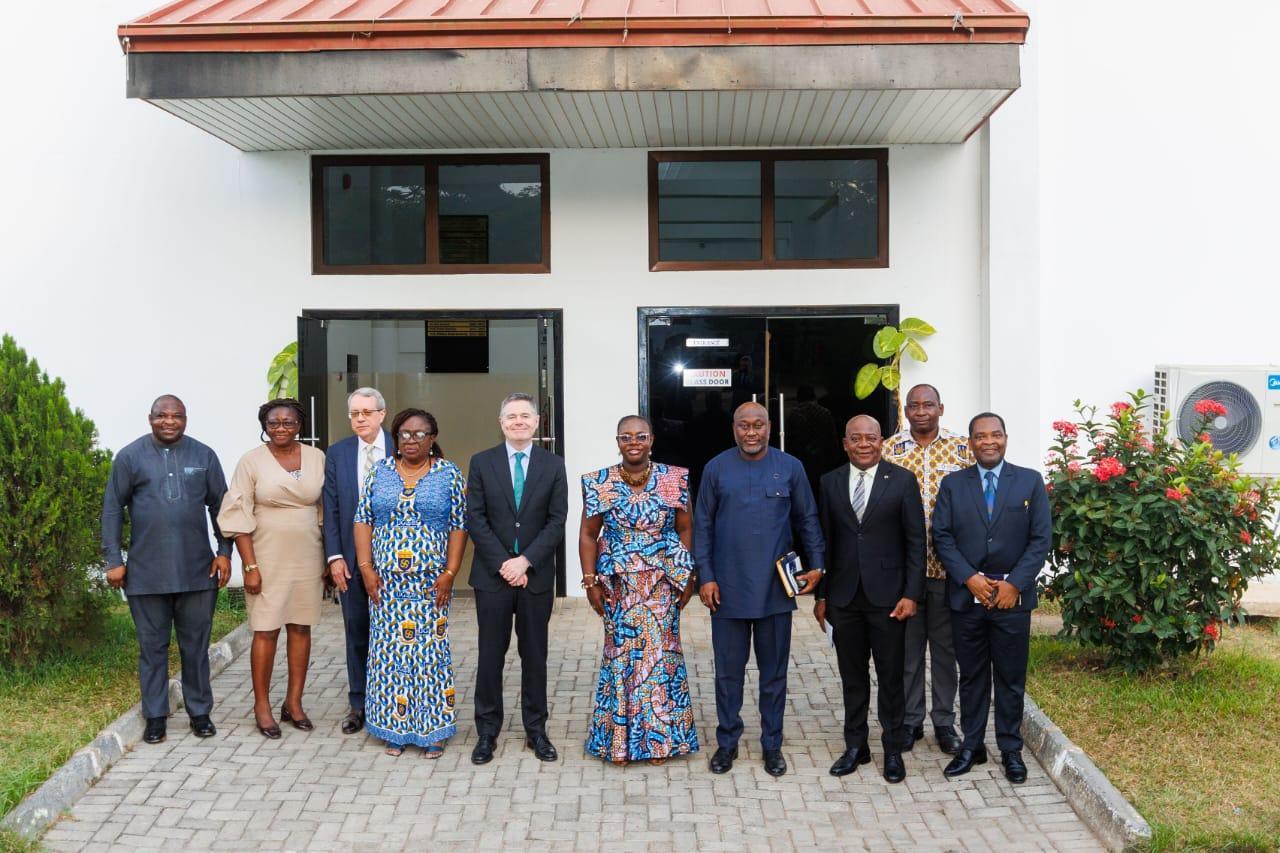
Africa-Press – Ghana. Mr Paschal Donohoe, Managing Director of the World Bank Group, has called for urgent reforms in education and skills systems to address mismatches with labour market demands.
He said the world faced a global skills crisis, with millions of young people entering the workforce without competencies required in economies shaped by technology, automation and the green transition.
Speaking on the theme: “Building Skills, Creating Jobs, and Empowering Africa’s Future,” in Accra, Mr Donohoe said many children in low- and middle-income countries lacked foundational learning skills, while numerous adults had not attained basic education.
He said about 1.2 billion young people were expected to enter labour markets in developing countries over the next decade, warning that many were not adequately prepared for available opportunities.
Mr Donohoe described Africa as central to the global economic future due to its youthful and fast-growing population, which presented both opportunities and challenges.
He noted that while about three million formal jobs were created annually on the continent, between 10 and 12 million young people entered the labour force each year, creating a significant employment gap.
Mr Donohoe said the challenge extended beyond job creation to improving productivity and earnings, particularly in sectors such as agriculture and small enterprises where many young people found livelihoods.
He said although students were among the most educated generations in Africa’s history, they faced a more competitive and dynamic job market.
Mr Donohoe identified skills mismatch, lack of practical experience, and limited alignment between academic training and industry needs as key challenges.
He urged students to develop foundational skills such as critical thinking, communication, and adaptability to remain competitive.
Mr Donohoe encouraged young people to explore opportunities in emerging sectors, including digital services, agribusiness and green energy, rather than relying solely on formal employment.
He said the World Bank Group had prioritised education, skills development and job creation, focusing on improving foundational learning, retaining children in school, equipping youth with relevant skills and promoting entrepreneurship.
Mr Donohoe emphasised the need for stronger collaboration between educational institutions and industry to align training with market needs.
He reaffirmed the World Bank’s commitment to supporting countries, including Ghana, to strengthen human capital development through investment in education and skills.
Mr Donohoe expressed optimism about Africa’s future, stating that the continent’s growth would be driven by the innovation, ambition, and resilience of its young people.