
Africa-Press – Kenya. The United Democratic Alliance (UDA) party has raised more than Sh25 million from aspirant registration fees as thousands of hopefuls sign up to seek the party’s ticket ahead of the next general elections.
Party records shows that a total of 9,165 aspirants registered by February 2, ahead of the deadline across all elective positions, from governor to member of county assembly (MCA), translating into Sh25.1 million collected through non-refundable nomination fees.
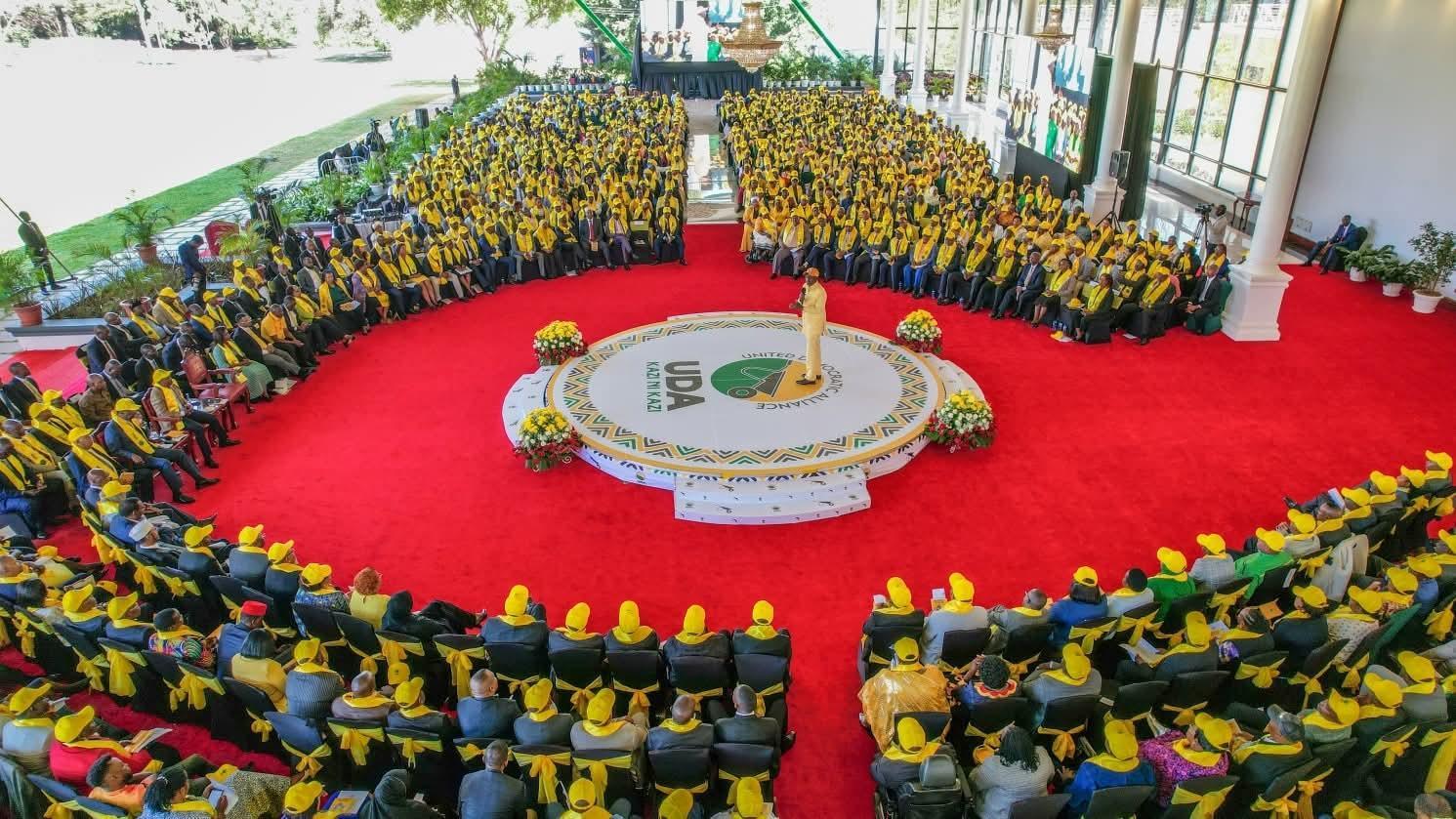
The registration was opened a week ago, ahead of the planned aspirants’ meeting to be held at the State House tomorrow (Wednesday). President William Ruto will chair the meeting.
The figures, Deputy President Kithure Kindiki, said point to UDA’s continued dominance as the country’s largest political party by membership and aspirant interest.
Governorship races have attracted 139 aspirants, each paying Sh10,000, bringing in Sh1.93 million. The Senate contests have drawn 240 aspirants, with each paying Sh5,000, generating Sh1.2 million.
For the National Assembly, 1,205 aspirants have registered to contest the 290 MP seats, contributing Sh6.03 million at the rate of Sh5,000 per aspirant.
The Woman Representative race has attracted 274 aspirants, also paying Sh5,000 each, yielding Sh1.37 million. The biggest numbers and the highest returns have come from the grassroots.
A total of 7,307 MCA aspirants have registered to compete for 1,450 ward seats, each paying Sh2,000, generating Sh14.61 million, more than half of the total collections. Speaking on Tuesday during a meeting with leaders from Meru at State House, Ruto revealed that the number had increased to 12, 235.
“Kesho nitakuwa hapa na aspirants. 12, 235, na sio wapigaji kura, wale wanataka kupigiwa kura…No political party has ever attracted this number of aspirants, even when we were in Jubilee, we never got this number,” he said.
According to Ruto, this underscores both the party’s national reach and the intense competition expected in its primaries. “Watu wanasoma mambo kwa ground na wanajua serikali inaenda kuundwa mahali pale, it is only a few people who cannot see where the government is going to be formed,” he stated.
The data reflects a familiar pattern in Kenyan politics, where county and ward-level races attract the largest pools of candidates due to lower entry barriers and the perception of closer proximity to voters.
Beyond the financial aspect, the sheer number of aspirants signals potentially bruising party primaries. In some wards and constituencies, more than ten candidates are expected to battle for a single ticket, raising concerns about disputes, defections and post-nomination fallout.
The party’s popularity among aspirants is partly attributed to its strong showing in the last general elections, where it secured the presidency and a significant presence in Parliament and county governments.
Holding the ruling party ticket is widely viewed as a major advantage in many regions, particularly in areas considered UDA strongholds. Political observers say the nomination process will be a critical test for the party’s internal democracy and organisational capacity.
How UDA handles disputes, appeals and perceived unfairness during the primaries could shape its fortunes in the general elections. By convening aspirants at State House, Ruto is positioning himself at the centre of the nomination conversation, long before campaigns officially begin.
At its core, the State House forum is about discipline and message control. Party primaries have historically been a major source of division, defections and post-election court battles, often weakening dominant parties ahead of general elections. For UDA, which controls both national and county-level seats in many regions, managing expectations early is seen as critical to preserving unity.
Political insiders say the meeting will be used to spell out nomination rules, timelines and dispute resolution mechanisms, while also issuing a clear warning against premature campaigns, parallel mobilisation structures and public infighting that could damage the party’s image.
The choice of State House as the venue is equally symbolic. It elevates the forum beyond a routine party meeting and signals that the nomination process is a strategic priority for the presidency itself.
Ruto is also expected to use the forum to take the political temperature across regions, particularly in areas where multiple strong aspirants are lining up for the same seats.
Early engagement allows the party leadership to identify flashpoints, manage rivalries, and, where possible, encourage consensus-building before competition escalates.
Another key objective is loyalty management. With UDA hosting both incumbents and ambitious newcomers, the party faces the delicate task of balancing renewal with political survival.
By bringing aspirants together under one roof, the leadership can reinforce party ideology, reaffirm loyalty expectations and discourage rebellion by those who may feel sidelined.