
Africa-Press – Kenya. East Africa’s historic joint bid for the 2027 Africa Cup of Nations is slipping into a race against time, with critical infrastructure still far from meeting required standards.
Following February 2026 assessment visits across Kenya, Tanzania and Uganda, CAF concluded that none of the proposed competition stadiums currently meet the benchmarks for hosting Africa’s premier football tournament.
With barely two years to go, the project remains firmly in a construction and corrective phase rather than nearing completion. For Kenya, the findings are particularly sobering.
Inspectors confirmed that none of the key venues—Moi International Sports Centre, Kasarani, Talanta Sports City and Nyayo National Stadium—meet CAF Category 4 requirements, placing immediate pressure on ongoing works.
Kasarani, long seen as the country’s flagship venue, now requires extensive redevelopment rather than routine upgrades. CAF has called for the development of modern hospitality areas and the installation of a new 3000 lux lighting system to meet broadcast standards.
The competition pitch must be fully reconstructed, including drainage and irrigation systems, while safety infrastructure such as CCTV, access control and fire detection requires significant improvement.
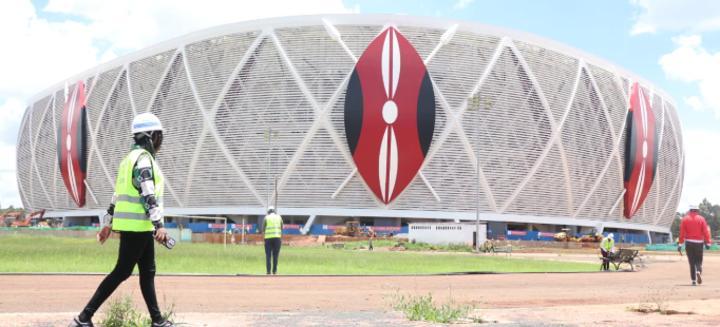
Media and operational facilities, including the Venue Operations Centre, also need upgrading. Talanta Sports City, Kenya’s most ambitious sports infrastructure project, remains central to the hosting plan but carries significant execution risks.
CAF has demanded at least 80 per cent completion within months, alongside integration of key systems such as lighting, power redundancy and security. The report also stresses the need for firm procurement commitments, highlighting concerns over time-lines and delivery.
Nyayo National Stadium faces the most uncertain future. CAF noted the absence of a detailed renovation master plan and concluded that the venue does not meet required standards in its current state.
It may only serve as a training facility unless major upgrades are undertaken, effectively narrowing Kenya’s pool of match venues. Beyond stadiums, CAF’s assessment expands into a broader systems audit, underlining that hosting AFCON is as much about logistics as infrastructure.
The report calls for upgrading and certification of all training facilities, confirmed government funding, and visible progress in supporting infrastructure such as access roads, utilities, power backup and security systems.
Logistical readiness remains a key concern. CAF requires assurance that airports can handle increased traffic, with clear procedures for teams and officials, alongside sufficient hotel capacity that meets tournament standards. Coordination with immigration and customs authorities is also essential.
A major regional requirement is the establishment of a unified visa framework across the three host nations to allow seamless movement of players, officials and fans—highlighting the complexity of delivering a joint tournament.
CAF has set August 2026 as the next critical inspection milestone, describing the months ahead as the decisive implementation phase. By then, host countries must demonstrate tangible progress in stadium construction, system installation, funding commitments and operational readiness.
In Kenya, concerns have been compounded by funding challenges. Appearing before Parliament, Sports Principal Secretary Elijah Mwangi revealed that the government owes contractors billions of shillings for works at Kasarani and Nyayo.
The delays have already slowed progress, with reduced workforce levels and, in Nyayo’s case, contractors vacating the site. Despite these setbacks, the government insists preparations remain on track and that corrective measures are underway. CAF’s report ultimately reframes AFCON 2027 as a test of execution rather than ambition.
The vision of a successful East African tournament remains alive, but its delivery now depends on urgent action, sustained funding and coordinated effort across Kenya, Tanzania and Uganda.