
Africa-Press – Kenya. At 22 years, Ruth Nyambura Kiarie chose a path to alcoholism. Excessive drinking became a lifestyle that cemented her relationship with fellow alcoholics. For more than eight years, Kiarie battled addiction, often finding it difficult to separate reality from fantasy.
“For all those years, nothing mattered to me but alcohol. I lived and dreamed of alcohol. It did not matter how much it cost or where it came from, I absolutely had to have it,” she said.
Kiarie said as her alcohol tolerance rose and she would not get drunk on beer alone, she started mixing beer with ‘harder’ drinks. The mother of a six-year-old boy said by now, most of her friends and relatives were avoiding her. Her relationship with her son was also strained because she was always drunk.
“Had I realised that the first sip of liquor I took as a cheeky activity with friends would spiral out of control and thrust me into a long-drawn-out battle with alcoholism, I would have reconsidered my actions,” the 30-year-old from Ndumberi village in Kiambu said.
But her salvation came in the form of a residential treatment facility at Njoro subcounty in Nakuru. It was while confined at the Beyond Love Rehabilitation Centre that the embers of love first sparked and interestingly, greatly helped shape her life.
After checking into the rehabilitation centre in March 2022, Kiarie went through a 12-step recovery programme. For the past nine months, she has been the only woman in an alcoholic recovery programme alongside six men.
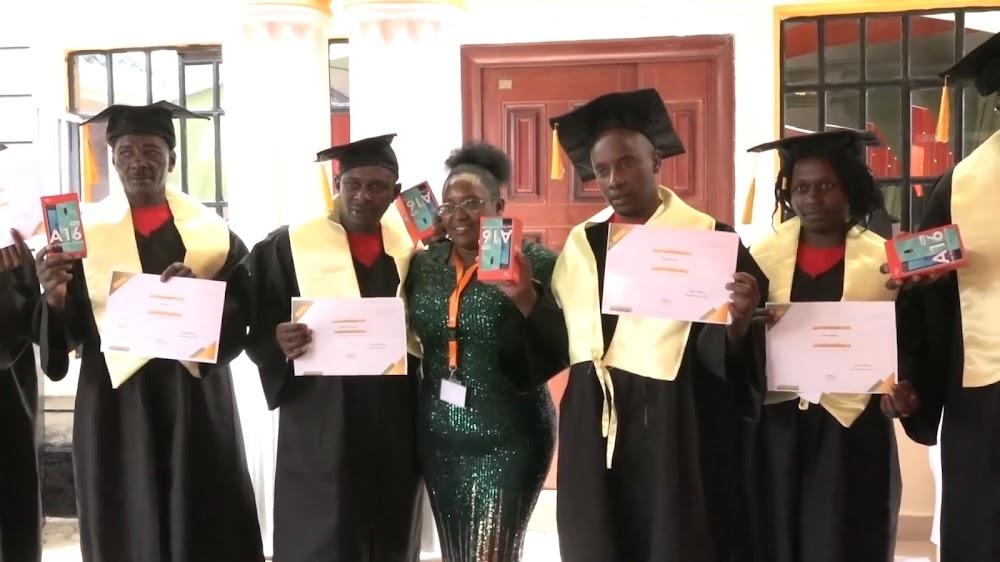
The seven recovered alcoholics are now ready to be reintegrated into the society after being rehabilitated and equipped with vocational skills such as interior design, fashion and design, electrical installation and joinery.
“I have recovered fully and now have about 275 days of sobriety. Being sober is the best thing that has ever happened to me. Waking up without a hangover is simply beautiful,” Kiarie said.
“I have opened a new chapter in my life. I plan to re-live my life. I will now shower my son with the motherly love and all the attention he lacked. I want to listen to his problems, ideas and experiences.”
Kiarie vows that she will make sure that her parents and siblings are the happiest people in the world. “We fell out so many times because of my alcoholism,” she said adding that many female alcoholics suffer in silence.
Kiarie said in the African culture, women are not supposed to drink in public, let alone become alcoholics. She said this is what brings about the stigma, barring them from seeking professional help.
“I accepted that I had a problem and needed help. I overcame denial. I made it. Someone else can make it too,” Kiarie said.
The founder of Beyond Love Rehabilitation Centre, Virginia Muthoni says while it’s important to be open and honest about one’s concerns over a family member who is an alcoholic, it is vital to remember that one cannot force someone to stop abusing alcohol.
She advises relatives to remain neutral and be compassionate with the affected family member rather than judge them or try to shame them. “Encourage your loved one to open up about the reasons they are abusing alcohol, for instance if they are bored, lonely, anxious or simply stressed,” she said.
Muthoni, who is also a counsellor and psychologist, calls on parents to avoid emotional appeals that may only add to the troubled alcoholic’s feelings of guilt and increase their compulsion to drink. She said they should instead offer advise and not ultimatums.
“Do not cover up for your loved one or make excuses for their behaviour. Trying to shield them from their responsibilities will only prevent them from seeing the negative consequences of their drinking and could delay their resolve to get help,” Muthoni said.
She said one of the best ways to stop a possible addiction before it begins is to be keen on one’s mental state and health. “You have to be proactive. If you go through a traumatic experience, seek therapy. Don’t look for excuses; they turn into that addiction that you can’t stop.
“For most people struggling with addiction, it started as a joke. And now they can’t come out of it. You feel so ashamed that you don’t know how to address this issue,” Muthoni said.
For 68-year-old Beth Wangui Karori from Gachura village in Bahati, Nakuru, immediate family members are more often than not in denial that their son, daughter, sister, wife, mother, niece, aunt or even grandmother is an alcoholic and in need of help.
Karori’s 27-year-old son Laurence Njuguna has undergone the nine-month alcoholic recovery programme at the Beyond Love Rehabilitation Centre. She said the humiliating rejection experienced by people who are stigmatised for their alcohol and drug abuse acts as a powerful social punishment, driving them to continue and perhaps intensify their drug-taking.
The retired civil servant said young alcoholics have dropped out of colleges, sold their household items and indulged in crime, while others have gone berserk or been reduced to zombies, unable to perform simple tasks such as washing clothes or even taking a bath.
She advocates that county governments and local NGOs should prioritise dealing with alcoholism and drug and substance abuse by enhancing access to treatment and after-care services.
“Counties should also come up with empowerment programmes for addicts so that they can comfortably afford basic needs and avoid returning to alcohol and drugs after rehabilitation,” Karori said.
She urged the county government of Nakuru to set up a treatment facility for addicts at the county referral hospital, where the affected youths can access free services.
“The cost of treatment is high and the majority of families with addicts cannot afford it,” Karori says. According to her, those who have become alcohol dependent should not be written off from society, when sobriety can be achieved with a helping hand.
For 37-year-old Benson Kimani Njoroge from Kanunga village in Kiambu, life went south after he was lured into alcohol abuse by some of his friends. He said it wasn’t long before he separated from his wife, when their daughter was two years old.
“I sold my properties to get money to satisfy the insatiable urge for the bottle. That was the genesis of my marriage woes,” Njoroge said.
He said he previously operated a business that collapsed as he sank deeper into alcoholism. Njoroge however, says his life changed after checking into Beyond Love Rehabilitation Centre in March 2022.
“I used to have very low self-esteem, but I now walk with my head held high,” he said. Njoroge said he also sleeps and eats well and enjoys a good relationship with God.
“I now pray and meditate. Before then, I only asked God for the landlord not to come at month-end because I had drunk the rent!” he said.
Njoroge said his previous battle with alcoholism was grueling, adding at one point, he thought he would die. When his parents heard about his behaviour, they confronted him, but he denied everything.
As he battled alcoholism, his mother prayed for him diligently, even giving him examples of people who had been alcoholics and recovered. However, alcohol provided an escape from the pain, stress and anxiety that he would experience every day.
Kenyans’ drinking problem, he says, stems from colleges and universities. He said it is fueled by peer pressure, easy access to alcohol, opportunity and the freedom to do whatever one wishes with one’s free time.
“Drinking is a big problem in our universities. The habit unfortunately follows many of us to our places of work, marriages and other relationships we form,” Njoroge said.
He said as he immersed himself into binging, he lost interest in his former hobbies, got drunk at inappropriate times and needed increased amounts of alcohol to get intoxicated.
“I became irritable and depressed, and was more forgetful than I was before drinking became an issue. My unkempt appearance no longer bothered me,” Njoroge said.
“I started feeling guilty about my drinking and tried to hide my alcohol consumption from my parents and siblings.”
Things took a worse turn when Njoroge who had hitherto been hooked to bottled brands of liquor resorted to illicit alcohol to sustain his addiction. His parents, he says, are among the few people who refused to give up on him.
“The journey between my first sip of alcohol and checking into rehab was long and tortuous,” Njoroge said.
“I hit rock bottom in order to finally go to rehab. I went in after my close relatives and friends sat me down for candid and lengthy talk as I had reached a point where it was do or die.”
Nakuru County Critical Infrastructure Protection Unit commander Antony Sohera was the chief guest during the graduation of the seven. He said other Kenyans are walking down the same path the recovered alcoholics trekked and hardly care of the consequences their actions have on their families.
The younger generation, he says, further contributes to this carefree public attitude towards alcohol abuse by glorifying being drunk to the point of blackout.
“Sadly, alcoholism does not respect career, creed, age or any other classification in society. You will find doctors, judges, politicians and even priests who are alcoholics,” Sohera said.
Regrettably, alcohol accounts for 3.3 million deaths globally, 320,000 of these being 15 to 29-year-olds. According to the World Health Organization, alcohol abuse is also the third leading risk factor for poor health globally.
“Alcohol abuse leads to premature deaths. Urgent action is needed from all of us especially our leaders, to tackle this issue of public interest, before any more lives are lost,” Muthoni said.
For More News And Analysis About Kenya Follow Africa-Press