
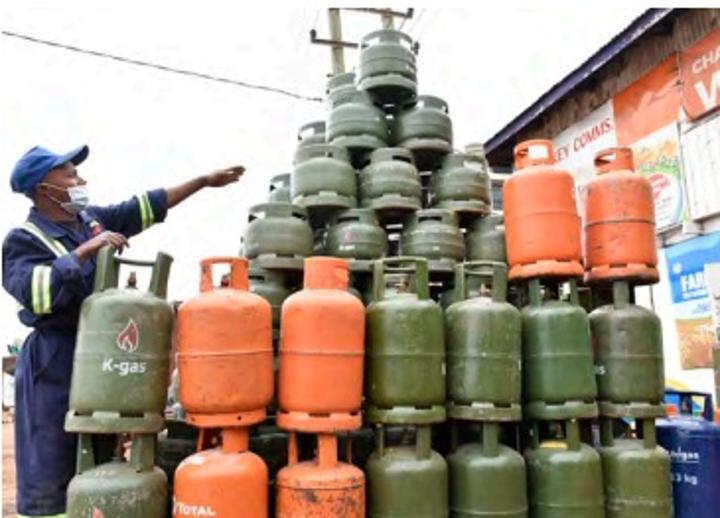
Africa-Press – Kenya. Following a string of LPG accidents across Kenya, the Energy and Petroleum Regulatory Authority (EPRA) has tightened safety rules for traders, warning of immediate enforcement action for any breaches.
The move comes after several incidents across the country highlighted the dangers posed by improper handling, storage, and transportation of LPG cylinders.
Last year alone, EPRA recorded eight major incidents, including a cylinder explosion in Nairobi’s Githurai area that killed two residents and an accident in Machakos where a fallen cylinder severely injured a market vendor.
Speaking at a press briefing on Thursday, EPRA Director General Sanjay Brahmbhatt emphasised that safety is non-negotiable.
“We have observed repeated violations by some traders, including storing cylinders in residential areas and overstacking, which puts lives at risk. EPRA will not hesitate to take strict action against anyone found flouting the law,” he said.
The regulator cited the Petroleum Act (Cap. 308) and the Petroleum (Liquefied Petroleum Gas) Regulations, 2025, which provide the legal framework for licensing, handling, storage, and distribution of LPG.
Traders must operate only with a valid EPRA licence and written consent from the legally registered brand owner for each cylinder sold.
They must also possess a valid fire certificate, a calibrated weighing scale, and issue receipts containing full cylinder details.
EPRA emphasises that all traders must adhere to strict safety standards in storage, handling, transportation, and stacking to protect both consumers and the public.
According to EPRA, cylinders must be stored and transported safely, with careful segregation of full and empty units, proper stacking to avoid accidents, and display of clear safety information at the point of sale.
Traders are required to maintain comprehensive records for each cylinder sold, including brand, serial numbers, net weight, price, and deposit where applicable.
Non-compliance with these standards may attract immediate enforcement action, including prosecution, fines, suspension, or revocation of licences.
Dr. Brahmbhatt stressed that non-compliance carries serious consequences.
“Any trader found operating illegally, refilling cylinders without approval, or compromising storage and transportation standards will face prosecution. In 2025, EPRA revoked the licences of two non-compliant traders in Nairobi and Nakuru counties. Our goal is to ensure the safety of both consumers and the general public,” he added.
Members of the public are encouraged to report suspected violations to EPRA via [email protected] or by calling +254 709 336 000.
Confidentiality is assured. “We all have a role to play in safeguarding our communities. Reporting unsafe practices can prevent unnecessary deaths and injuries,”
Dr. Brahmbhatt concluded. EPRA reiterated its commitment to a safe, reliable, and fully compliant LPG market for all Kenyans