
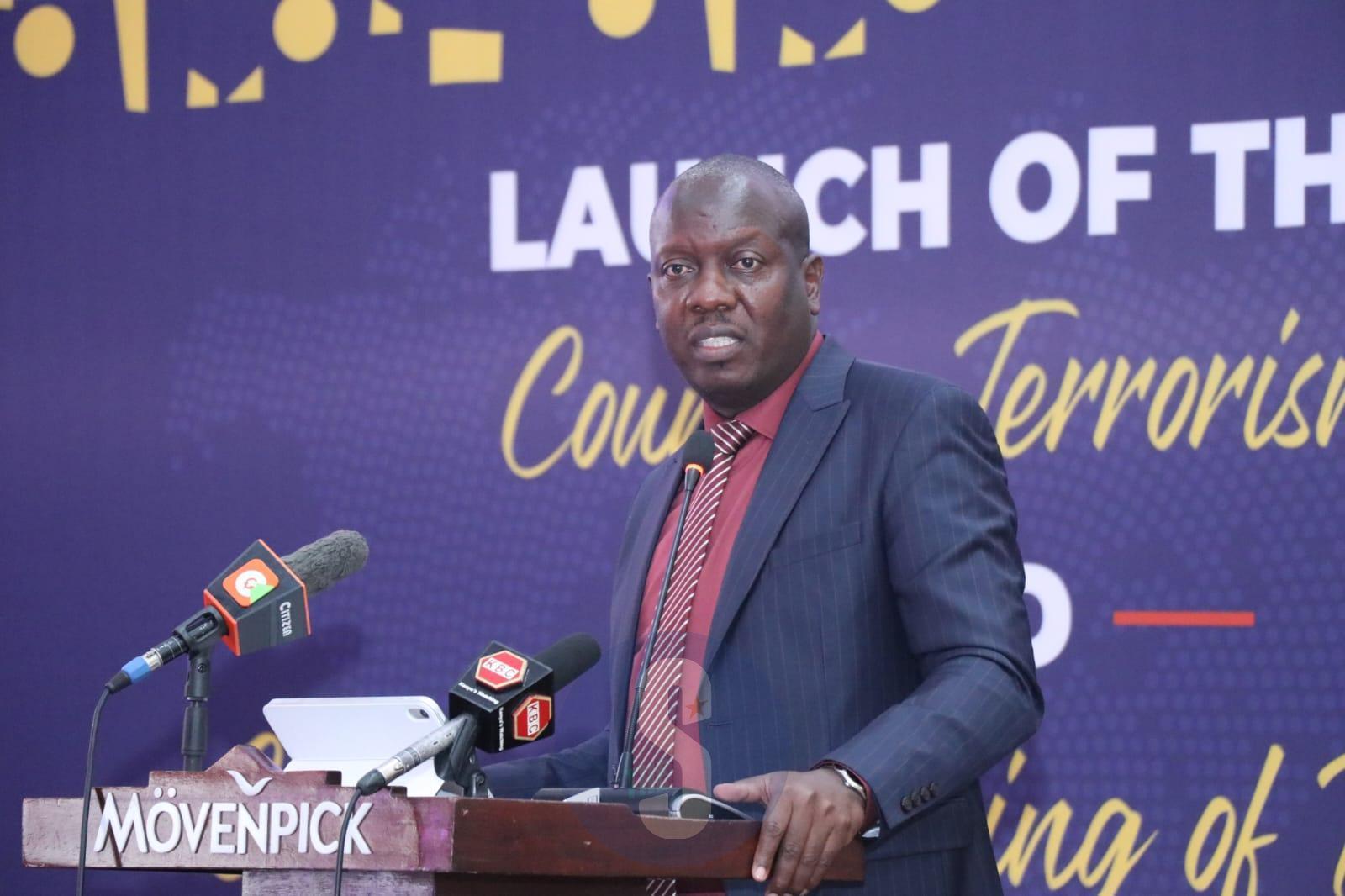
Africa-Press – Kenya. Kenya took a major step in strengthening its fight against terrorism and transnational organised crime following the launch of a specialised training curriculum by the Office of the Director of Public Prosecutions (ODPP).
Speaking during the official launch, Director of Public Prosecutions Renson Ingonga described the Counter-Terrorism (CT) and Countering the Financing of Terrorism (CFT) Curriculum as a milestone achievement for the ODPP and the broader criminal justice sector.
Ingonga said the curriculum is designed to equip prosecutors and law enforcement agencies with the specialised knowledge and practical skills required to investigate and prosecute terrorism-related offences effectively.
“The significance of this occasion cannot be overstated. It demonstrates our resolve to ensure that prosecutors are fully equipped with the tools necessary to dismantle terrorist networks and hold perpetrators accountable,” he said.
The launch comes on the heels of successful prosecutions in high-profile terrorism cases, including the DusitD2 terror attack case, where suspects were convicted for Financing Terrorist Activities and Facilitation of Terrorist Activities.
According to Ingonga, the strategies and lessons drawn from such complex cases have been incorporated into the curriculum to strengthen prosecutorial preparedness. He also referenced a landmark bio-terrorism case involving a medical doctor accused of plotting to deploy anthrax — a biological weapon of mass destruction.
The case attracted significant local and international attention and tested Kenya’s legal and investigative capabilities.
“These cases demonstrate our ‘Network vs Network’ approach — matching criminal networks with coordinated prosecutorial and investigative structures,” Ingonga noted.
The curriculum will now be integrated into training programmes at the Prosecution Training Institute to prepare the next generation of prosecutors for high-stakes terrorism litigation.
The DPP acknowledged the role of international partners in developing the curriculum, including the British High Commission, the United States Department of Justice (USDoJ), the Office of Overseas Prosecutorial Development, Assistance and Training (OPDAT), and the International Institute for Justice and the Rule of Law (IIJ).
He emphasised that international cooperation has been critical in handling terrorism cases, particularly in navigating the complexities of Mutual Legal Assistance (MLA).
Through collaboration with foreign law enforcement agencies, telecommunication firms and financial institutions — especially in the UK and the USA — Kenya has been able to secure vital digital and financial evidence.
The curriculum places particular focus on strengthening prosecutors’ ability to obtain, preserve and present digital evidence from foreign jurisdictions.
A key component of the training addresses the diverse financing streams that sustain terrorist operations.
These include illicit trafficking in arms, persons, drugs and cultural property; environmental crimes such as illegal exploitation of minerals, timber, charcoal and wildlife; and the imposition of “protection fees” within conflict zones.
By treating such activities as the financial engine of terrorism rather than isolated crimes, the ODPP aims to disrupt terror networks at their core.
Ingonga noted that the Eastern Africa region’s strategic location and porous borders expose it to vulnerabilities arising from the nexus between terrorism and organised crime.
The curriculum provides insights into how cross-border criminal activities are exploited to finance terrorism and violent extremism.
The curriculum is grounded in international legal frameworks, including the International Convention for the Suppression of the Financing of Terrorism and key United Nations Security Council resolutions addressing the crime-terror nexus.
It also incorporates evolving global mandates that require states to suppress all forms of financial support to terrorist groups, even in the absence of a direct link to a specific terrorist act.
Recognising the rapid evolution of technology, the curriculum dedicates a core module to digital threats.
Prosecutors will receive specialised training in cyber-crimes such as impersonation and phishing, which terrorist groups increasingly exploit to radicalise recruits and raise funds.
The training also addresses the use of cryptocurrencies and decentralised finance platforms, which provide new avenues for anonymous cross-border capital movement.
However, Ingonga observed that technological advancements such as blockchain analytics and digital forensics equally offer opportunities to detect and disrupt terror financing networks.
The curriculum highlights the importance of specialised judicial infrastructure, notably the Kahawa Law Courts, established in 2020 as Kenya’s dedicated court for Counter-Terrorism and Transnational Organised Crime cases.
Concentrating CT and TOC cases within a specialised court has enabled the refinement of prosecutorial strategies and deepened jurisprudence in complex terrorism cases.
Beyond legal frameworks and institutional structures, the DPP stressed the need to prioritise victims of terrorism and transnational organised crime.
He emphasised that justice must remain inclusive and restorative, ensuring victims’ voices are recognised throughout the judicial process.
The curriculum also introduces mental health and trauma-informed practices for prosecutors.
Given the psychological toll associated with handling extremist violence and graphic evidence, the ODPP aims to safeguard the well-being of its staff.
Ingonga concluded by recognising key individuals, including the US Resident Legal Advisor based at the US Embassy in Kenya and the former Criminal Justice Advisor at the British High Commission, for mentoring prosecutors within the Counter-Terrorism Division.
“With these remarks, it is my distinct honour to officially launch the Counter-Terrorism and Countering the Financing of Terrorism Curriculum Manual,” he declared.
The launch signals Kenya’s continued commitment to strengthening its legal and institutional response to terrorism, reinforcing its position within regional and global counter-terrorism efforts.