What You Need to Know
Former Deputy President Rigathi Gachagua has criticized National Assembly Speaker Moses Wetang’ula for allegedly not following parliamentary rules during discussions about him. Gachagua highlighted the need for a substantive motion when MPs debate issues concerning individuals not present in the House. He made these remarks at a funeral service, emphasizing the importance of upholding standards in
Africa-Press – Kenya. Former Deputy President Rigathi Gachagua raised concerns over the conduct of National Assembly Speaker Moses Wetang’ula, suggesting that parliamentary rules may not have been consistently applied during discussions by MPs about his remarks.
According to Gachagua, there were several instances where, in his view, the Speaker did not invoke the relevant Standing Orders when MPs debated matters relating to him without a substantive motion.
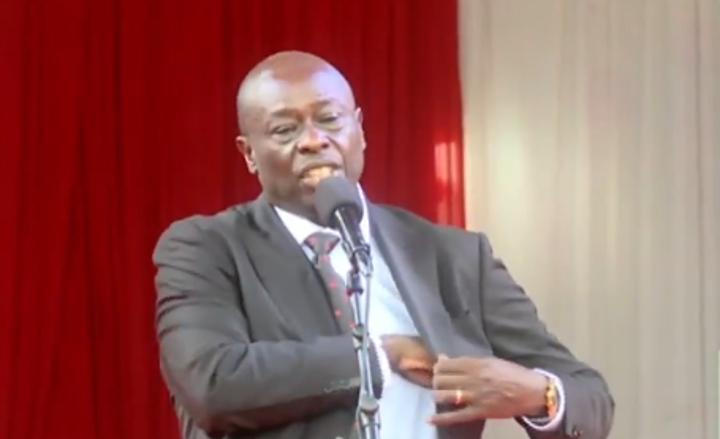
“Mr Speaker, let me address you since you are here. I heard you talking about Standing Orders, and let me draw your attention to Standing Order Number 51, which requires a member to introduce a substantive motion when discussing someone who is not in the House,” Gachagua said.
He added that, in his opinion, the Speaker ought to uphold the standards of the office, alleging that on multiple occasions MPs had been allowed to discuss him without a substantive motion.
He further said that if an MP wished to raise such matters, it should be done in line with Standing Order Number 51.
Wetang’ula, who attended the event, had not responded to the remarks by press time.
Gachagua spoke in Ol Kalou during the funeral service of the late area MP Njuguna Kiaraho, at an event attended by President William Ruto.
The former Deputy President, who was impeached in late 2024, also claimed that some MPs from the Mt Kenya region did not support him during the impeachment process, alleging that inducements may have influenced their decisions, a matter that has not been independently verified.
“The man we are mourning is a hero. He resisted pressure and rejected bribery offers to impeach me. He said a firm no. He is not like some who, according to my view, accepted inducements during the process,” Gachagua said.
The DCP leader also asked the President to engage Ichung’wah, the Majority Leader and Kikuyu MP, to ensure that a planned public rally on Saturday proceeds without disruption.
Gachagua, while speaking about his impeachment, said he currently recognises Ruto as President, adding that their political differences would be addressed in next year’s elections.
He also responded to claims of tribalism, stating that the region overwhelmingly voted for Ruto in 2022 despite him not being from the area.
“We have no problem with you for now, as you hold the position of President. Use the time in office to serve the people of Kenya. Other issues will be addressed at the election,” he said.
He added: “We voted for you not because of your name but because you are William Kipchirchir Arap Ruto; how then can we be described as tribalistic. When you travel to other regions, please refrain from characterising our community as tribal.”
The role of the Speaker in the National Assembly is crucial for maintaining order and ensuring that parliamentary procedures are followed. Standing Orders govern how debates are conducted, particularly when discussing absent members. Gachagua’s comments reflect ongoing tensions within Kenyan politics, especially following his impeachment in late 2024, which has left a significant impact on political alliances and public perception. The dynamics between Gachagua and Wetang’ula illustrate the complexities of parliamentary governance in Kenya, where procedural adherence is often contested.