
Africa-Press – Kenya. Kenya is positioning itself for an expanded agricultural export presence in Georgia, following a strong 2024 performance in which it exported goods worth Sh821 million against Sh58 million in imports.
Fresh-cut flowers remained Kenya’s top export to Georgia last year, valued at Sh777.8 million, followed by tea, fruits and coffee.
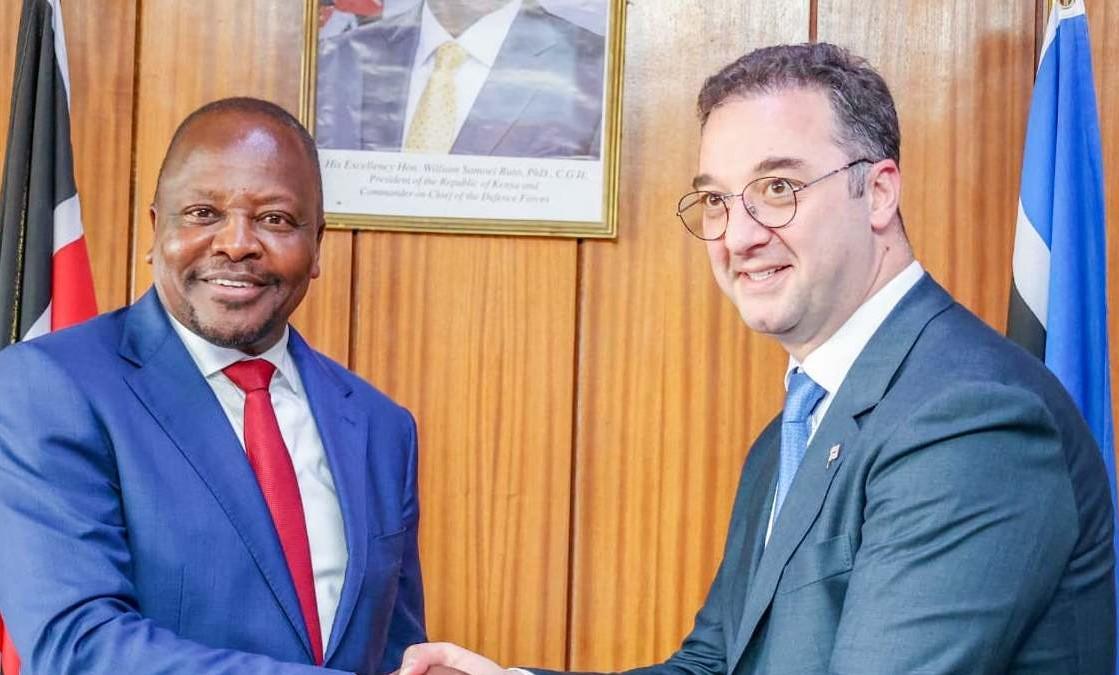
During a meeting in Tbilisi with Georgia’s Environmental Protection and Agriculture Minister David Songulashvili, Agriculture Cabinet Secretary Mutahi Kagwe said the country is pursuing a more structured approach to growing its export volumes.
He noted that the government aims to enhance packaging, standardise quality and strengthen distribution systems for Kenyan products in Georgia and the wider Caucasus region.
“Kenya is pushing to expand access for its top exports to Georgia. With flowers already at Sh777.8 million, we are looking at growth opportunities. Our farmers must benefit from diversified, premium markets,” Kagwe said.
The two ministers discussed ways to speed up market access processes, including sanitary and phytosanitary approvals, food safety certifications and the establishment of a Kenya–Georgia Joint Working Group to coordinate trade-related efforts.
Kenya also raised the issue of diversifying sources of fertilizer to reduce reliance on Ukraine, noting that fluctuations in supply can affect local production.
Georgia indicated interest in supplying fertilizer and collaborating in local blending and production.
The talks also touched on cooperation in irrigation and water-resource management. Georgia’s technologies are expected to be integrated into various Kenyan projects, including ASAL irrigation schemes, solar-powered water systems and greenhouse operations.
In addition, the two countries plan to strengthen collaboration in digital and precision agriculture, livestock vaccines and diagnostics, genetics, research partnerships between KALRO and Georgian institutions, and training in sanitary, phytosanitary and traceability systems.
This is intended to help reduce post-harvest losses and improve product quality for export markets.
Kagwe also highlighted the importance of diversifying Kenya’s global food import sources for commodities such as wheat, maize and rice.
To formalise the new areas of cooperation, Kenya and Georgia agreed to develop a comprehensive Kenya–Georgia Agriculture Memorandum of Understanding aimed at supporting private-sector investment and joint ventures in agro-processing, logistics, warehousing and agricultural innovation.
Minister Songulashvili described Kenya as an important regional hub for agricultural distribution, technology cooperation and market access, and affirmed Georgia’s commitment to the partnership.