What You Need to Know
The Kenyan government is working to confirm the employment of 20,000 teachers previously hired under an internship program. Education Cabinet Secretary Julius Ogamba announced that Sh6 billion is currently available, but an additional Sh23 billion is required to complete the process. This move follows a court ruling deeming the internship program illegal and discriminatory, prompting the need for
Africa-Press – Kenya. The government has confirmed it is working to absorb teachers previously employed under the internship programme into permanent and pensionable terms, in line with a court ruling that declared their previous employment conditions unfair and discriminatory.
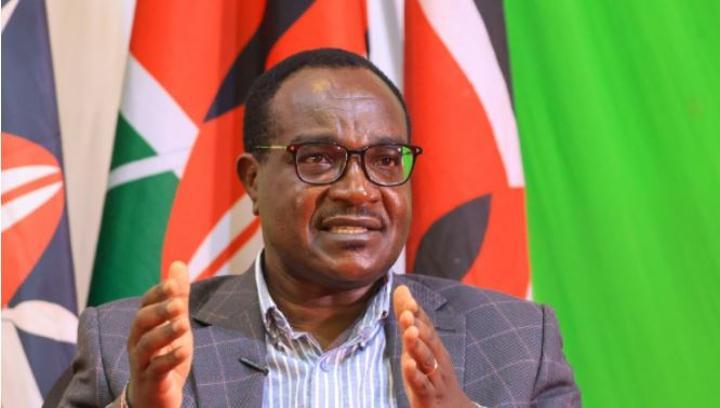
Education Cabinet Secretary Julius Ogamba said the state already has Sh6 billion available for the exercise and is seeking an additional Sh23 billion to complete the process.
Speaking in Kisii county on Saturday to vernacular media stations ahead of President William Ruto’s Gusii development tour, Ogamba said the absorption of intern teachers would be carried out gradually, depending on the availability of resources.
“We have no choice but to have them. The thing is we have to look for resources from somewhere for them to be confirmed; it’s just a question of how we stagger that process,” Ogamba said.
“We have Sh6 billion, and the teachers to confirm are 20,000, so we are looking for Sh23 point something billion to confirm the rest.”
The government, through the Teachers Service Commission (TSC), is also seeking to hire 16,000 new teachers for junior and senior secondary schools.
The recruitment is part of a broader plan to address teacher shortages that have been exacerbated by the rollout of the Competency-Based Education (CBE) system.
As part of its 2026-27 financial year budget proposals, the TSC has outlined plans to convert 20,000 intern teachers to permanent and pensionable terms, in addition to hiring new teachers. Pressure to regularise the employment status of intern teachers intensified following a March 14, 2026 ruling by the Employment and Labour Relations Court, which found the TSC’s internship programme illegal and unconstitutional.
The court held that the hiring of 44,000 trained teachers as interns was discriminatory and directed that they be employed on permanent and pensionable terms.
Ogamba said the government is already working with the National Treasury and the TSC to ensure compliance with the ruling, alongside recruiting 16,000 more teachers under similar conditions.
“That is being done. There is a team, as we speak, working with Treasury and TSC. I know there are discussions at an advanced stage to perhaps agree on a period within which to complete the confirmation. We cannot employ them as interns because the court nullified the process,” he said.
The CS emphasised that the conversion of intern teachers to permanent staff is unavoidable as the government seeks to meet the globally recommended teacher-to-student ratio of 1:25.
He noted that the internship programme had already helped improve staffing levels, reducing the ratio from 1:45 to 1:29. The planned recruitment of an additional 16,000 teachers is expected to lower the ratio further.
“We now have to put our heads together to find a solution,” Ogamba said.
At the same time, the CS highlighted ongoing efforts to align teacher skills with the demands of the CBE curriculum.
He said more than 220,000 teachers have so far been retooled to handle the new system, particularly in technical subjects such as metalwork.
Following the transition of the pioneer CBE cohort to Grade 10, Ogamba said about 60 per cent of learners have been placed in STEM pathways, while 38 to 39 per cent are pursuing social sciences. About 10 per cent have opted for sports science.
“These numbers are helping us analyse what is missing so that we do not train teachers in subjects that are not in high demand. We are harmonising training to match the number of teachers required,” he said.
Universities have also begun retooling lecturers from September 2025 in preparation for the first cohort of CBE learners expected to join higher education institutions in 2029.
Ogamba said the transition to senior school has effectively served as a pilot phase, giving the Ministry of Education a clearer understanding of the adjustments needed at the university level to accommodate the new curriculum.
The Kenyan education system has faced challenges regarding teacher employment and staffing ratios. In March 2026, a court ruling declared the internship program for teachers unconstitutional, leading to the government’s commitment to convert these positions to permanent roles. The initiative aims to improve the teacher-to-student ratio, which has been a significant concern in the context of the Competency-Based Education system introduced in recent years. The government is also focusing on aligning teacher training with current educational demands, particularly in STEM subjects.