
Africa-Press – Kenya. Nairobi-based Senior Counsel Nelson Havi has ignited a lively online debate after advising Kenyans to avoid meat during the festive season and instead opt for fruits and vegetables.
In a post shared on his social media platforms, Havi attributed his lean physique to his dietary choices, saying he rarely eats meat.
“Stop over-feeding on carcasses over the festive season, and asking me why I do not have a public opinion (toad tummy),” he said.
He added that his preference for fruits and vegetables had helped him avoid developing a protruding belly common among many middle-aged Kenyans.
Senior Counsel Nelson Havi /NELSON HAVI/XThe senior counsel went further to justify his argument by drawing comparisons from the animal kingdom.
“Have you ever seen an obese chimpanzee? We just eat fruits and vegetables,” he posted.
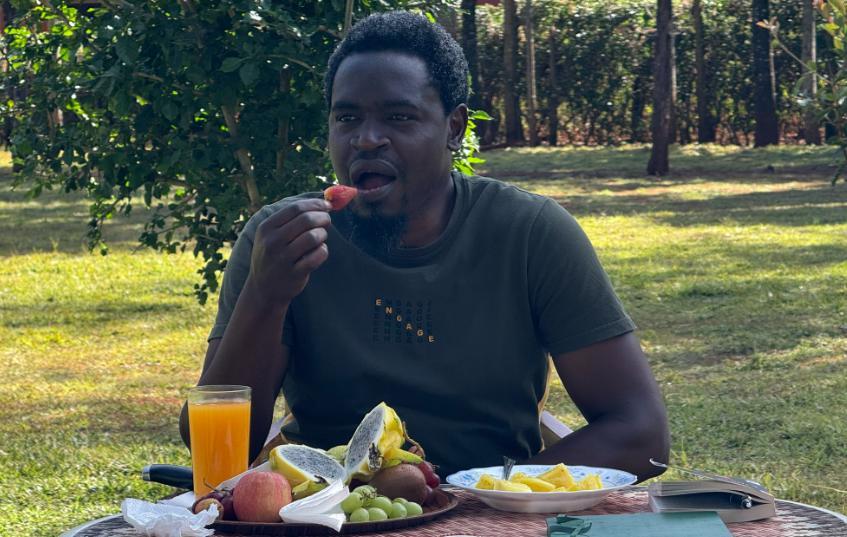
Havi accompanied the remarks with a photo of himself seated outdoors at what appeared to be his rural home in western Kenya.
On the table before him was a spread of fruits and a glass of fresh juice, grapes, dragon fruit, pineapple slices, an apple and strawberries.
The image quickly circulated online, drawing thousands of reactions, comments and shares.
However, his comments did not go unchallenged. Many social media users pushed back, questioning his logic and defending meat consumption, especially during the festive season.
“Have you ever seen an obese lion, cheetah or a hyena for that matter? They are all lean and muscular! Meat is good for you,” one user posted in response.
Others framed the debate around economics and social realities. One commenter noted that for many Kenyans, Christmas is one of the few times they can afford to enjoy meat.
“When you have money you can eat vegetables on Christmas Day and still be comfortable. Those who are broke save money to supplement their diet with meat on Christmas Day,” the post read.
Some reactions were light-hearted, with one user quipping that “over eating on fruits is the new flex.”
Another countered Havi’s animal analogy by saying: “But I have seen a fat elephant, yet they feed on ‘fruits and vegetables.’”
There were also culturally nuanced responses. One commenter jokingly advised Havi to simply admit he had eaten meat before turning to fruits “to clean the system,” while asking whom he had left imondo—chicken gizzard—for, a delicacy highly prized in western Kenya.Mbuzi choma/FILE
The debate touched a nerve because, for many Kenyan families, the festive season is inseparable from the aroma of meat roasting over open fires and the bustle of preparations that begin days in advance.
The slaughtering of chickens, goats and, in some households, cattle, traditionally marks Christmas and New Year celebrations.
Across rural villages and urban neighbourhoods alike, the sight of fresh meat being prepared is a symbol that the holidays have truly arrived.
Chicken and goat meat hold a special place on the festive table, with indigenous chicken often reserved for honoured guests or major celebrations, while mbuzi choma is a centrepiece of many gatherings.