
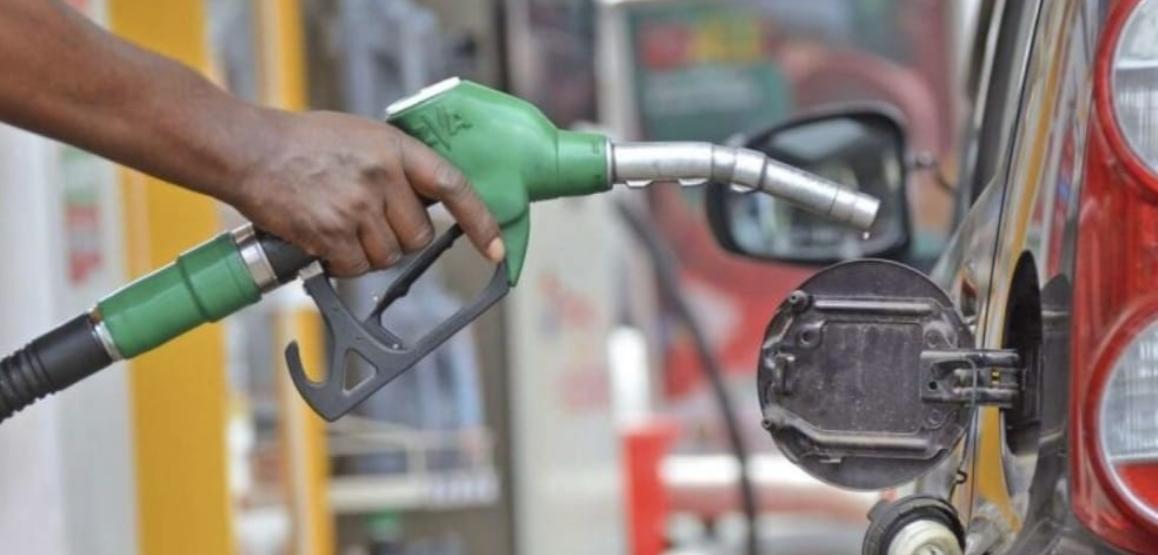
Africa-Press – Kenya. Fuel hoarding and rationing by major Oil Marketing Companies has been blamed for creating a product shortage in Nairobi and other parts of the country.
In their push for upward pump price revisions to boost profits margins, they are now threatening a nationwide supply cut.
The dealers cite rising landed costs and operational constraints despite most of the current stocks having been shipped into the country before the US and Israel led attack against Iran which began on February 28.
Kenya has a 45-day reserve capacity, according to Kenya Pipeline and the Energy and Petroleum Ministry.
A spot check by the Star also noted panic buying in some stations as motorists moved to fill tanks.
Taxi drivers and boda boda operators, who form the backbone of Nairobi’s daily commute, said the situation was getting worse , with some accusing fuel attendants of rationing supplies or selling selectively to customers willing to pay above the regulated pump prices.
An independent dealer who spoke the Star yesterday said the regulator, Energy and Petroleum Regulatory Authority (EPRA) has agreed to look the other way on those increasing margins, as its hands are tied by the law until the next cycle pricing (April-May).
“EPRA has allowed dealers to adjust but what they are saying is hey, we are not telling you to go break the law but we understand the situation. There is nothing they can do until the official monthly pricing,” the dealer said.
EPRA director general Daniel Kiptoo did not confirm nor deny the claims.
The Petroleum Outlets Association of Kenya (POAK) yesterday noted “heightened demand” as a result of panic buying amid lower stock levels.
“Our stocks are lower than optimal. We are avoiding making comments that will increase the anxiety. We have fuel. But we shall have to reduce demand to avoid a shortage,” POAK CEO John Njogu told the Star.
There are concerns that major OMCs have cut selling to small dealers at wholesale, and are now forced to buy at the pump for resale, forcing them to increase the margins.
Independent (small petrol stations) account for up to 68 per cent of fueling points across the country.
“This is creating an unnecessary panic in the market,” POAK chairman Martin Chomba said.
“We might start feeling the impact on prices in a month’s time or so but as of now there is product. What we are asking the OMCs is to keep the taps of these small dealers running to enable them fuel the economy.”
OMCs are anticipating a sharp rise in prices next pegged on global trends, where benchmark crude surged to $104 per barrel on Tuesday.
This is in addition to higher landed costs as a result of vessels rerouting to the Cape of Good Hope, amid disruption in supply as a result of the closure of the Strait of Hormuz.
Kenya Ships Agent Association CEO Elijah Mbaru told the Star the supply chain disruptions has seen shipping lines introduce emergency surcharges due to increased risk, leading to potential commodity shortages and high prices.
“Kenya is highly vulnerable to this conflict due to its heavy reliance on imported petroleum from the Gulf,” Mbaru said, “Kenyans are facing higher costs of living due to increased fuel prices and transportation costs which drive up the price of basic commodities.”
Similar sentiments have been shared by the Kenya Association of Manufacturers (KAM).
“Given Kenya’s high reliance on imported petroleum products to power its transport, manufacturing, and energy sectors, such a disruption could significantly strain the economy,” CEO Tobias Alando said.
Meanwhile, all the three major Middle Eastern state-owned oil giants in the G2G deal with Kenya, that is Saudi Aramco (Saudi Arabia), Abu Dhabi National Oil Company (ADNOC) (UAE) and Emirates National Oil Company (ENOC) (UAE), have been affected by the war.
Saudi Aramco’s Ras Tanura refinery is among those that have suffered drone attacks, affecting production and supply.
The Ras Tanura complex, on the kingdom’s Gulf coast, houses one of the Middle East’s largest refineries with a capacity of 550,000 barrels per day (bpd) and serves as a critical export terminal for Saudi crude.
Emirates National Oil Company (ENOC) is also facing logistical challenges as shipping companies remain reluctant to call at the port of Fujairah in the UAE, prompting cancellations of oil cargoes.
The firm primarily uses the Port of Jebel Ali in Dubai to process and export refined products from its 140,000 barrels-per-day condensate refinery.
Additionally, ENOC heavily utilises the Port of Fujairah for storage, blending, and distributing marine fuels and lubricants.
Abu Dhabi National Oil Company (ADNOC) on the other hand shut its Ruwais refinery a fortnight ago, before slowly resuming operations, following a drone attack.
ADNOC is also cutting oil production from its offshore assets following the disruption at the Strait of Hormuz.
Under the G-2-G deal, the Middle East companies supply Kenya with super petrol, diesel and jet fuel on a 180-day credit plan, being run by KCB, designed to ease foreign exchange pressure on the Kenyan shilling.
Energy and Petroleum CS Opiyo Wandayi has however said the government has activated contingency measures under the G-to-G fuel importation framework, engaging its Gulf partners to secure steady shipments.
The ministry noted that it was in constant communication with suppliers to cushion the country from supply shocks linked to the conflict.
However, the situation on the ground appears to contradict official assurances, with industry insiders suggesting that some marketers could be holding back stocks in anticipation of the next pricing cycle.
A section of OMCs have suggested a fuel conservation call by the government, such as working from home to cut transport demand-driven consumption.