Africa-Press – Kenya. Kenya last year grappled with widespread stalled road projects, as contractors downed tools over mounting unpaid bills. Today, a sweeping infrastructure revival is underway, with more than 580 previously stalled road projects back in motion across the country.
The turnaround follows the government’s bold decision to securitise a portion of the Road Maintenance Levy Fund (RMLF), a move that raised Sh175 billion to unlock funding for long-delayed works. Spearheaded by the Kenya Roads Board (KRB), the strategy enabled the settlement of verified pending bills owed to contractors and suppliers, many of whom had been financially distressed by years of non-payment.
As of January 13, this year, KRB had disbursed Sh132.2 billion to road agencies, with KeRRA receiving Sh67.2 billion, KeNHA Sh52 billion and KURA Sh12.9 billion. Beyond reviving road construction, the payments have injected liquidity into the economy, benefiting SMEs and communities linked to the infrastructure value chain.
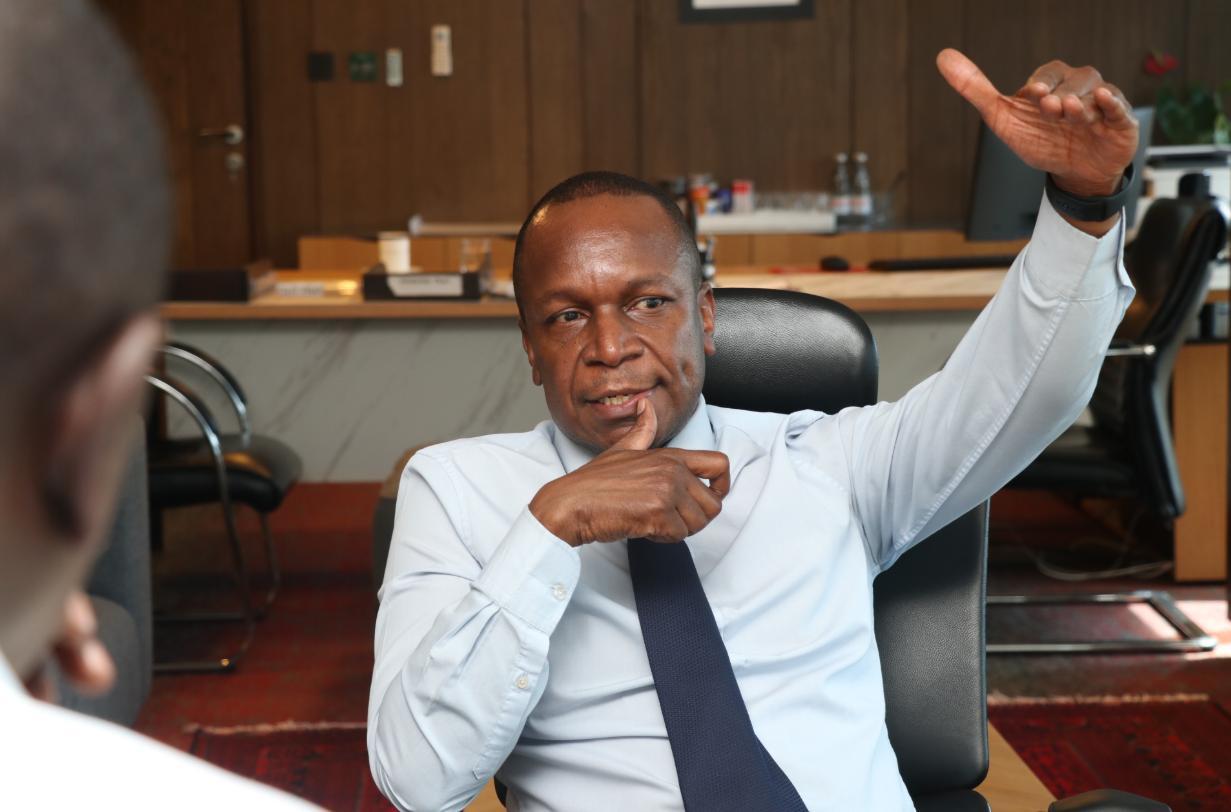
The Star spoke to Kenya Roads Board acting Director General Martin Agumbi on maintaining roads in Kenya.
Excerpts:
For readers who may not fully understand Kenya Roads Board’s role, what do you do?
Kenya Roads Board is a public parastatal that was established by the Kenya Roads Board Act of 1999 and the board started operating in the year 2001. The road sector in Kenya is structured in different segments. We have the ministry that is in charge of policy, KRB which is in charge of management of the Road Maintenance Levy Fund (RMLF), then we have the three road agencies that are in charge of implementing roadworks.
Kenya Roads Board is the link between the policymakers and road agencies. It manages funds which include fuel levy, transit tolls and any interest that may accrue on these funds while deposited in banks by KRB but the fuel levy is the main source of revenue.
How much money does KRB handle annually, and how is it distributed?
Average annual collection from the fuel levy is Sh115 billion based on last financial year data. Previously, we were collecting Sh86 billion when the levy was at Sh18 per litre. This levy which Sh25 per litre of fuel is not collected at the pump station; it is collected by the Kenya Revenue Authority on behalf of the board on importation of petroleum products. Before any oil marketer imports a product, he is required to pay all relevant taxes, with fuel levy as one of them.
The law stipulates that 40 per cent of the road maintenance levy shall go to highways which are managed by the Kenya National Highways Authority (KeNHA), 32 per cent to rural roads under Kenya Rural Roads Authority (KeRRA), 15 per cent of the funds go to urban roads managed by the Kenya Urban Roads Authority (KURA) while one per cent is for roads in national parks managed by the Kenya Wildlife Service.
The Act states that 10 per cent of the fund shall be retained and allocated in accordance with the road sector investment programme. This is the money we use for emergency roadworks. If you add up those percentages, it comes to 98 per cent. The balance of two per cent is retained at KRB for administration.
What challenges has KRB historically faced in fulfilling its mandate?
The biggest challenge is inadequate funding for our roads. The annual maintenance requirement for the country’s roads is about Sh180 to Sh200 billion but we are only collecting Sh115. So every year there is a shortfall in the amounts available for road maintenance, and this continues to accumulate over time as we also construct new roads.
The second challenge faced by the road agencies is the inadequate funding for development. Road maintenance funds only go to maintaining existing roads, such as filling of potholes and marking roads, traffic lights and things like that, but road development is the construction of new roads.
From 2015 up to December 2024, the road agencies had accumulated pending bills due to non-payment of contractors totalling Sh174 billion as a result of low funding. We are working towards addressing these challenges through different strategies, among them the securitisation of the RMLF.
What exactly is securitisation in simple terms and why did KRB opt for it instead of normal budgetary allocations?
Securitisation is basically like a mortgage where you have your salaries for the next 20 to 30 years, but you have to buy a house. So you go to a financial institution, they will get you a house for Sh15 million or so, with a promise of paying that mortgage on your future salaries. So what we did in the instance of Kenya Roads Board, first, the Act expressly provides for borrowing. We can use up to 50 per cent of the road maintenance levy for borrowing purposes. 50 per cent of 25 shillings is Sh12.50.
The IMF had already given limits to Kenya on the amount of debt that it can incur. We could not go the traditional way of issuing an infrastructure bond, leverage on the fuel levy, because this would then be a balance sheet item. It would increase public debt. So we approached the Eastern and Southern African Development Bank (TDB) to come up with a structure that will not impact the government balance sheets and would ensure that funding is available for roads.
This is where securitisation came in. Now, if we had pending bills of Sh174 billion and were to apply the funds we had, it would take us about five to six years to settle them, while not considering the accumulation of interest and penalties. This means stalled road projects and maintenance.
TDB offered Sh174 billion as the net present value of the Sh7 shillings over the next 10 years which has been applied to settle pending bills. We are securitising the additional Sh5, which was approved by Cabinet last year, targeting an additional Sh120 billion, which will also go into projects.
As of January 13, KRB had disbursed a total of Sh132.2 billion to road agencies, with KeRRA getting Sh67.2 billion, KeNHA) had received Sh52 billion, while Sh12.9 billion has gone to Kenya Urban Roads Authority (KURA). What I can assure Kenyans is that in the next two years, all road projects will be completed and we will have funds to maintain them.
Does securitisation have any implication on the taxpayer?
There is no impact. Whether we securitise today or not, there is no impact because the fuel levy remains at Sh25 over the next 10 years.
Tell us about the pending bills, return to work by contractors and impact on the economy?
Contractors have been paid and we continue to clear certificates which are falling due. Securitisation commenced on February 28 2025 and in April, we commenced settlement of contractors. What happened was that after we had audited pending bills, each contractor was required to sign a settlement agreement, which basically stipulated that once a contractor is paid 40 per cent of the principal amount due, they would resume work within 14 days.
Cabinet approved a payment plan where we would pay 40 per cent on signing of the settlement agreement then another 40 per cent in 120 days and the balance of 20 per cent two months later. You will agree with me stalled projects have resumed country-wide. Most road construction projects had stalled because of non-payment of contractors. We had contractors getting distressed, unable to pay their bank loans, some were even being auctioned but from April last year, the situation significantly changed because we paid out.
The economy, everything changed because liquidity came back into the market through securitisation. Anyone who was owed Sh50 million or less was fully paid with the 40 per cent initial payment. We had 580 stalled projects which works have resumed. The multiplier effect of having good roads, having funds in the contractor’s pockets, the trickle-down effect to SMEs and others is huge.
How do you ensure funds are well used by the road agencies and that Kenyans don’t lose their taxes?
We monitor how funds are applied. Once we approve the plans for funding, we collect this money and disburse them to road agencies as the year progresses. We evaluate by way of both financial and technical audits to ensure that these funds are applied for the intended purpose. Financial audits are a normal work of checking the bank statements, checking bank repositions and the procurement process, but technical audits, because we have engineers at Kenya Roads Board, they check the quality of roadworks that have been done. So we do both financial and technical audits. Regarding securitisation, there is a very clear and strict mode of disbursing these funds.
The world is moving towards Electric Vehicles (EVs) which will affect fuel consumption, how do you plan to sustain road maintenance funds?
It is true. There will be no fuel levy in Kenya by the year 2040. We import virtually 90 per cent of our vehicles from Japan which has consciously, in order to go green, decided that from the year 2030 to 2032, they will stop production of internal combustion engines. All the vehicles will be electric. What does this mean for Kenya? We import up to eight-year old cars.
So by 2038, the cars that will be imported will be fully electric. Of course, there will still be the existence of vehicles, but as time goes by, the fuel levy will cease to exist. The ministry is cognizant of this fact and has set up what we call the e-mobility policy. We are attempting to find alternative sources of funding for road maintenance that are outside the scope of the traditional fuel levy.
One of the proposed solutions is to charge a levy on vehicles based on the distance that you cover. This will require that each motorist install a gadget on the vehicle and you will only be paying according to your usage of the product. We are also thinking of introducing a road insurance levy. You see, whenever there is an accident on the roads, no one pays for the bridges and the signage that are broken.
It still comes back to the government. So we are proposing an insurance levy where every year, when you go to pay your insurance, pay like one per cent or something to cater for the breakages, the damage on the road. We are also considering reintroducing the annual road license, which was replaced by the fuel levy about 20 or 30 years ago.
If you have a registered vehicle, you are required to pay a small amount every year when you go to get your insurance and you would put a sticker on your car. So we are considering ways of ensuring that road maintenance funding does not decrease over time.