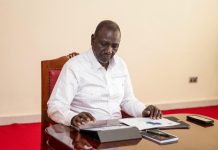
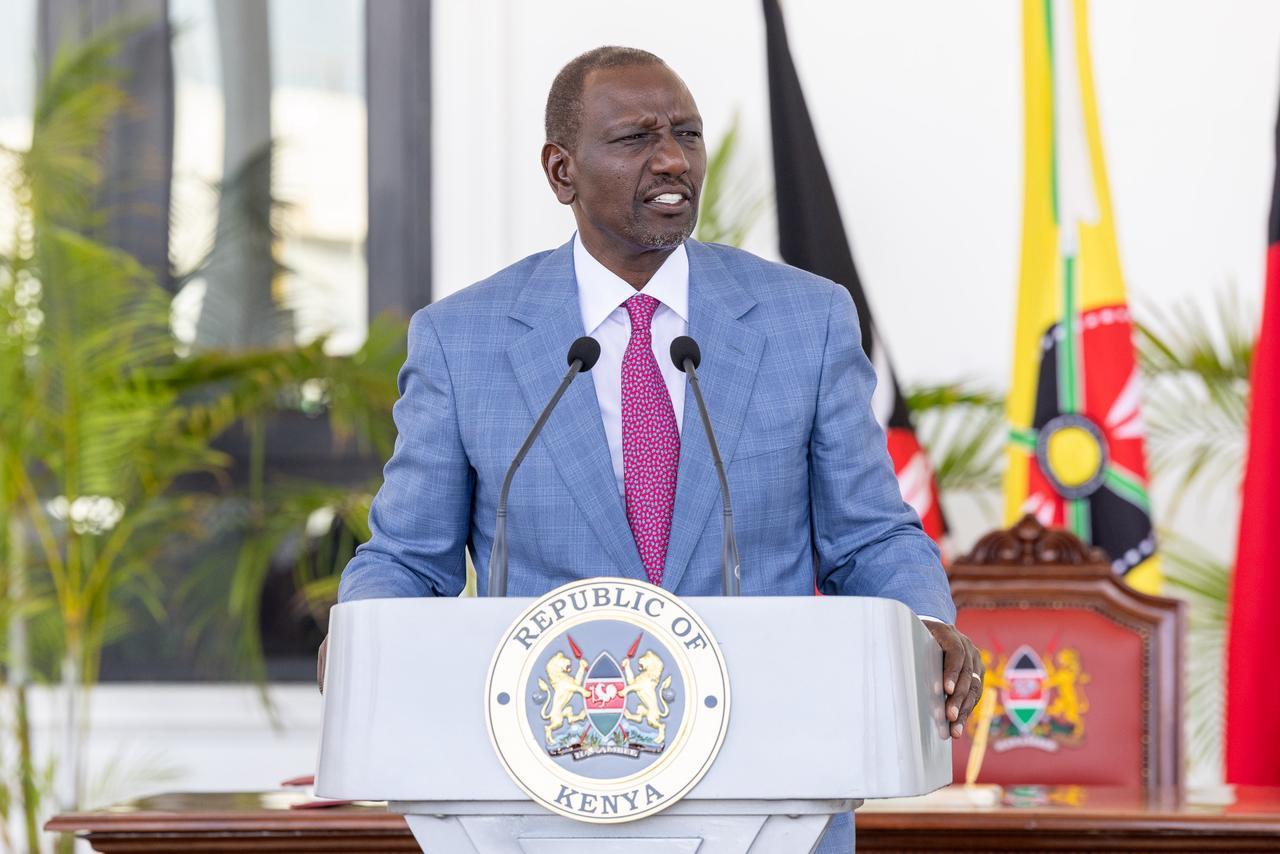
Africa-Press – Kenya. President William Ruto on Tuesday reflected on the long journey that saw the setting up of Bomet University, now officially a fully-fledged public university, and he joked about the spirited debates over its location.
Recalling the early days, Ruto said that while everyone agreed Bomet deserved a university, there were serious disagreements over the land in Bomet Town, a parcel that had previously served as a dumpsite.
“We argued a lot about where to put it, but I am glad we finally got it right,” he said as he awarded the charter to the university in a ceremony held at State House.
“I was right there at the beginning. I remember the beginnings of Bomet University,” Ruto said amid laughter from the attendees.
Ruto, who was Deputy President at the time, recalled that the dispute centred on a parcel of land in Bomet Town that had previously served, or was intended to serve, as a dumpsite and other civic facilities.
The choice of site sparked a standoff between the national government and the county administration led by then governor Isaac Rutto.
“We argued a lot about where to put it,” the President said, drawing laughter from the audience.
In a lighter moment, the President acknowledged the presence of his former political rival at the ceremony, saying the charter symbolised closure to a chapter once defined by disagreement.
“I am very happy that today we are here together, including my brother Isaac Rutto, to actualise the charter for Bomet University,” he said.
Rutto wanted the university located in Sigor, a more rural part of the county, because he believed that putting a major university there would bring jobs, infrastructure, and economic growth to an otherwise less developed area.
Ruto preferred the university be built in Bomet town, which is the county capital, arguing that the town’s infrastructure and accessibility would better support a university and spur urban growth.
This disagreement was politically significant because it was not just about education policy, it was tied to local development priorities, political influence, and control over county government direction.
“There was great controversy over the land, but I am glad we finally got it right.”
He noted that while there was shared political will to establish the university, practical questions over land use forced difficult conversations, including proposals to relocate public facilities to create space for the institution.
“We all agreed that it was time for Bomet to have a university. The only difference was where, where should it be?” he said.
“We had many discussions about moving other public facilities to pave way for the university,” Ruto said.
He said although the debates were heated, they were driven by a shared belief in education as a tool for regional transformation.
The disagreement affected local politics, including Rutto’s later election loss, but over time the leaders reconciled with shifting roles.
Rutto argued that the land in Bomet town proposed for the university was essentially a dumpsite or at least had been used as one and that is part of why he opposed building there.
He and the Bomet County government wanted that land kept for waste disposal and other local uses, including a stadium, rather than for the university campus, and this became one of the core issues in the dispute with the national government and Moi University.
When national leaders including Ruto and retired President Uhuru Kenyatta allocated parcels of land in Bomet town to establish the Moi University campus (now Bomet University College), the county government under Rutto objected.
The County government argued that the 10‐acre parcel the university wanted to use had been designated as a solid waste dumping site and also was where waste was being disposed of for Bomet town.
They claimed using that land for a university would harm waste management in the area.
Isaac Rutto’s position was that the university construction would hamper garbage collection and that the county had planned to keep the land as a dump (and also had plans for a stadium there), so it should not be taken away for academic use.
At some point, the disagreement led to a court battle.
The county government tried to challenge the transfer, saying the land should remain a dumpsite and not be used for the university.
However, the courts ultimately ruled in favor of Moi University, allowing construction on the disputed parcel.
Awarding the charter, Ruto said the university had earned its place among Kenya’s public universities through persistence and institutional discipline.
“Today, ladies and gentlemen, Bomet University takes its rightful place among Kenya’s fully-fledged public universities,” he said.
“This is an achievement built on years of academic rigour, institutional discipline and an unwavering commitment to quality, and I say this knowing very well where Bomet University started.”
The President pledged to visit the institution in person to mark its growth from modest beginnings to full university status.
“Chairman of Council, I want to confirm that at the earliest opportunity, I will find my way to Bomet University so that I can celebrate what started very humbly and is now a fully chartered university in Bomet,” he said.
Ruto added that the ceremony also offered him a chance to reflect on unresolved promises and questions raised during the early debates.
“I hope when I come, I will be able to answer all the other things you asked me at that time,” he added.
The charter grants Bomet University full autonomy to expand academic programmes, strengthen research and governance, and position itself as a key driver of education and development in the South Rift region.
BUC was established in 2017 as a constituent college of Moi University, part of a national plan to spread university education to all counties.