
FREDRICK OKANGO
Africa-Press – Kenya. The facts are stark. The pattern is undeniable. The implications are grave.
The near-lynching of a sitting senator at a restaurant in Kisumu on April 8 was not an isolated eruption of violence. It was the latest—and perhaps most chilling—manifestation of a deeper and more dangerous trend: the normalisation of goonism as an instrument of political contestation in Kenya.
This violence has not emerged in a vacuum. It has been cultivated through reckless political rhetoric and sustained incitement across the country. Senior political actors increasingly deploy inflammatory language—branding opponents as “enemies” and advancing charged slogans such as “must go” or “Wantam.” Such rhetoric does more than energise supporters; it legitimises hostility and lowers the threshold for violence.
What unfolded in Kisumu, Nyandarua—and in similar incidents in Kikuyu and parts of Nairobi—bore the hallmarks of orchestration: coordinated confrontation, politically charged aggression framed as a test of loyalty, and violence severe enough to endanger lives. These are not spontaneous outbursts. They are deliberate, patterned and increasingly normalised.
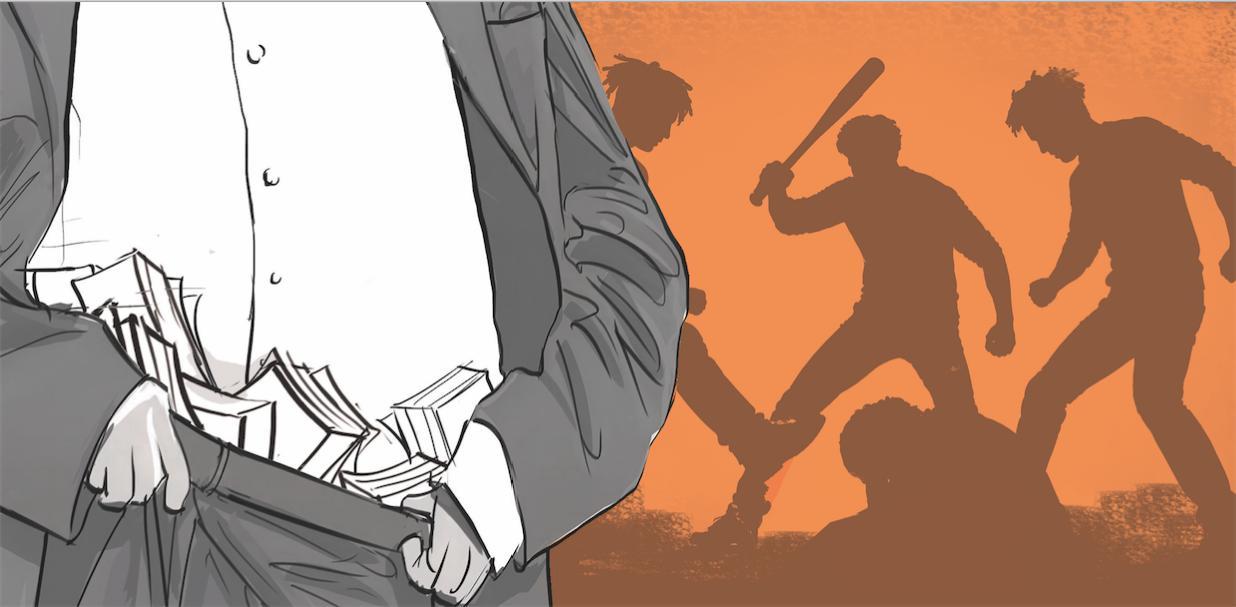
Across urban and peri-urban centres, a troubling script has taken root. Organised groups—often drawn from economically vulnerable youth—are mobilised to disrupt political gatherings, invade rallies, heckle leaders and even desecrate solemn spaces such as funerals. The pattern is familiar: a political actor dehumanises an opponent, signals confrontation, unleashes goons and retreats behind plausible deniability once chaos erupts.
Goonism in Kenya has thus evolved beyond sporadic hooliganism. It is now a structured political tool, closely linked to hate speech and incitement. These groups are not only mobilised but, in many cases, financed and coordinated with precision. Their utility lies in deniability: political actors publicly distance themselves while privately benefiting from the intimidation and disruption of rivals. In effect, goons have become outsourced enforcers in Kenya’s political marketplace.
This reality points to a deeper democratic crisis. Kenya is not merely confronting isolated criminal acts; it is witnessing the gradual erosion of democratic norms through organised coercion. When violence becomes embedded in political strategy—and is justified through incendiary rhetoric—public discourse is distorted, civic space shrinks and competition shifts from persuasion to intimidation.
Equally dangerous is the opportunistic exploitation of such incidents to inflame ethnic tensions. Kenya’s strength lies in its diversity and coexistence. This foundation must not be sacrificed for short-term political gain. The moment acts of thuggery are reframed as ethnic confrontation is the moment the architects of goonism succeed—dividing citizens while consolidating their own advantage.
Historically, enforcement against both perpetrators and their sponsors has been inconsistent. While arrests are occasionally made, identifying and prosecuting the political instigators—the so-called “goon in chief”—remains elusive. Political patronage has entrenched a cycle of impunity. Even as oversight bodies such as the National Cohesion and Integration Commission continue to flag incitement, prosecutions have remained limited.
There are, however, signs of a firmer response. Interior Cabinet Secretary Kipchumba Murkomen has unequivocally condemned recent acts of goonism, warning against the weaponisation of violence in political competition and affirming that those responsible must be held accountable. Interior Principal Secretary Raymond Omollo has similarly described the trend as criminal and unacceptable, reiterating the state’s duty to protect all citizens regardless of political affiliation.
The relatively swift investigative response to the Kisumu incident signals a government increasingly alert to the dangers of organised political violence, and what is now required is a sustained, structural response: thorough investigations, credible prosecutions of both perpetrators and their political sponsors and the systematic dismantling of the networks that sustain goonism. The culture of violence must never be accepted as a currency of politics.
Kenya now stands at a defining moment. One path leads to the rule of law, where ideas—not intimidation—shape political competition. The other leads to the normalisation of coercion and ethnic incitement through political manipulation. This must stop.
Source: The Star