
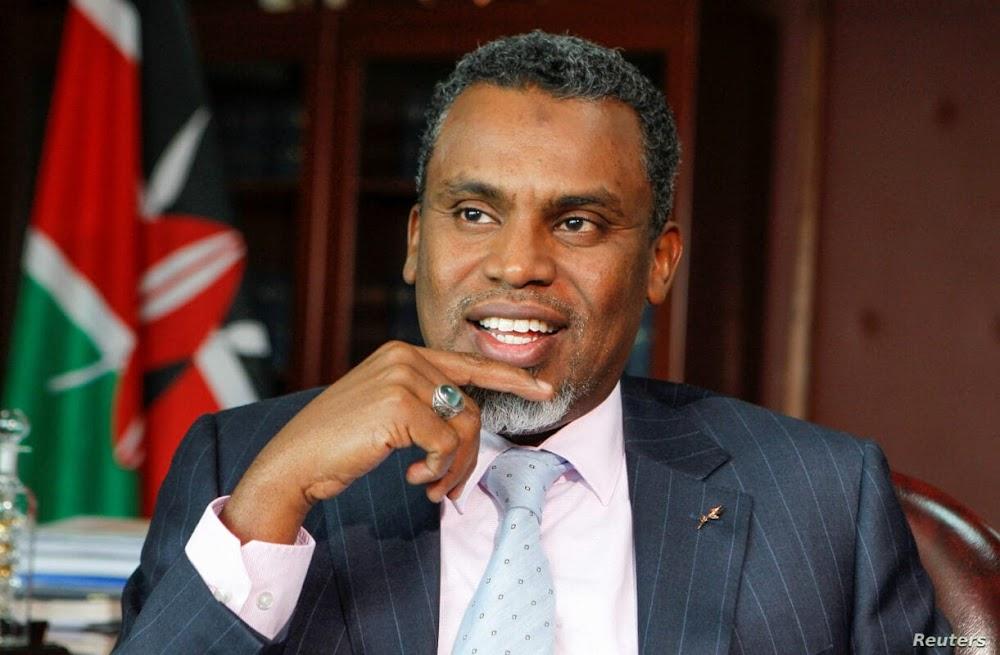
Africa-Press – Kenya. Director of Public Prosecution Noordin Haji has been nominated as the new Director General of the National Intelligence Service. His exit is quite unusual as Article 158 of the Constitution only anticipated his exit from office either by resignation or is removed from Office over gross misconduct or misbehaviour.
Other instances are if one dies or is convicted of a felony and sentenced to imprisonment for a term exceeding six months without an option of a fine.
If the National Assembly approves the nomination by President William Ruto, Haji will ascend to the position, after six years of serving as the DPP. A new Director will have to be appointed in accordance with Article 157 of the Constitution.
Qualifications for appointment as Director of Public Prosecutions are the same as for the appointment as a judge of the High Court, Article 157(3) says. Such a person must also have a high moral character, integrity and impartiality.
If the DPP’s office falls vacant, ODPP Act 2 of 2013 directs that the President has to constitute a selection panel within 14 days to for selection of his or her replacement.
The should comprise members from the Office of the President, the Office of the Attorney General, the Ministry responsible for Public Service and the Kenya National Commission on Human Rights.
Other panel members must be drawn from the Law Society of Kenya, Central Organisation of Trade Unions and the Ethics and Anti-corruption Commission, EACC. The first meeting is then convened by the Public Service Committee members of the selection panel elect a chairperson from among themselves.
Within seven days of convening, the panel is required to call for applications through an advertisement in at least two daily newspapers of national circulation.
“The selection panel shall within 14 days consider the applications received to determine compliance with the Constitution, shortlist the applicants, publish the names of the shortlisted applicants and qualified applicants in at least two daily newspapers of national circulation,” the ODPP Act states.
The panel thereafter conducts interviews of the shortlisted candidates. After the interview, it has to shortlist three successful applicants in the order of merit and submit the names to the President.
The President then has 14 days to nominate a candidate and forward the name to the National Assembly for approval. The National Assembly shall, within 21 days of receiving the nomination, sit to vet and consider the nominee.
Should the nomination be approved by MPs, the Speaker of the National Assembly will then forward the name to the President for appointment of the nominee as the new DPP.
“The President shall, within seven days of receipt of the approved nominee’s name from the National Assembly, by notice in the Gazette, appoint the Director of Public Prosecutions approved by the National Assembly,” the Act states.
In the case that the nomination is rejected by legislators, the Speaker communicates the same to the President within three days. The President is thereafter expected to submit fresh nomination within 21 days.
The Constitution and ODPP Act of 2013 vests power in the DPP to direct the Inspector General of the National Police Service to investigate any information or allegation of criminal conduct and prefer charges against suspects.
For More News And Analysis About Kenya Follow Africa-Press