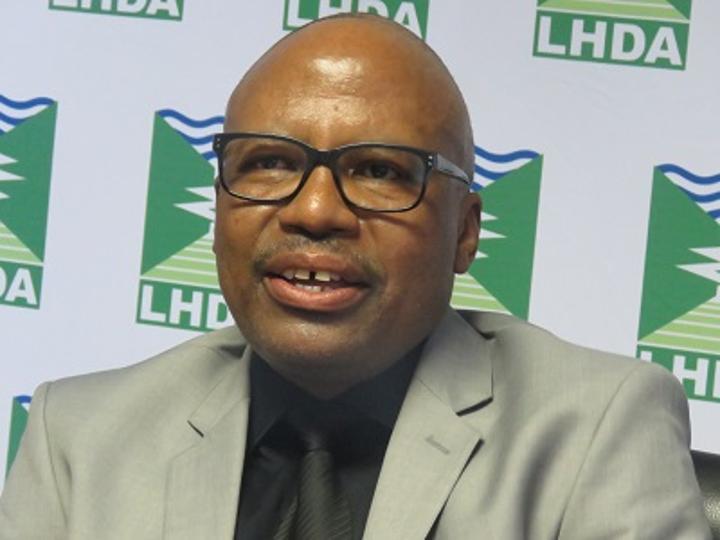
Africa-Press – Lesotho. Last Thursday saw 230 bricklayers graduate from the Trade Tests they had taken through the support of Lesotho Highlands Development Authority (LHDA). The graduation
ceremony took place at Mapholaneng Resource Centre. Speaking at the event, LHDA Divisional Manager Phase II Gerard Mokone revealed that LHDA is mandated to execute many social programs that impact positively the lives of
those affected by LHDA developments and this Trade Test graduation is part of the programs. He also indicated that those graduating had taken Trade Tests following the discovery
that they were knowledgeable about building but had no professional qualifications, they were sharpened and examined through Technical and Vocational Department (TVD).
Mokone said the awarded certificates will go a long way in helping the graduates to find jobs and get paid well due to the scale of their certificates.
The Trade Examiners were from Taung Skills and Training, Lerotholi Polytechnic and TVD respectively. Mokhotlong Contractor Lehlathe Ramoruti urged the graduates not to go to trading posts with their
certificates but to seek or create jobs in the construction field. He further advised them to go build everything from kraals to houses and not become
choosy. “I also insist you consult us contractors so we can secure vacant positions for you. We are thankful to LHDA for improving the Built and Construction field,” he said.
Trade Examiner from Lerotholi Polytechnic Motlatsi Maseela pointed out that they examined buildings done by those graduating and were satisfied with their work.
He said there is a challenge in Mokhotlong of a need for a training center so that residents can learn and sharpen various skills. On behalf of the Graduates, Mohau Lekola expressed gratitude to LHDA for initiating and
coordinating the examination process. He conveyed hope that the certificates will go a long way in helping them obtain employment as Polihali project is
underway in their area. LHDA Chief Executive Officer Tente Tente congratulated those who obtained certificates and indicated that they are working hand in hand as stakeholders, quoting that the Treaty governing the Lesotho
Highlands Water Project and the Phase II Agreement commits both Parties to take all reasonable measures to ensure that the implementation, operation and
maintenance of the project are compatible with the protection and the existing quality of the environment and, in particular, shall pay due regard to the
maintenance of the welfare of the persons and communities immediately affected by the Project. Tente also revealed that LHDA is in the process of tendering for a contract of the construction of
Polihali Village, hence they have provided an opportunity for Bricklayers to be examined. He explained that there will be another tender of building houses for
the villagers who are going to be relocated. He said the initiative of examining and awarding bricklayers with certificates is to empower them as the project is in their area.
The Minister of Water Hon. Kemiso Mosenene said the Government of Lesotho is proud to see that LHDA is implementing the promises it made. He said 230 graduates were being
conferred with certificates and the registration was done in 2019 and that those who could not register then still have an opportunity to register. Hon.
Mosenene thanked the Ministry of Education and Training, LHDA and the community for working harmoniously, referencing unemployment as the major challenge in
the country and big projects such as Polihali help curb unemployment rate. He said in Mapholaneng LHDA has implemented community projects like indigenous and
fruit tree planting farm, various conservation and land rehabilitation projects around Polihali among others. The Lesotho Highlands Water Project (LHWP) is a multi-phased project to provide water to
the Gauteng region of South Africa (SA) and to generate hydro-electricity for Lesotho. It was established by the 1986 Treaty signed by the governments of the
Kingdom of Lesotho and SA. The project entails harnessing the waters of the Senqu/Orange River in the Lesotho highlands through the construction of a series of dams for the mutual benefit of the two countries.
Phase I of the project was completed in 2003 and inaugurated in 2004, and Phase II is currently underway. The Treaty governing the LHWP II Agreement commits both Parties to take “all reasonable measures to ensure that the
implementation, operation and maintenance of the project are compatible with the protection and the existing quality of the environment and, in particular,
shall pay due regard to the maintenance of the welfare of the persons and communities immediately affected by the Project”. The LHDA is therefore mandated to ensure that the risks associated with resettlement are addressed
and that the livelihoods of affected people are restored. Construction of the Polihali Dam and reservoir, water transfer tunnel and the associated access roads, bridges,
accommodation, electrical transmission lines and telecommunications infrastructure, will impact on communities in Mokhotlong and adjoining districts. The implementation of Phase II requires the acquisition of land from
local communities. Approximately 5,000 hectares of land will be flooded by the Polihali Dam and reservoir in the valleys and tributary catchments of the Senqu and Khubelu Rivers.
This will lead to significant impacts on the livelihoods and socio-economic status of the local population as homesteads, cultivation land, trees, grazing land and other natural resources
will be inundated and access to resources and facilities impeded. Permanent land acquisition will also be necessary for infrastructure developments such as access roads, power lines, office and residential accommodation, and some land will also be occupied temporarily during the construction period.
For More News And Analysis About Lesotho Follow Africa-Press